Reading PassagePremium

Drought Mitigation and Water Conservation

Interactive passage with audio narration, comprehension questions, and printable PDF.

No ratings yet
Grades 5–8ScienceElaEnglish · SpanishInteractive · Printable
Aligned toMS-ESS3-2MS-ESS3-4
Just this resource
$1.50
One-time purchase
Best value
Unlock everything
$49.99$29.99/yr
40% off until Aug 1 — 10,000+ resources
Renews at $49.99/year.
Unlock above to use these actions

What's included

Reading passage
Audio narration
Comprehension quiz
Writing activity
Glossary & flashcards
Differentiated version
Spanish translation

Drought Mitigation and Water Conservation preview and details

About this printable Drought Mitigation and Water Conservation science reading passage, NGSS-aligned (Grades 5-8)

This middle school science passage explores how drought mitigation and water conservation strategies reduce the impact of droughts on communities, agriculture, and the environment. It covers mechanisms like drought prediction, monitoring indicators, water supply management, and agricultural adaptation, as well as policy tools and personal conservation actions. Students learn the scientific principles behind these approaches, how they interact, and why they matter for sustainability. The passage aligns with NGSS standards MS-ESS3-2 and MS-ESS3-4 and includes a glossary, comprehension quiz, writing prompts, and graphic organizers. Audio integration is available to support diverse learners. Key vocabulary is highlighted to aid understanding, and the passage encourages systems thinking and real-world application, making it a valuable resource for science classrooms.
Written by Workybooks TeamPublished by Workybooks
Preview

Sample passage and quiz from Drought Mitigation and Water Conservation

Reading passage and comprehension quiz preview

Drought Mitigation and Water Conservation
California-drought-4
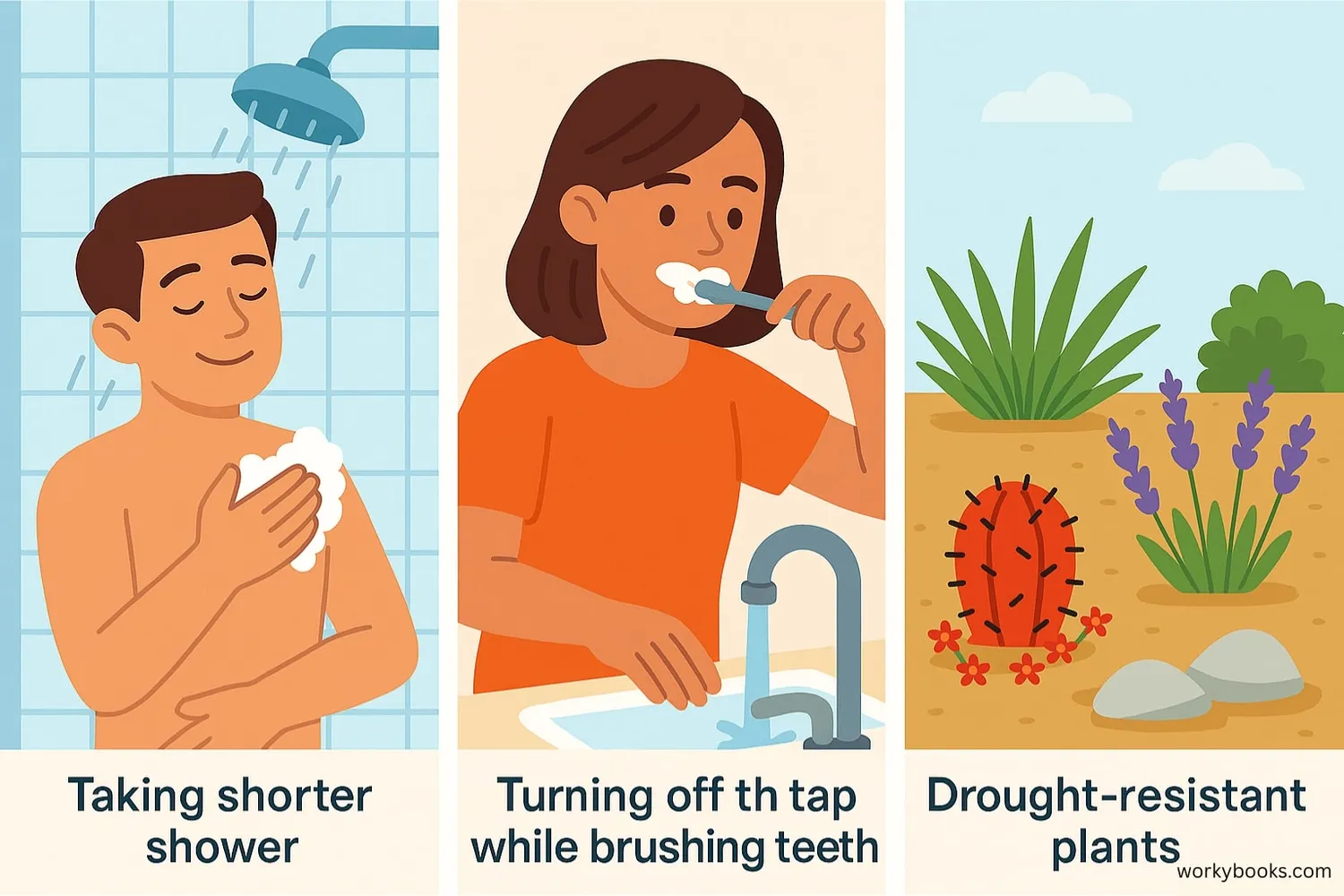
Examples of water conservation practices at home and in communities  

Drought is a natural phenomenon that occurs when an area receives much less rainfall than usual over a long period. This leads to water shortages that can affect people, agriculture, and ecosystems. Scientists and communities use drought mitigation strategies to reduce the negative effects of drought. By combining scientific monitoring, technological solutions, and personal actions, we can limit the damage caused by water scarcity.

Monitoring and Early Warning Systems

One of the first steps in mitigation is monitoring for drought conditions. Scientists use indicators such as rainfall levels, soil moisture, and stream flow rates to predict when a drought may occur. Advanced computer models analyze these data to provide early warnings. Early warning systems help communities prepare by conserving water, planting drought-resistant crops, or activating emergency plans. For example, the United States Drought Monitor uses data from weather stations and satellites to track droughts nationwide.

Water Conservation and Supply Management

Water conservation is a key strategy for reducing drought impacts. People and industries use efficient irrigation methods, like drip irrigation and scheduled watering, to minimize waste. Installing low-flow fixtures in homes can cut water use by 30% or more. Xeriscaping, or landscaping with drought-tolerant plants, reduces outdoor water needs. Some cities reuse graywater—wastewater from sinks and showers—for irrigation. Leak detection systems prevent unnecessary water loss. On a larger scale, communities manage water supplies by storing water in reservoirs, banking groundwater, and transferring water between regions. Desalination plants can convert seawater to freshwater during emergencies, though this process is energy-intensive.

Agricultural and Policy Adaptations

Farmers adapt to drought by planting drought-resistant crops and using soil moisture conservation techniques. Improving irrigation efficiency helps crops survive with less water. Crop insurance can protect farmers from financial losses due to drought. Governments use policy tools like water pricing, allocation systems, and temporary restrictions to manage demand during droughts. Long-term strategies include investing in water infrastructure, diversifying water sources, and encouraging demand management.

Personal Actions and Broader Implications

Individuals can help by taking shorter showers, using efficient appliances, and choosing drought-tolerant landscaping. These actions, when multiplied across communities, have a significant effect on water conservation. Drought mitigation is an example of how humans use science and technology to adapt to environmental challenges. By understanding and acting on these strategies, we contribute to sustainable water use and resilience against climate variability.

Interesting Fact: 
In some drought-prone cities, xeriscaping can reduce household water use by up to 50% compared to traditional lawns!

Comprehension quiz (10 questions)

1. What is the main purpose of drought mitigation?

To reduce the negative effects of drought
To increase rainfall in dry areas
To eliminate the need for water
To plant more traditional lawns

2. Which of the following is NOT a drought indicator mentioned in the passage?

Soil moisture
Stream flow rates
Cloud color
Rainfall levels

3. Why do scientists use computer models in drought monitoring?

To predict droughts and provide early warnings
To water crops automatically
To build more reservoirs
To desalinate seawater

4. What advantage does drip irrigation offer compared to traditional irrigation?

It delivers water directly to plant roots, reducing waste
It increases evaporation
It uses more water
It only works for lawns

5. What does the term 'graywater' mean in the passage?

Rainwater collected from rooftops
Used water from sinks and showers that can be reused for irrigation
Water that is polluted and unusable
Water from underground sources

6. Which of the following is an example of a policy tool for managing water during drought?

Water pricing and allocation systems
Drip irrigation
Xeriscaping
Graywater reuse

7. How can individuals help reduce the impact of drought?

By taking shorter showers and using efficient appliances
By planting only traditional lawns
By ignoring water leaks
By using as much water as possible

8. True or False: Desalination is an energy-intensive process used to make freshwater from seawater.

True
False

9. True or False: Xeriscaping can reduce household water use by up to 50% in some cities.

True
False

10. What is one long-term strategy communities use to prepare for drought?

Investing in water infrastructure and diversifying water supplies
Watering lawns every day
Relying only on rainfall
Avoiding the use of technology
Who it's for

Perfect for the way you teach

Teachers
  • Build comprehension skills
  • Auto-graded quiz
  • Differentiated reading
Parents
  • Read together at home
  • Improve fluency
  • Quiet reading time
Homeschoolers
  • Reading curriculum support
  • Independent practice
  • Track Lexile growth
Topics

Reviews & Ratings

No reviews yet. Be the first to share your experience!

More reading you might love

20 more
Passage
Natural Disaster: Earthquake - reading educational content
Grades 4–5

Natural Disaster: Earthquake

weather and climate · RI.3.1

Free
Passage
Obsidian: The Natural Glass Rock - reading educational content
Grades 5–8

Obsidian: The Natural Glass Rock

science · MS-ESS2-3

Free
Passage
All About Seismometers - reading educational content
Grades 5–8

All About Seismometers

science · MS-ESS3-2

Free
Passage
What Is the Difference Between Magma and Lava? - reading educational content
Grades 5–8

What Is the Difference Between Magma and Lava?

science · MS-ESS2-3

$1.50
Passage
Tools and Technology in Earth Science - reading educational content
Grades 5–8

Tools and Technology in Earth Science

science · MS-ESS2-2

$1.50
Passage
Types of Maps  - reading educational content
Grades 5–8

Types of Maps

earth science · MS-ESS2-2

$1.50
Passage
Mass Movements - reading educational content
Grades 5–8

Mass Movements

science · MS-ESS2-1

$1.50
Passage
What Causes Earthquakes? - reading educational content
Grades 5–8

What Causes Earthquakes?

science · MS-ESS2-2

$1.50
Passage
Floods: Causes and Types - reading educational content
Grades 5–8

Floods: Causes and Types

weather and climate · MS-ESS3-2

$1.50
Passage
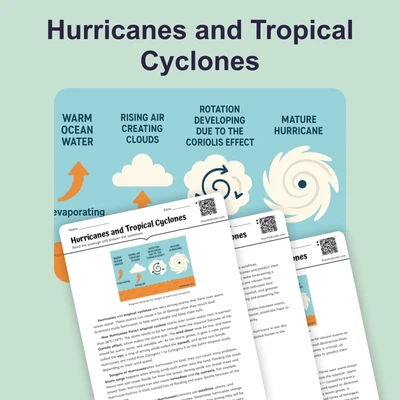
Hurricanes and Tropical Cyclones - reading educational content
Grades 5–8

Hurricanes and Tropical Cyclones

weather and climate · MS-ESS3-2

$1.50
Passage
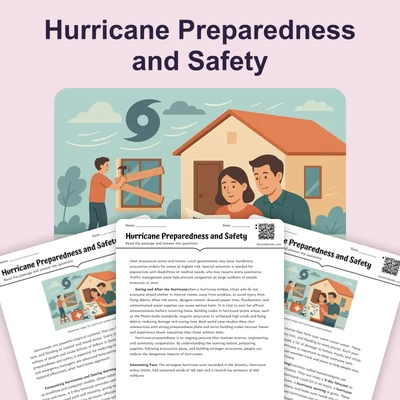
Hurricane Preparedness and Safety - reading educational content
Grades 5–8

Hurricane Preparedness and Safety

weather and climate · MS-ESS3-2

$1.50
Passage
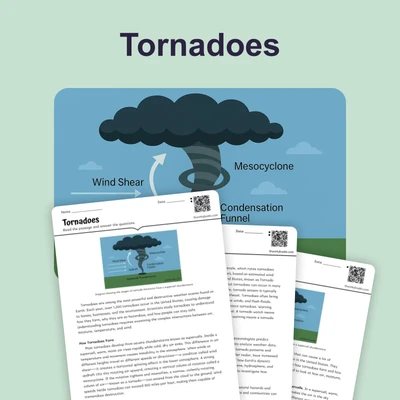
Tornadoes - reading educational content
Grades 5–8

Tornadoes

weather and climate · MS-ESS3-2

$1.50
Passage
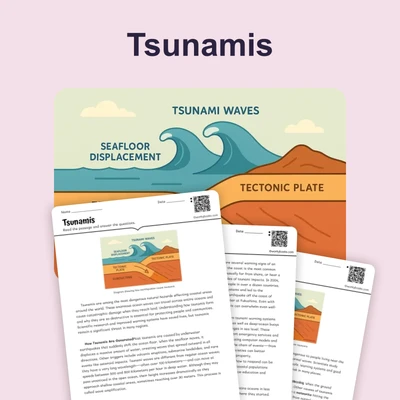
Tsunamis - reading educational content
Grades 5–8

Tsunamis

science · MS-ESS3-2

$1.50
Passage
Tsunami Warning and Safety - reading educational content
Grades 5–8

Tsunami Warning and Safety

science · MS-ESS3-2

$1.50
Passage
Earthquake Hazards and Damage - reading educational content
Grades 5–8

Earthquake Hazards and Damage

science · MS-ESS3-2

$1.50
Passage
Earthquake Zones and Patterns - reading educational content
Grades 5–8

Earthquake Zones and Patterns

science · MS-ESS2-2

$1.50
Passage
Seismic Waves - reading educational content
Grades 5–8

Seismic Waves

science · MS-ESS2-2

$1.50
Passage
Measuring Earthquakes - reading educational content
Grades 5–8

Measuring Earthquakes

science · MS-ESS2-2

$1.50
Passage
Earthquake Safety and Preparedness - reading educational content
Grades 5–8

Earthquake Safety and Preparedness

science · MS-ESS3-2

$1.50
Passage
Volcanic Eruptions and Products - reading educational content
Grades 5–8

Volcanic Eruptions and Products

science · MS-ESS2-2

$1.50
Copyright © 2026 Workybooks. Made with ♥ in California.