Electric Vehicles and Emissions — Reading Comprehension
Rate this
Premium Resource
Present
Present in classroom. No work saved
Assign
Classroom with student accounts, Track progress
Quick Play
No student accounts, assign with a link
Grades
6
7
8
PRINT+DIGITAL RESOURCE
This learning resource is available in interactive and printable formats. The interactive worksheet can be played online and assigned to students. The Printable PDF version can be downloaded and printed for completion by hand.
This engaging passage for grades 6-8 explores the science behind electric vehicles (EVs) and their role in reducing transportation emissions, aligning with NGSS standards. Students will learn about how EVs work, the difference between gasoline cars and electric cars, and why switching to electric vehicles can help reduce air pollution and greenhouse gases. The passage explains key vocabulary such as 'battery,' 'emissions,' 'fossil fuels,' and 'renewable energy' in simple terms. Real-world examples, like electric buses and trucks, show how this technology is used every day. Students will test their understanding with a multiple-choice quiz and deepen their thinking with writing activities. Audio integration and a Spanish translation support diverse learners. This resource is perfect for science teachers, students, or anyone interested in sustainable transportation solutions.
CONTENT PREVIEW
Expand content preview
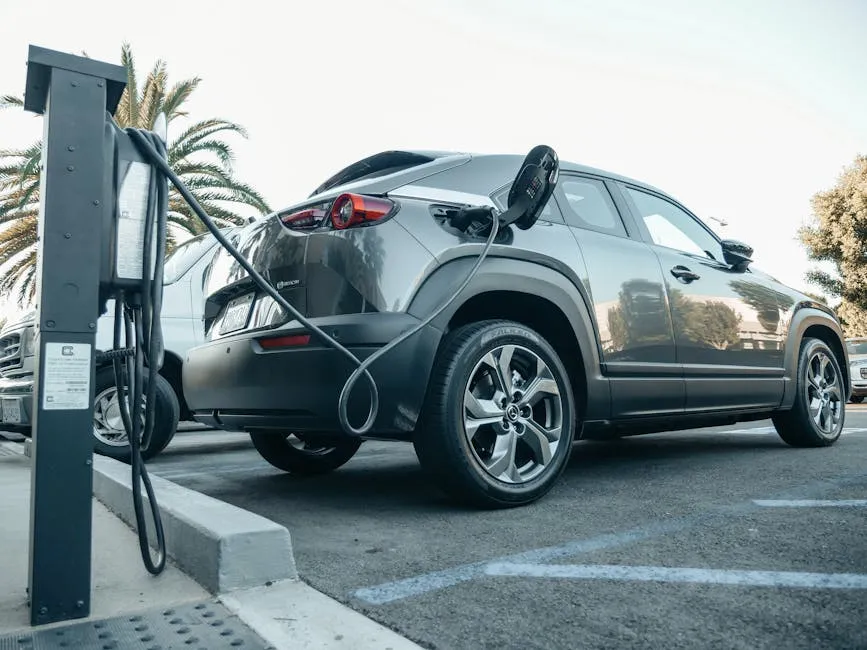
Modern electric vehicle charging at an outdoor station in daylight. Source: Pexels - Kindel Media
Transportation emissions are gases released into the air when cars, trucks, and buses use fuel to move. These emissions include greenhouse gases like carbon dioxide, which can trap heat in the Earth's atmosphere and contribute to climate change.
Most vehicles today use fossil fuels such as gasoline or diesel. When these fuels burn, they produce emissions that pollute the air. To help reduce pollution, scientists and engineers have created electric vehicles (EVs). Instead of burning fuel, EVs use a large battery to store electricity that powers an electric motor.
Electric vehicles do not have a tailpipe, so they do not release harmful gases while driving. This helps lower air pollution in cities and neighborhoods. However, the source of the electricity used to charge EVs is important. If the electricity comes from renewable energy sources like solar or wind, the process creates even fewer emissions. But if the electricity comes from burning coal or oil, some emissions are still produced, just at the power plant instead of the car.
The charging station is where electric vehicles get their energy. People can charge their cars at home or at special stations in public places. Charging an EV can take from 30 minutes to several hours, depending on the type of charger and the size of the battery.
Many cities and countries are now encouraging the use of electric buses and delivery trucks to help improve air quality. Some governments even offer rewards or discounts to people who buy EVs. This helps more people make the switch from fossil fuel vehicles to cleaner electric ones.
Electric vehicles are an important part of the solution to reduce transportation emissions and fight climate change. They are becoming more popular every year as technology improves and more charging stations are built.
Interesting Fact: Norway has one of the highest numbers of electric vehicles per person in the world, and most of its electricity comes from clean, renewable energy sources!
What do electric vehicles use for power?
BatteriesGasolineSolar panels onlyDiesel
What is a greenhouse gas?
A gas that traps heatA gas plants makeA gas from batteriesA gas from wind
Which country is a leader in EV use?
NorwayBrazilJapanIndia
Why are charging stations important?
Charge EVs with electricityRefuel with gasolineClean the carsChange the tires
What happens if EVs use coal power?
Some emissions are producedNo emissions at allCars go fasterBatteries last longer
How do EVs help fight climate change?
By reducing emissionsBy using more fuelBy making noiseBy needing oil
Electric vehicles need gasoline to run.
TrueFalse
What does the word 'battery' mean here?
Stores and gives electricityPart of the exhaustUses gasolineMakes loud noises
Perfect For:
👩🏫 Teachers
• Reading comprehension practice
• Auto-graded assessments
• Literacy skill development
👨👩👧👦 Parents
• Reading practice at home
• Comprehension improvement
• Educational reading time
🏠 Homeschoolers
• Reading curriculum support
• Independent reading practice
• Progress monitoring
Reading Features:
📖
Reading Passage
Engaging fiction or nonfiction text
❓
Comprehension Quiz
Auto-graded questions
📊
Instant Feedback
Immediate results and scoring
📄
Printable Version
Download for offline reading
🔊
Read Aloud
Voice-over with word highlighting
Reviews & Ratings
No reviews yet. Be the first to share your experience!
Related Content
What Is Earth Science?
This engaging middle school science passage introduces students to the field of Earth science, aligning with NGSS standa...
MS-ESS1MS-ESS2MS-ESS3SEP
Transportation and Climate Change
This engaging science passage for grades 6-8 explores the vital role that transportation plays in climate change. Studen...
Tools and Technology in Earth Science
This middle school science reading passage explores the wide range of tools and technologies used in Earth science, from...
MS-ESS2-2MS-ESS3-2MS-ETS1-1MS-PS4-3
Climate Change: Solutions and Mitigation
This passage explores scientific solutions and mitigation strategies for climate change, designed for middle school scie...
MS-ESS3-4MS-ESS3-5
Extreme Weather and Climate Change
This Grade 6-8 science passage, aligned to NGSS standards, explores the impact of climate change on extreme weather even...
Climate Change: Causes
This comprehensive middle school science passage explores the causes of climate change by examining both natural and hum...
MS-ESS3-5MS-LS2-4
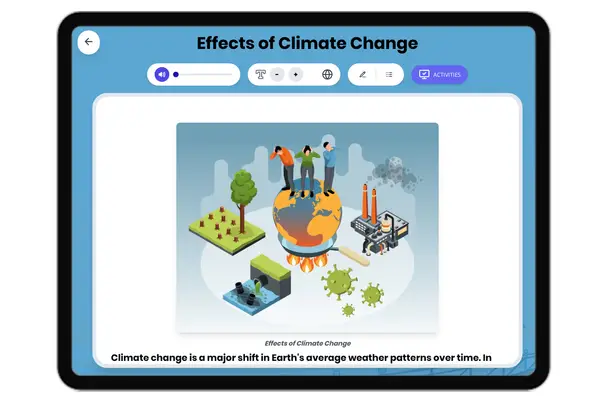
Effects of Climate Change
This comprehensive middle school science passage explores the effects of climate change on Earth's systems and life, ali...
MS-ESS3-5MS-LS4-4
Climate Change Bird Migration
This educational passage, audio integrated, explores how climate change affects bird migration patterns. Students will l...
MS-LS2-4: CONSTRUCT AN ARGUMENT SUPPORTED BY EMPIRICAL EVIDENCE THAT CHANGES TO PHYSICAL OR BIOLOGICAL COMPONENTS OF AN ECOSYSTEM AFFECT POPULATIONS.
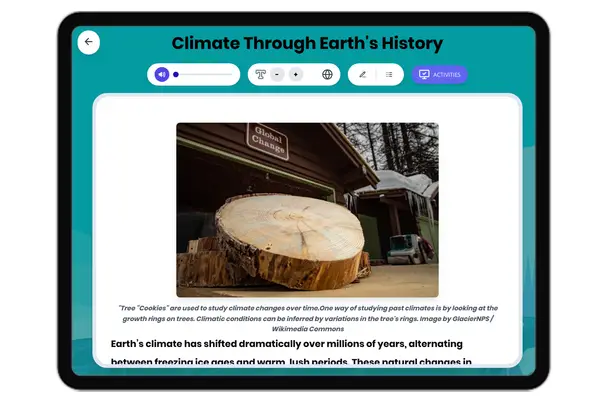
Climate Through Earth's History
This engaging passage for grades 6-8 explores how Earth's climate has naturally changed over millions of years, highligh...
MS-ESS1-4MS-ESS2-6
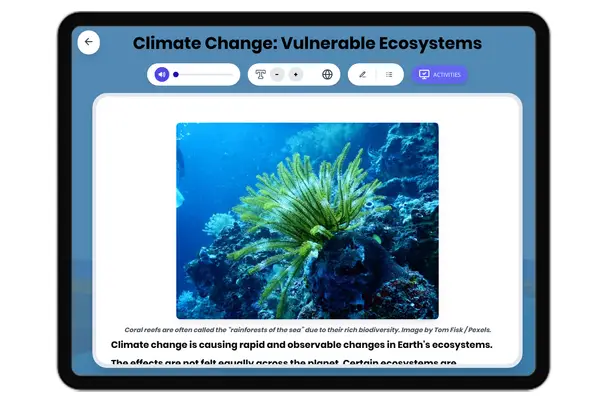
Climate Change: Vulnerable Ecosystems
This middle school science passage, aligned with NGSS standards MS-ESS3-5 and MS-LS2-4, helps students understand how cl...
MS-ESS3-5MS-LS2-4
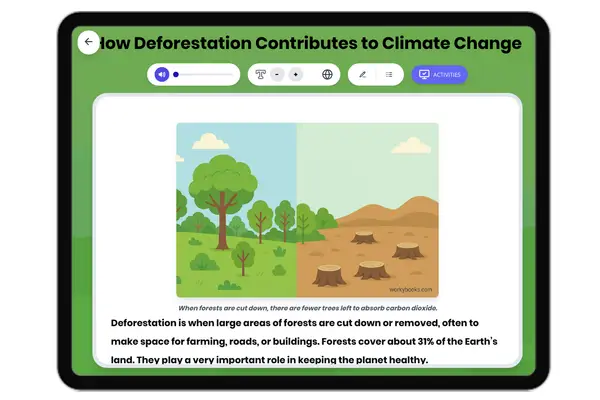
How Deforestation Contributes to Climate Change
This engaging science passage, aligned with NGSS standards, explains how deforestation contributes to climate change for...
Permafrost and Climate Change
This engaging, NGSS-aligned science passage for grades 6-8 explores how melting permafrost releases greenhouse gases, im...
Scientific Inquiry in Earth Science
This passage explores scientific inquiry in Earth science for grades 6-8, aligned with NGSS standards MS-ESS1-4, MS-ESS2...
MS-ESS1-4MS-ESS2-1MS-ESS3-5SEP
Impact of Climate Change on Water Resources
This engaging science passage for grades 6-8 explores the impact of climate change on water resources, aligning with NGS...
Heatwaves and Climate Change
This educational resource features an engaging, audio-integrated reading passage titled 'Heatwaves and Climate Change,' ...
How Climate Change Affects Food Security
This grade 6-8 science passage, aligned with the NGSS standards, explores how climate change affects food security aroun...
Addressing Climate Change
This middle school science passage, aligned with NGSS standards MS-ESS3-4 and MS-ESS3-5, explores the mechanisms and sol...
MS-ESS3-4MS-ESS3-5
What Is The Difference Between Global Warming And Climate Change?
This educational content, audio integrated, explores the crucial differences between global warming and climate change. ...
Climate Change: Species Responses
This middle school science passage explores how species respond to climate change, aligning with NGSS standards MS-LS4-4...
MS-LS4-4MS-LS4-6
Climate Refugees
This engaging science passage for grades 6-8 introduces students to the topic of climate refugees and human migration. A...