Facts About the Sun
Interactive passage with audio narration, comprehension questions, and printable PDF.
By completing this purchase you agree to our Terms of Use and Privacy Policy. Your subscription renews automatically until you cancel. You can cancel anytime from your account settings. All sales are final and non-refundable. Digital content is available for download in your account immediately upon purchase.
What's included
Facts About the Sun preview and details
About this printable Facts About the Sun science reading passage, NGSS-aligned (Grades 3-6)
Sample passage and quiz from Facts About the Sun
Reading passage and comprehension quiz preview
Facts About the Sun
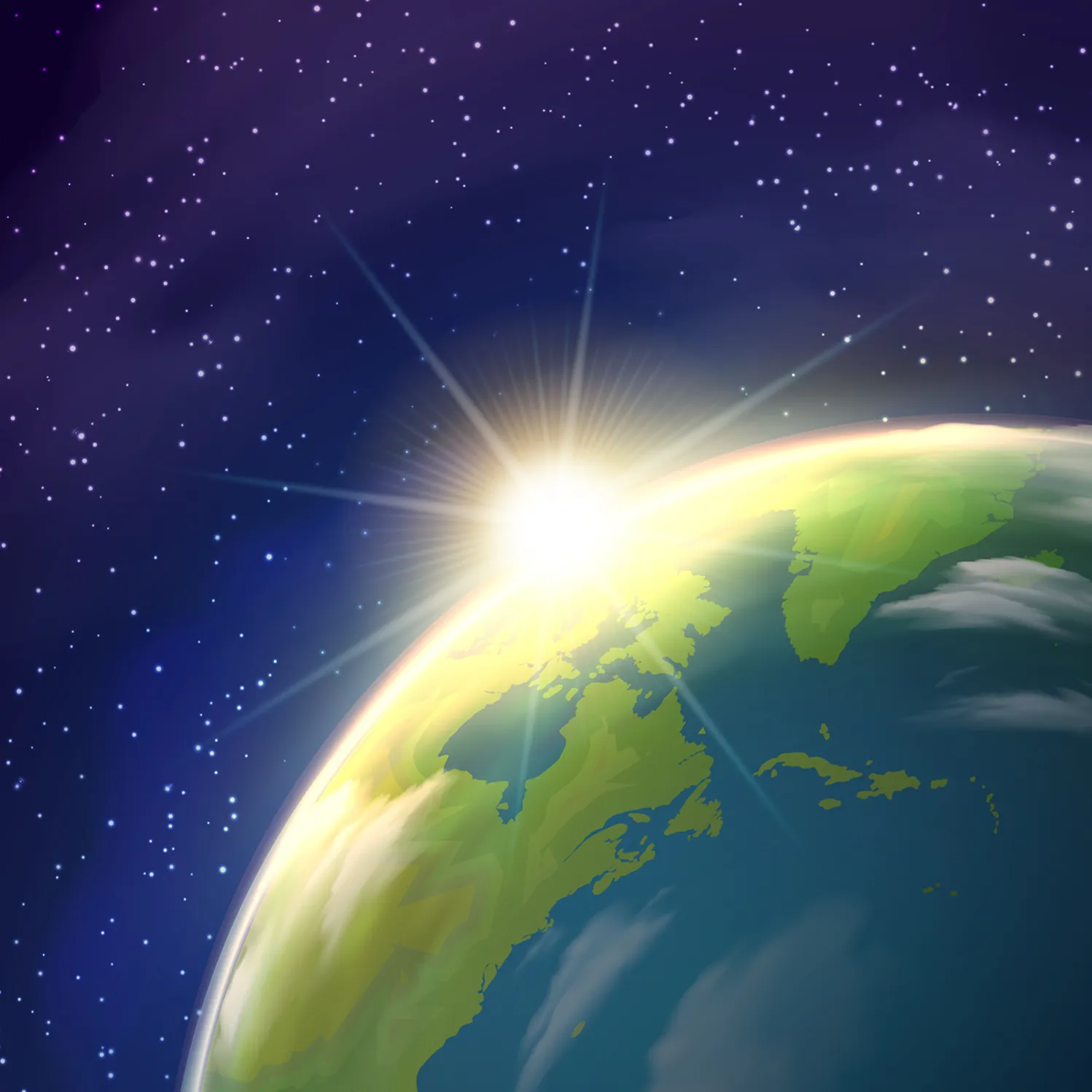
The Sun is the closest star to Earth. It is a huge ball of hot, glowing gases. The Sun looks much bigger and brighter than other stars because it is much closer to us. In fact, the Sun is about 93 million miles from Earth, while other stars are much farther away.
The Sun is made mostly of hydrogen and helium. Deep inside the Sun, a process called nuclear fusion happens. Nuclear fusion is when tiny atoms join together to make bigger atoms, releasing a large amount of energy and heat. This energy travels through space as sunlight and solar energy.
Solar energy from the Sun is very important. It warms our planet and makes life possible. Plants use sunlight to make their own food through a process called photosynthesis. Without the Sun, plants would not grow, and animals, including humans, would not have food to eat.
The Sun also causes seasons and weather on Earth. As the Earth moves around the Sun, different parts of our planet get different amounts of sunlight. This is why we have summer, winter, spring, and fall. The Sun’s heat also makes water evaporate, forming clouds and rain.
Besides providing light and warmth, the Sun helps people in many ways. For example, solar panels can capture sunlight and turn it into electricity. This is called solar power. Using solar power helps us save other resources and protect the environment.
Interesting Fact: The Sun is so big that about 1.3 million Earths could fit inside it!
Comprehension quiz (8 questions)
1. What is the Sun mostly made of?
2. How far is the Sun from Earth?
3. What process makes the Sun's energy?
4. Why do we have seasons?
5. What do plants use sunlight for?
6. If the Sun disappeared, what would happen?
7. The Sun gives off light and heat.
8. What does 'photosynthesis' mean?
Perfect for the way you teach
- Build comprehension skills
- Auto-graded quiz
- Differentiated reading
- Read together at home
- Improve fluency
- Quiet reading time
- Reading curriculum support
- Independent practice
- Track Lexile growth