Great Pacific Garbage Patch
Interactive passage with audio narration, comprehension questions, and printable PDF.
By completing this purchase you agree to our Terms of Use and Privacy Policy. Your subscription renews automatically until you cancel. You can cancel anytime from your account settings. All sales are final and non-refundable. Digital content is available for download in your account immediately upon purchase.
What's included
Great Pacific Garbage Patch preview and details
Sample passage and quiz from Great Pacific Garbage Patch
Reading passage and comprehension quiz preview
Great Pacific Garbage Patch
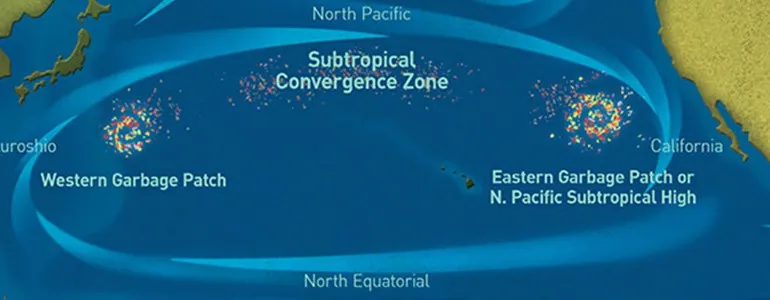
"Garbagepatch1" by Boyan Slat / Wikimedia Commons (CC0).
The Great Pacific Garbage Patch is a massive collection of floating plastic waste located in the North Pacific Ocean. It is estimated to cover an area of 1.6 million square kilometers (620,000 square miles), roughly three times the size of France.
The garbage patch is formed by ocean currents that trap debris in a circular pattern called the North Pacific Gyre. Most of the waste is plastic, including bottles, bags, and microplastics (tiny plastic particles). These materials do not biodegrade but instead break into smaller pieces, harming marine life.
Marine animals, such as turtles and seabirds, often mistake plastic for food, leading to injury or death. Microplastics also enter the food chain, potentially affecting human health.
Efforts to clean up the garbage patch are challenging due to its size and the tiny size of microplastics. Organizations like The Ocean Cleanup are developing technologies to remove plastic waste, but prevention—such as reducing single-use plastics and improving recycling—is key to solving the problem.
Fun fact: Scientists estimate that the Great Pacific Garbage Patch contains over 1.8 trillion pieces of plastic, weighing about 80,000 tons—equivalent to 500 jumbo jets!
Comprehension quiz (8 questions)
1. What is the Great Pacific Garbage Patch?
2. How big is the Great Pacific Garbage Patch?
3. What is the North Pacific Gyre?
4. What is the main type of waste in the garbage patch?
5. How does plastic harm marine life?
6. What is one challenge of cleaning up the garbage patch?
7. What is the fun fact mentioned in the passage?
8. What is one way to prevent the garbage patch from growing?
Perfect for the way you teach
- Build comprehension skills
- Auto-graded quiz
- Differentiated reading
- Read together at home
- Improve fluency
- Quiet reading time
- Reading curriculum support
- Independent practice
- Track Lexile growth