This comprehensive middle school science reading passage examines how oceans drive the water cycle, aligning with NGSS standard MS-ESS2-4. Students explore how oceans serve as the primary source of water vapor in the atmosphere, supplying the majority of global evaporation. The passage explains the relationship between ocean surface temperature and solar energy in determining evaporation rates, and connects ocean circulation to the broader water cycle across land, ocean, and atmosphere. Through clear explanations and real-world examples, students understand the critical role oceans play in distributing water around the planet. The passage includes audio integration for enhanced accessibility, a simplified version for struggling readers, Spanish translations, comprehensive glossary, multiple-choice questions, writing activities, and graphic organizers. Perfect for grades 6-8 science curriculum focusing on Earth's systems and water cycle processes.
Written by Workybooks TeamPublished by Workybooks
Preview
Sample passage and quiz content
CONTENT PREVIEW
Expand content preview
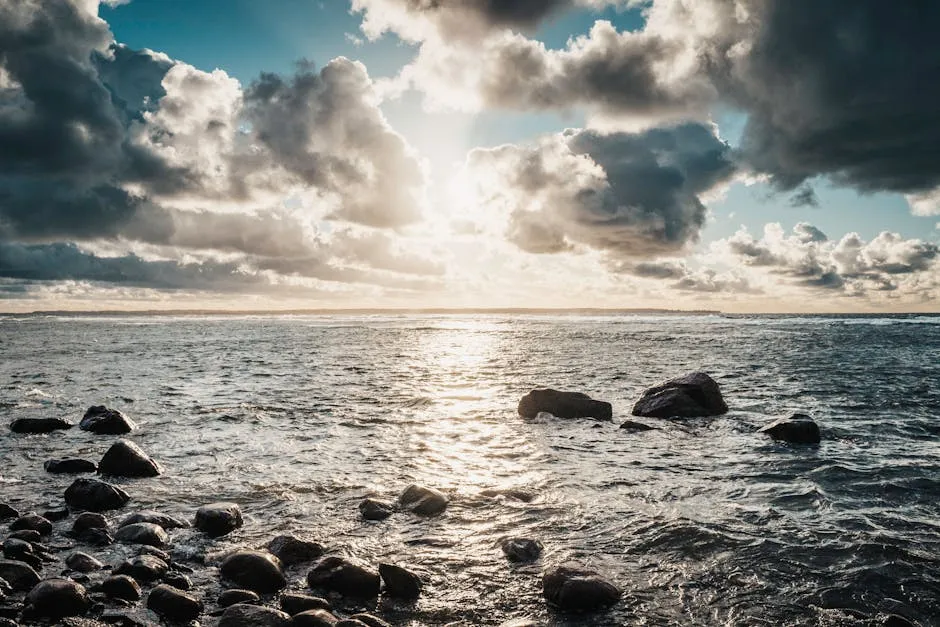
The process of evaporation from oceans depends on two main factors working together: solar energy and ocean surface temperature..Image by Raul Kozenevski / Pexels.
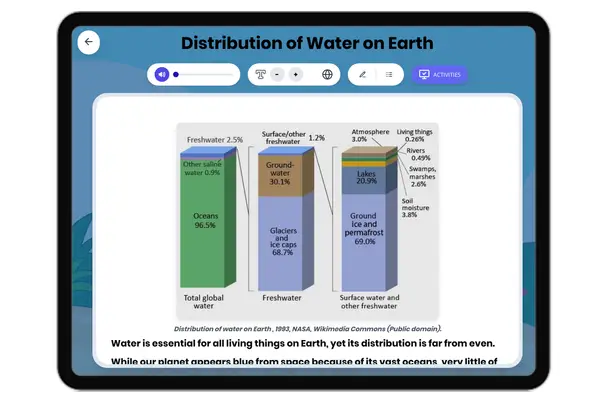
Oceans cover more than 70 percent of Earth's surface and contain about 97 percent of all water on the planet. This vast amount of water makes oceans the primary source of water vapor in the atmosphere. Evaporation from ocean surfaces supplies approximately 86 percent of all water vapor that enters Earth's atmosphere. Without this constant supply from the oceans, the water cycle would slow dramatically, affecting weather patterns and life across the entire planet.
The process of evaporation from oceans depends on two main factors working together: solar energy and ocean surface temperature. Solar energy from the sun provides the heat needed to change liquid water into water vapor, a process that requires significant energy. When sunlight strikes the ocean surface, it warms the water molecules, causing them to move faster. Once these molecules gain enough energy, they break free from the liquid surface and enter the atmosphere as invisible water vapor. Ocean surface temperature determines how much energy is already present in the water, which affects how quickly evaporation can occur.
Warmer ocean surfaces evaporate water much faster than cooler surfaces. In tropical regions near the equator, where ocean temperatures often exceed 80 degrees Fahrenheit, evaporation rates are extremely high. These warm waters receive intense solar energy year-round, creating ideal conditions for rapid evaporation. In contrast, polar oceans with temperatures near freezing experience much slower evaporation rates. This difference in evaporation rates across different ocean regions helps drive global weather patterns and influences where precipitation falls.
Ocean circulation plays a crucial role in distributing heat around the planet, which directly affects the water cycle. Ocean currents transport warm water from tropical regions toward the poles and bring cold water from polar regions toward the equator. As warm currents move across the ocean surface, they continue to release water vapor into the atmosphere along their path. The Gulf Stream, for example, carries warm water from the Caribbean northward along the eastern coast of North America, providing moisture that contributes to precipitation patterns across the Atlantic region.
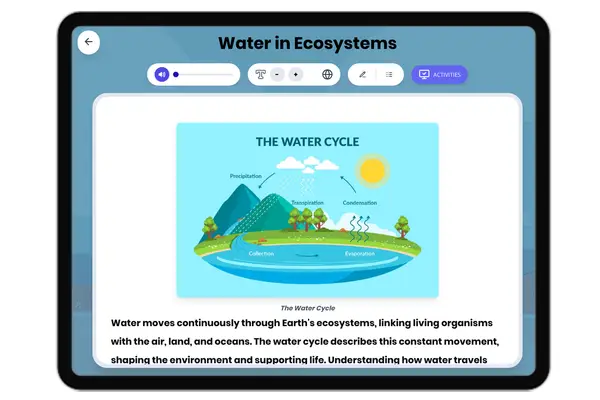
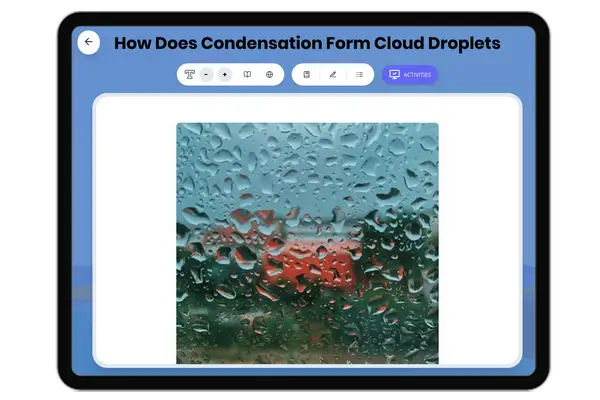
Once water vapor enters the atmosphere from ocean evaporation, it becomes part of the global water cycle that connects ocean, land, and atmosphere. Wind patterns transport this moisture across vast distances, sometimes thousands of miles from its ocean source. When water vapor rises and cools in the atmosphere, it undergoes condensation, forming clouds. Eventually, this moisture returns to Earth's surface as precipitation in the form of rain, snow, sleet, or hail. Some precipitation falls directly back into the ocean, while other precipitation falls on land, where it flows through rivers and streams, eventually returning to the ocean and completing the cycle.
The connection between oceans and the water cycle demonstrates how Earth's systems interact on a global scale. Changes in ocean temperature, whether from natural climate patterns or human activities, can alter evaporation rates and affect precipitation patterns worldwide. Understanding this relationship helps scientists predict weather patterns, study climate change, and recognize how oceans regulate Earth's water distribution. The ocean acts as both a massive reservoir and an engine that continuously drives the movement of water through Earth's systems.
Interesting Fact: A single water molecule that evaporates from the ocean surface spends an average of only 10 days in the atmosphere before falling back to Earth as precipitation, yet it may take thousands of years for that same molecule to cycle through the deep ocean before returning to the surface.
What percentage of water vapor in Earth's atmosphere comes from ocean evaporation?
70 percent86 percent97 percent50 percent
What are the two main factors that determine how quickly water evaporates from the ocean?
Wind speed and ocean depthSolar energy and ocean surface temperaturePrecipitation and condensationOcean currents and atmospheric pressure
Based on the passage, what does the term 'condensation' mean?
Water flowing through rivers back to the oceanThe process of water evaporating from the oceanWater vapor cooling and changing back into liquid waterOcean currents moving warm water toward the poles
According to the passage, what does 'ocean circulation' refer to?
The daily rise and fall of tidesThe movement of ocean water through currents that distribute heatThe process of evaporation from ocean surfacesThe formation of waves on the ocean surface
Why do tropical ocean regions near the equator have higher evaporation rates than polar oceans?
They have more windThey are deeperThey have warmer temperatures and receive more intense solar energyThey have more ocean currents
How does the Gulf Stream affect precipitation patterns?
It cools the atmosphere and reduces rainfallIt carries warm water northward, providing moisture that contributes to precipitationIt prevents evaporation along the coastIt only affects ocean temperatures, not precipitation
What happens to water vapor after it enters the atmosphere from ocean evaporation?
It immediately falls back to the oceanIt stays in the atmosphere permanentlyWind transports it across distances, where it eventually condenses and falls as precipitationIt turns into ice in the upper atmosphere
If ocean temperatures increase due to climate change, what would likely happen to evaporation rates?
Evaporation rates would decreaseEvaporation rates would stay the sameEvaporation rates would increaseEvaporation would stop completely
True or False: Oceans contain about 97 percent of all water on Earth.
TrueFalse
True or False: A water molecule spends an average of 10 years in the atmosphere before falling back to Earth as precipitation.
TrueFalse
Who it's for
Perfect for the way you teach
Teachers
Build comprehension skills
Auto-graded quiz
Differentiated reading
Parents
Read together at home
Improve fluency
Quiet reading time
Homeschoolers
Reading curriculum support
Independent practice
Track Lexile growth
Topics
water cycleocean evaporationwater vaporsolar energyocean temperatureocean circulationatmosphereprecipitationNGSS MS-ESS2-4
Reviews & Ratings
No reviews yet. Be the first to share your experience!
More reading you might love
19 more
The Intertropical Convergence Zone (ITCZ): Earth's Weather Belt
This science passage explains the Intertropical Convergence Zone (ITCZ), a key equatorial weather system. Covering NGSS ...
MS-ESS2-5MS-ESS2-4RI.6.7
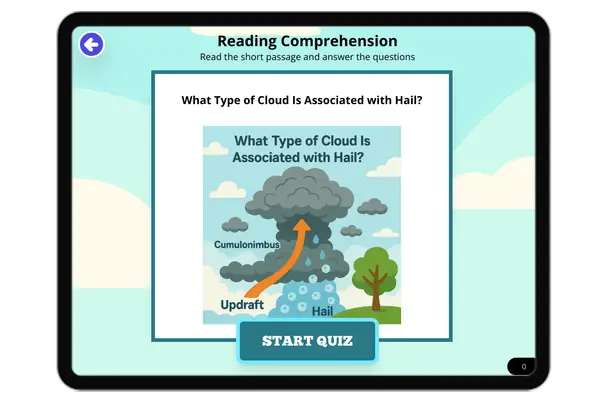
What Type of Cloud Is Associated with Hail?
This NGSS-aligned science reading passage for middle school explains that cumulonimbus clouds are the main cloud type re...
MS-ESS2-4
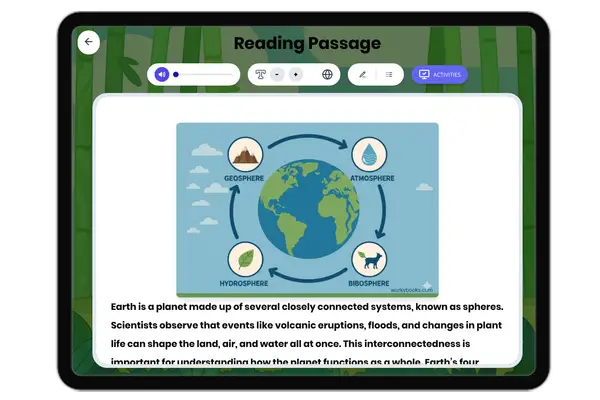
Earth's Spheres
This middle school science passage introduces students to Earth's four major spheres: the geosphere, hydrosphere, atmosp...
MS-ESS2-4MS-ESS2-6
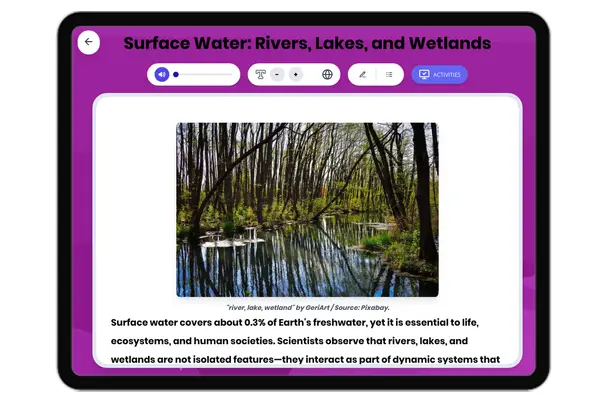
Surface Water: Rivers, Lakes, and Wetlands
This engaging middle school science passage explores the dynamic world of surface water, focusing on the complex systems...
MS-ESS2-4
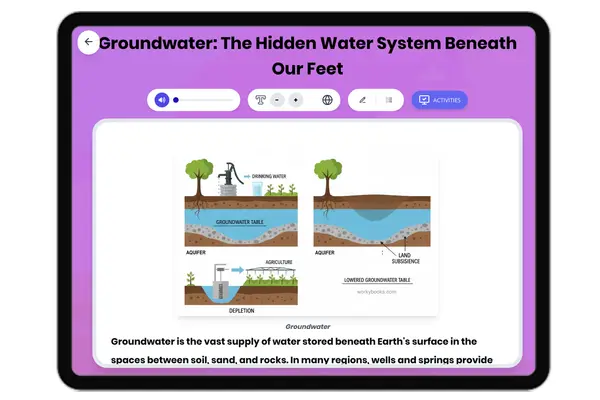
Groundwater
This middle school science passage explores the essential topic of groundwater, aligned to NGSS standards MS-ESS2-4 and ...
MS-ESS2-4MS-ESS3-1
Distribution of Water on Earth
This middle school science reading passage explores the distribution of water on Earth, aligned with NGSS standards MS-E...
MS-ESS2-4MS-ESS3-1
Water in Ecosystems
This engaging passage for grades 6-8 explores the essential role of water in ecosystems, tracing its movement through va...
MS-LS2-3MS-ESS2-4
The Ozone Layer
This engaging NGSS-aligned passage explores the science and importance of the ozone layer for middle school students (gr...
MS-ESS2-4MS-ESS3-3
Layers of the Atmosphere
This middle school science reading passage, aligned to NGSS standard MS-ESS2-4, guides students through the structure an...
MS-ESS2-4
How Sonar Maps the Ocean Floor
This comprehensive middle school science reading passage explores how sonar technology maps the ocean floor using sound ...
MS-ESS2-4
How Aquifers Store Groundwater
This comprehensive reading passage explores how aquifers store groundwater, aligned with NGSS standard MS-ESS2-4. Studen...
MS-ESS2-4
How Glaciers Store and Release Water
This comprehensive middle school science passage examines how glaciers store and release water, aligned with NGSS MS-ESS...
MS-ESS2-4
How Does Condensation Form Cloud Droplets
This comprehensive middle school science reading passage explores how condensation forms droplets in Earth's atmosphere,...
MS-ESS2-4
How Does Solar Energy Drive the Water Cycle
This comprehensive 650-word reading passage explores how solar energy and gravity work together as the dual engines of E...
MS-ESS2-4
How Precipitation Returns Water to Earth
This comprehensive middle school science reading passage examines how precipitation returns water to Earth's surface and...
MS-ESS2-4
What Is Oceanography
This comprehensive reading passage introduces middle school students to the field of oceanography and how scientists stu...
MS-ESS2-4
Freshwater vs. Saltwater
This comprehensive 650-word science reading passage for middle school students (grades 6-8) examines the critical differ...
MS-ESS2-4
How Does Water Evaporate into the Atmosphere
This comprehensive 600-word reading passage explores how water enters the atmosphere through evaporation and transpirati...
MS-ESS2-4
How Does Runoff Flow Across Watersheds
This comprehensive middle school science passage explores how runoff and watersheds drain, aligning with NGSS standard M...