How Does Runoff Flow Across Watersheds
Interactive passage with audio narration, comprehension questions, and printable PDF.
By completing this purchase you agree to our Terms of Use and Privacy Policy. Your subscription renews automatically until you cancel. You can cancel anytime from your account settings. All sales are final and non-refundable. Digital content is available for download in your account immediately upon purchase.
What's included
How Does Runoff Flow Across Watersheds preview and details
About this printable How Does Runoff Flow Across Watersheds science reading passage, NGSS-aligned (Grades 6-8)
Sample passage and quiz from How Does Runoff Flow Across Watersheds
Reading passage and comprehension quiz preview
How Does Runoff Flow Across Watersheds
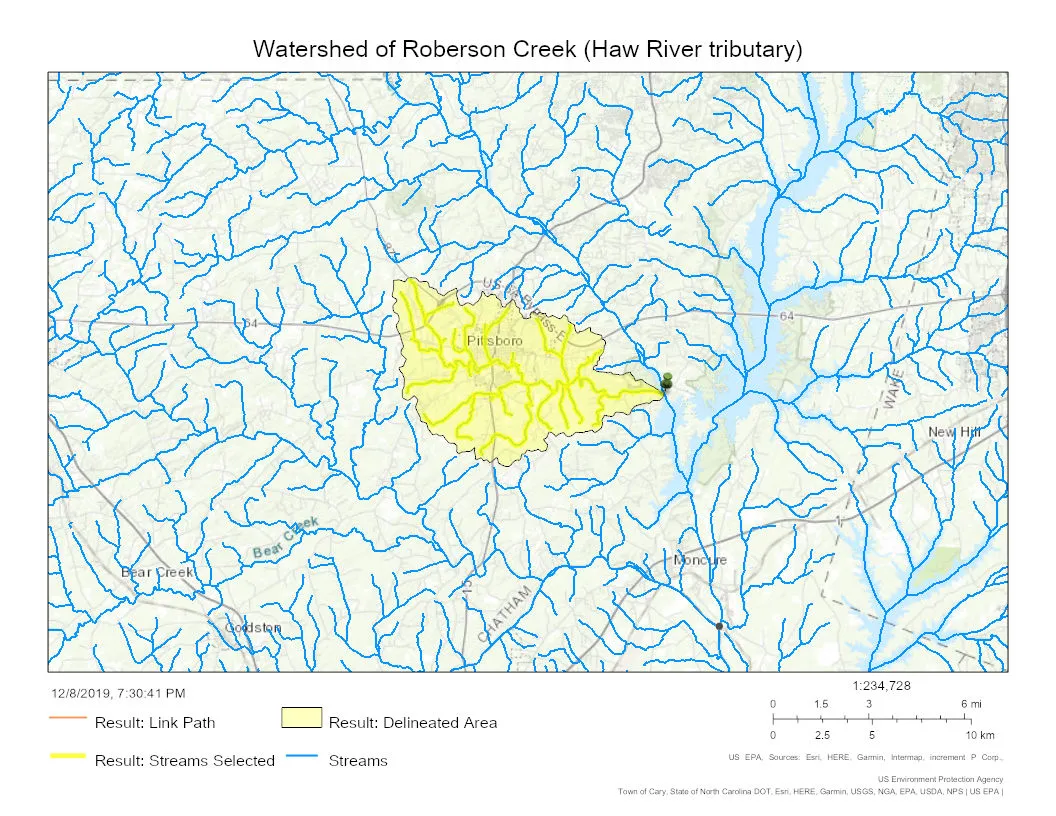
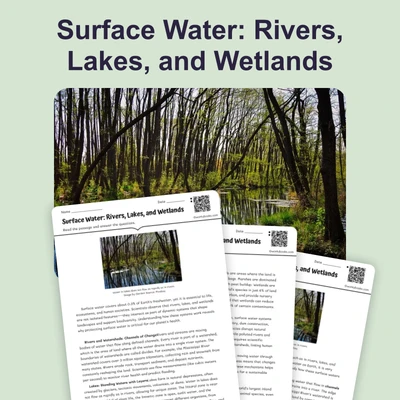
"Watershed of Roberson Creek (Haw River tributary)" by B Cooper / Wikimedia Commons (Public domain).
When rain falls on the ground, not all of it soaks into the soil. Water that does not infiltrate (soak into the ground) flows over the land surface as runoff. Runoff is water from precipitation that travels across the land instead of being absorbed. This flowing water plays an important role in shaping Earth's surface and moving materials from one place to another.
As runoff flows downhill, it follows the pull of gravity, the force that attracts all objects toward Earth's center. The water takes the path of least resistance, flowing from higher elevations to lower elevations. At first, runoff might flow in thin sheets across the land, but it quickly begins to concentrate into small channels called rills. These rills can merge together to form larger channels called gullies. Over time, with repeated rainfall events, these channels can deepen and widen into streams and rivers. The flowing water has enough energy to pick up and carry loose soil particles and rock fragments, a process called erosion. The transported material is called sediment, which includes particles of sand, silt, clay, and small rocks.
The amount of sediment that runoff can carry depends on the water's velocity, or speed. Faster-moving water has more energy and can transport larger and heavier sediment particles. When runoff slows down, it loses energy and drops the sediment it was carrying in a process called deposition. This is why you often see sand and mud deposited at the bottom of hills or along riverbanks after a heavy rain. The continuous process of erosion and deposition by runoff constantly reshapes the land surface.
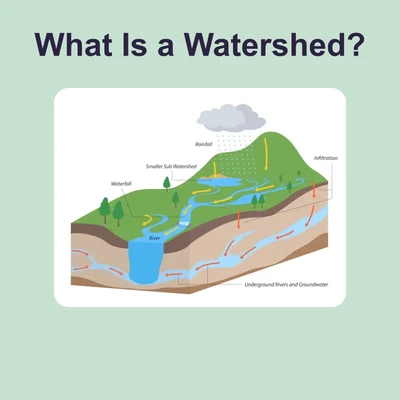
All the runoff in a particular area drains into a common outlet, such as a river, lake, or ocean. The land area that drains to a single outlet is called a watershed or drainage basin. You can think of a watershed like a bathtub—all the water that falls within the tub's edges flows toward the drain. In nature, the edges of a watershed are formed by high points in the landscape called divides or ridgelines. Rain that falls on one side of a divide flows into one watershed, while rain on the other side flows into a different watershed. Watersheds can be small, draining just a few acres into a creek, or enormous, like the Mississippi River watershed, which drains water from 31 states.
Within a watershed, all water follows gravity downhill through a network of channels. Small streams join together to form larger streams, which combine to create rivers. This branching pattern looks similar to the branches of a tree, with many small tributaries feeding into progressively larger waterways. The entire system works together to move water and sediment from high elevations to the watershed's outlet. Understanding watersheds helps scientists predict where water will flow during storms and how pollutants might spread through an area.
Human activities can significantly affect how runoff moves through watersheds. When people pave surfaces with concrete or asphalt, they create impervious surfaces that prevent infiltration. This increases the amount of runoff because water cannot soak into the ground. More runoff means faster water flow, more erosion, and greater sediment transport. Cities often experience more flooding than natural areas because of all the impervious surfaces. Managing runoff in watersheds is important for protecting water quality, preventing erosion, and reducing flood damage.
Interesting Fact: The Continental Divide in the Rocky Mountains separates watersheds that drain to the Pacific Ocean from those that drain to the Atlantic Ocean. A raindrop falling on one side of this divide might end up in the Pacific, while a drop falling just a few feet away could travel thousands of miles to the Atlantic.
Comprehension quiz (10 questions)
1. What is runoff?
2. What force causes runoff to flow downhill?
3. What is the term for particles of sand, silt, clay, and small rocks transported by water?
4. A watershed is best compared to which of the following?
5. What happens when runoff slows down?
6. Why do cities often experience more flooding than natural areas?
7. Based on the passage, what would likely happen to sediment transport if runoff velocity increases?
8. If a raindrop falls on one side of a divide, where will it flow?
9. Impervious surfaces prevent water from infiltrating into the ground.
10. All watersheds drain to the same outlet location.
Perfect for the way you teach
- Build comprehension skills
- Auto-graded quiz
- Differentiated reading
- Read together at home
- Improve fluency
- Quiet reading time
- Reading curriculum support
- Independent practice
- Track Lexile growth