What Is Oceanography
Interactive passage with audio narration, comprehension questions, and printable PDF.
By completing this purchase you agree to our Terms of Use and Privacy Policy. Your subscription renews automatically until you cancel. You can cancel anytime from your account settings. All sales are final and non-refundable. Digital content is available for download in your account immediately upon purchase.
What's included
What Is Oceanography preview and details
About this printable What Is Oceanography science reading passage, NGSS-aligned (Grades 6-8)
Sample passage and quiz from What Is Oceanography
Reading passage and comprehension quiz preview
What Is Oceanography
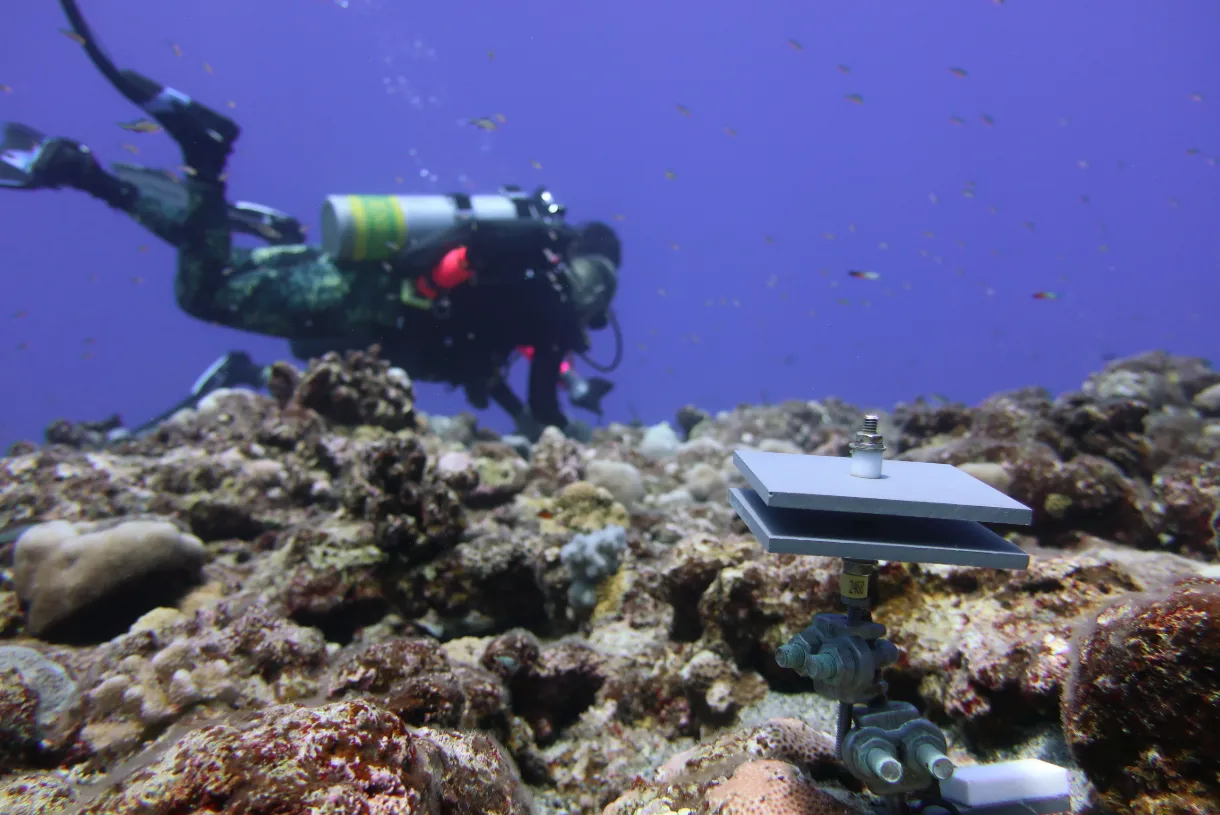
To study ocean currents, oceanographers use specialized instruments.. NOAA divers Calcification Accretion Unit Maug Island West 2022" by NOAA (uncredited) / Wikimedia Commons (Public domain).
Oceanography is the scientific study of Earth's oceans. Scientists who study the ocean are called oceanographers. They investigate everything about the ocean, including its physical features, chemical makeup, living organisms, and the landforms on the ocean floor. Oceanography helps us understand how oceans affect weather patterns, climate, and life on Earth.
Oceanographers study the ocean in four main ways. Physical oceanography focuses on ocean movements like waves, tides, and currents. Currents are continuous flows of water that move in specific directions, much like rivers flowing through the ocean. Chemical oceanography examines the substances dissolved in seawater, such as salt, oxygen, and nutrients. Geological oceanography studies the ocean floor and its features, including underwater mountains, valleys, and volcanoes. Biological oceanography investigates marine life and how organisms interact with their ocean environment.
To study ocean currents, oceanographers use specialized instruments. They deploy floating devices called drifters that move with the water and send location data to satellites. Scientists also use ships equipped with sensors that measure water temperature, speed, and direction at different depths. Understanding currents is important because they transport heat around the planet and affect global climate patterns. For example, the Gulf Stream current carries warm water from the tropics toward Europe, making temperatures there milder than other places at the same latitude.
Water chemistry is another critical area of oceanographic research. Scientists collect water samples from various ocean depths using special bottles that can be sealed underwater. They analyze these samples to measure salinity, which is the amount of salt dissolved in water. They also test for oxygen levels, nutrients like nitrogen and phosphorus, and pollutants. Changes in ocean chemistry can affect marine life and indicate environmental problems. Ocean water is not the same everywhere—salinity and temperature vary by location and depth, creating distinct water masses with different properties.
Oceanographers study marine landforms using sonar technology. Sonar sends sound waves down to the ocean floor and measures how long they take to bounce back. This creates detailed maps of underwater features. Scientists have discovered vast mountain ranges called mid-ocean ridges, deep trenches, underwater volcanoes, and flat areas called abyssal plains. They also use remotely operated vehicles (ROVs), which are underwater robots equipped with cameras and sampling tools. ROVs can explore areas too deep or dangerous for human divers, reaching depths of several thousand meters.
Modern oceanography combines fieldwork with laboratory analysis and computer modeling. Scientists spend time at sea collecting data, then analyze their findings using sophisticated equipment on shore. They create computer models to predict how ocean systems will change over time. This research helps us understand critical issues like sea level rise, ocean acidification, and the health of marine ecosystems. Oceanographers work with other scientists, including meteorologists, geologists, and biologists, to build a complete picture of how Earth's systems interact.
Interesting Fact: The ocean covers more than 70 percent of Earth's surface, yet scientists estimate that humans have explored less than 20 percent of the ocean floor. We have better maps of the surface of Mars than we do of our own ocean floor.
Comprehension quiz (10 questions)
1. What is oceanography?
2. Which tool do oceanographers use to map the ocean floor?
3. What are currents?
4. What does salinity measure?
5. Why is understanding ocean currents important?
6. What are ROVs used for?
7. Which branch of oceanography studies the ocean floor and its features?
8. How do drifters help oceanographers study currents?
9. Ocean water has the same salinity and temperature everywhere.
10. Humans have explored more than half of the ocean floor.
Perfect for the way you teach
- Build comprehension skills
- Auto-graded quiz
- Differentiated reading
- Read together at home
- Improve fluency
- Quiet reading time
- Reading curriculum support
- Independent practice
- Track Lexile growth