This comprehensive middle school science passage examines how glaciers store and release water, aligned with NGSS MS-ESS2-4 standards. Students explore glaciers as major freshwater reservoirs locked in solid form, containing approximately 69% of Earth's freshwater. The passage explains the processes of melting and calving through which glaciers release water into rivers and oceans. Real-world examples connect glacier retreat to regional water availability, helping students understand the broader distribution of Earth's freshwater resources. Audio-integrated features support diverse learners, while differentiated versions ensure accessibility for all students. Activities include comprehension questions, writing prompts, and graphic organizers that reinforce understanding of glacier dynamics and their critical role in Earth's water cycle and human communities.
Written by Workybooks TeamPublished by Workybooks
Preview
Sample passage and quiz content
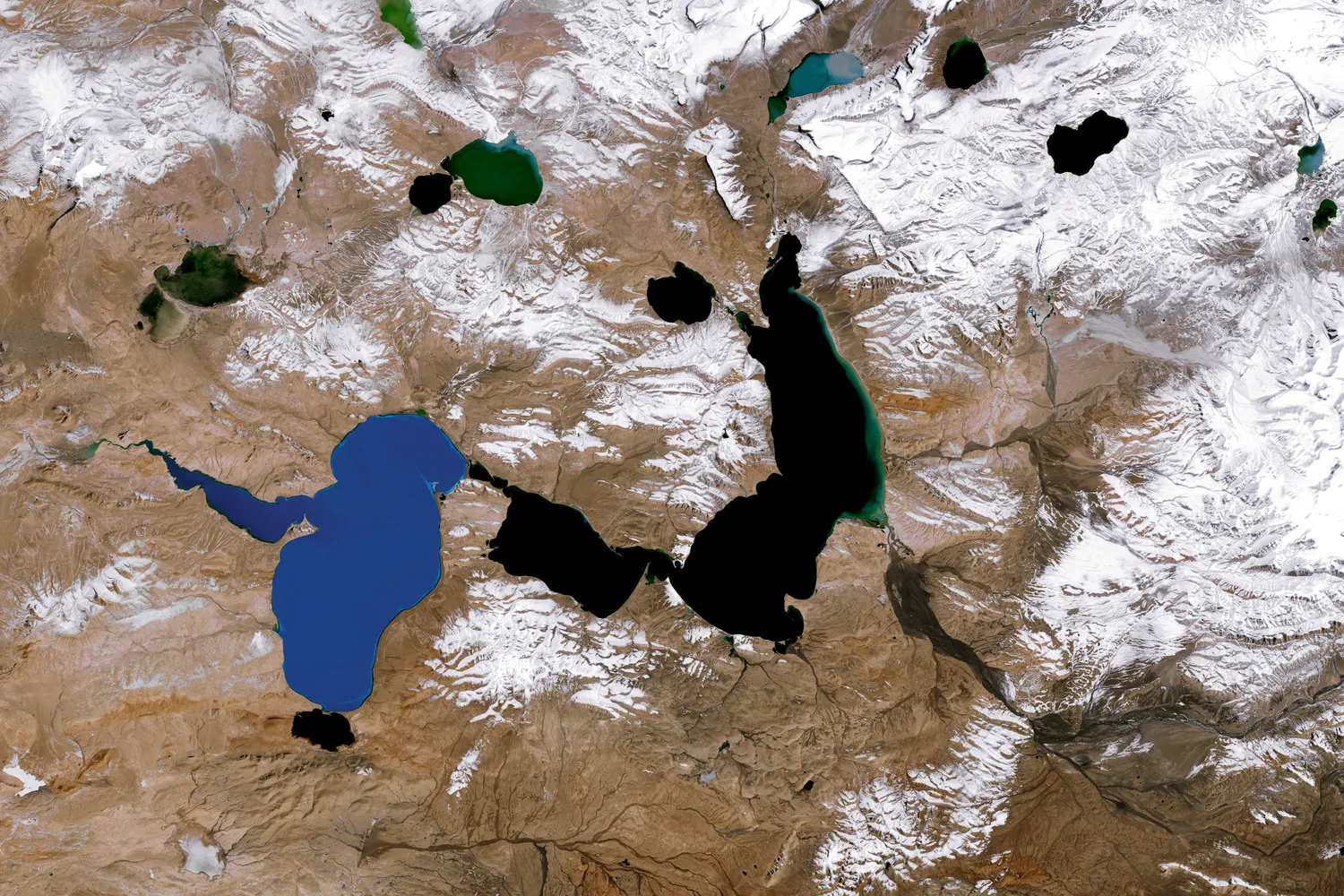
"Shrinking Glaciers and Growing Lakes 1987" by NASA Earth Observatory images by Joshua Stevens, using Landsat data from the U.S. Geological Survey. Story by Adam Voiland. / Wikimedia Commons
Glaciers are massive bodies of ice that form when snow accumulates over many years and compresses into dense ice. These frozen giants cover about 10% of Earth's land surface and hold approximately 69% of the planet's freshwater. A glacier is a slow-moving mass of ice that flows under its own weight, typically forming in areas where more snow falls in winter than melts in summer. Ice sheets, the largest type of glacier, cover entire continents like Antarctica and Greenland. Together, glaciers and ice sheets represent Earth's largest freshwater reservoirs—natural storage systems that hold water in solid form for hundreds or thousands of years.
Glaciers store water through a process that begins with snowfall. In cold regions, snow accumulates year after year in layers. The weight of new snow compresses the layers below, squeezing out air and transforming the snow into dense ice crystals. Over time, this ice becomes so thick and heavy that it begins to flow downhill like an extremely slow river. The accumulation zone at the top of a glacier is where more snow falls than melts each year, adding to the glacier's mass. This stored water remains frozen, sometimes for millennia, making glaciers incredibly important long-term water storage systems. Scientists estimate that if all of Earth's glaciers melted, global sea levels would rise by approximately 230 feet.
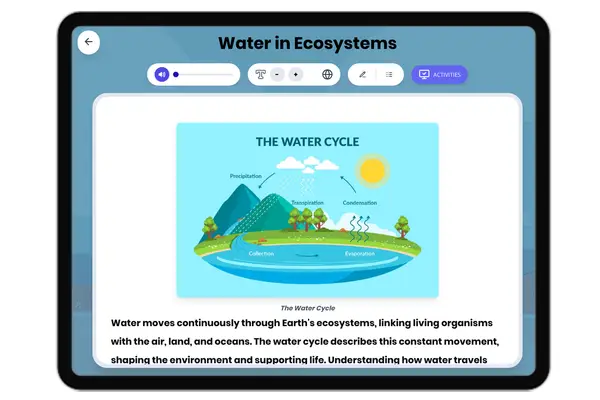
Glaciers release water through two primary processes: melting and calving. Melting occurs when temperatures rise above freezing, causing ice to turn into liquid water. This typically happens in the ablation zone, the lower part of a glacier where more ice melts each year than accumulates. Meltwater flows off the glacier surface or through internal channels, eventually reaching rivers and streams. Calving happens when chunks of ice break off from the glacier's edge, particularly where glaciers meet the ocean. These ice chunks, called icebergs, float away and gradually melt in warmer ocean waters. Both processes transfer water from solid storage back into the liquid water cycle.
The balance between accumulation and ablation determines whether a glacier grows or shrinks. When a glacier receives more snow than it loses through melting and calving, it advances. When melting and calving exceed snowfall, the glacier retreats. Currently, most glaciers worldwide are retreating due to rising global temperatures. This glacier retreat has significant consequences for regional water availability. Many communities depend on glacier meltwater for drinking water, agriculture, and hydroelectric power. For example, cities in Peru and Bolivia rely heavily on meltwater from Andean glaciers, which provide water during dry seasons when rainfall is scarce.
As glaciers retreat, they initially release more water through increased melting. However, once glaciers shrink significantly or disappear, the total water available decreases dramatically. This creates a serious problem for regions that depend on seasonal glacier meltwater. In the Himalayas, glacier retreat threatens water supplies for approximately two billion people who live in river basins fed by glacier meltwater. Rivers like the Ganges and Indus receive substantial portions of their flow from melting glaciers, especially during hot, dry months. Understanding how glaciers store and release water helps scientists predict future water availability and helps communities plan for changes in their water supplies.
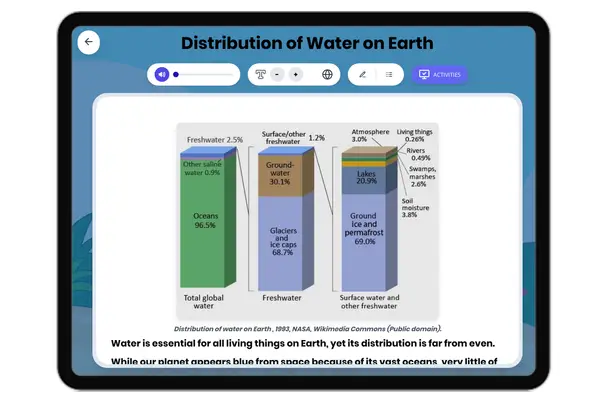
The distribution of Earth's freshwater illustrates why glaciers matter so much. Of all freshwater on Earth, approximately 69% is locked in glaciers and ice sheets, about 30% exists as groundwater, and less than 1% flows in rivers and lakes. This means glaciers hold the vast majority of Earth's freshwater, even though most of it is not immediately accessible. The slow release of glacier meltwater into rivers provides a steady water supply that many ecosystems and human populations have adapted to over thousands of years. Changes in glacier storage and release patterns therefore affect not just water quantity, but also the timing and reliability of water availability.
Interesting Fact: The Lambert Glacier in Antarctica is the world's largest glacier, measuring approximately 60 miles wide and 250 miles long. It contains enough ice to raise global sea levels by about 1.5 feet if it completely melted.
What percentage of Earth's freshwater is stored in glaciers and ice sheets?
About 30%About 50%About 69%Less than 1%
What is the accumulation zone of a glacier?
The area where more ice melts than accumulatesThe area where chunks of ice break offThe area where more snow falls than melts each yearThe area where glacier meets the ocean
What are the two primary processes by which glaciers release water?
Freezing and flowingMelting and calvingAccumulation and ablationCompression and expansion
Based on the passage, what happens when a glacier retreats significantly?
It provides more water indefinitelyIt stops melting completelyThe total water available eventually decreasesIt starts to advance again
In the context of the passage, what does the term 'ablation zone' mean?
The area where snow accumulates on a glacierThe lower part of a glacier where more ice melts than accumulatesThe area where glaciers store water permanentlyThe zone where icebergs are formed
Why do cities in Peru and Bolivia depend on Andean glaciers?
For tourism and recreationFor water during dry seasons when rainfall is scarceFor building materialsFor cooling the climate
What can be inferred about the relationship between global temperatures and glacier retreat?
Rising temperatures cause most glaciers to retreatTemperature has no effect on glaciersColder temperatures cause glaciers to retreatOnly ocean temperatures affect glaciers
If a community depends on seasonal glacier meltwater for agriculture, what would likely happen if the glacier disappeared?
Agriculture would improve with more rainfallWater availability would decrease dramaticallyThe community would have more water year-roundNothing would change
True or False: Glaciers form when snow accumulates over many years and compresses into dense ice.
TrueFalse
True or False: Most of Earth's freshwater is found in rivers and lakes.