How Do Scientists Measure Weather
Interactive passage with audio narration, comprehension questions, and printable PDF.
By completing this purchase you agree to our Terms of Use and Privacy Policy. Your subscription renews automatically until you cancel. You can cancel anytime from your account settings. All sales are final and non-refundable. Digital content is available for download in your account immediately upon purchase.
What's included
How Do Scientists Measure Weather preview and details
About this printable How Do Scientists Measure Weather science reading passage, NGSS-aligned (Grades 5-8)
Sample passage and quiz from How Do Scientists Measure Weather
Reading passage and comprehension quiz preview
How Do Scientists Measure Weather
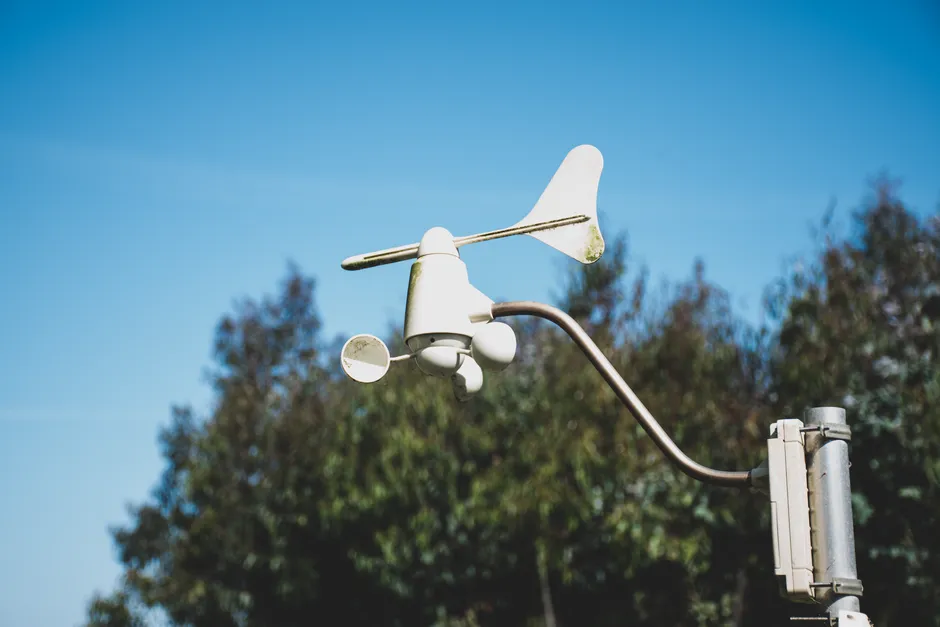
Each tool measures one specific weather condition.This white anemometer measures wind speed. Image by Lucy Meadows / Pexels.
Scientists who study weather are called meteorologists. They use special instruments to measure different parts of the atmosphere. Each tool measures one specific weather condition. Together, these instruments help meteorologists understand current weather and predict future conditions.
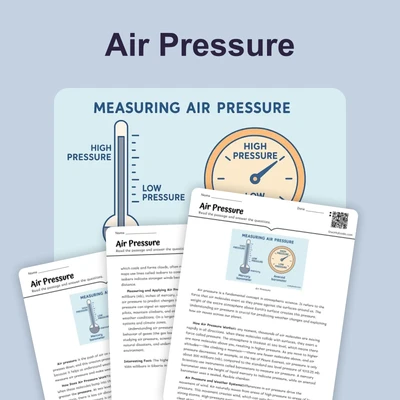
A thermometer measures air temperature using a liquid that expands when warm and contracts when cold. A barometer measures atmospheric pressure, which is the weight of air pressing down on Earth's surface. Changes in air pressure can signal approaching storms or clear weather. An anemometer measures wind speed using cups that spin faster in stronger winds. A wind vane shows wind direction by pointing toward where the wind is coming from. A hygrometer measures humidity, which is the amount of water vapor in the air. A rain gauge collects and measures precipitation that falls as rain, snow, or sleet.
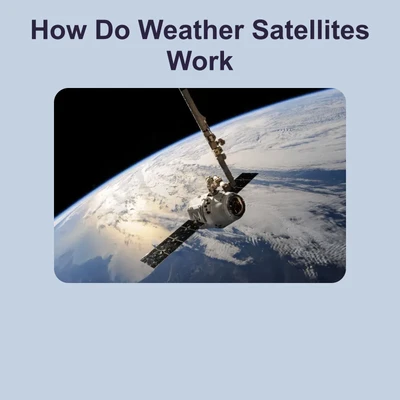
Modern meteorologists also use advanced technology to gather weather data. Weather satellites orbit Earth and take pictures of clouds and storms from space. These images help scientists track large weather systems across continents and oceans. Doppler radar sends out radio waves that bounce off precipitation particles. This technology can detect rain, snow, and even severe storms like tornadoes. Weather balloons carry instruments high into the atmosphere to measure temperature, pressure, and humidity at different altitudes. Scientists launch these balloons twice daily from hundreds of locations worldwide.
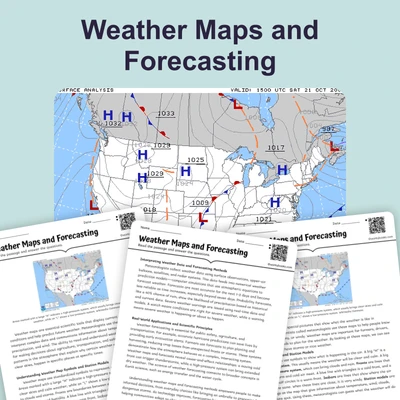
A basic weather station combines several instruments in one location. Students can build their own weather station for less than $200. These stations collect data throughout the day and night. Meteorologists compare measurements from thousands of weather stations to create weather maps and forecasts. Evidence shows that accurate measurements from multiple locations improve forecast reliability.
Interesting Fact: Weather balloons can rise more than 100,000 feet into the atmosphere before they burst. That's about three times higher than most commercial airplanes fly!
Comprehension quiz (10 questions)
1. What are scientists who study weather called?
2. Which instrument measures air pressure?
3. What does humidity measure?
4. How does an anemometer measure wind speed?
5. What technology sends out radio waves that bounce off precipitation?
6. How often do scientists launch weather balloons?
7. According to the passage, what can changes in air pressure signal?
8. Why do meteorologists compare measurements from thousands of weather stations?
9. True or False: A basic weather station that students could build costs more than $500.
10. True or False: Weather satellites take pictures of clouds and storms from space.
Perfect for the way you teach
- Build comprehension skills
- Auto-graded quiz
- Differentiated reading
- Read together at home
- Improve fluency
- Quiet reading time
- Reading curriculum support
- Independent practice
- Track Lexile growth