Why San Francisco Is Foggy
Interactive passage with audio narration, comprehension questions, and printable PDF.
By completing this purchase you agree to our Terms of Use and Privacy Policy. Your subscription renews automatically until you cancel. You can cancel anytime from your account settings. All sales are final and non-refundable. Digital content is available for download in your account immediately upon purchase.
What's included
Why San Francisco Is Foggy preview and details
About this printable Why San Francisco Is Foggy science reading passage, NGSS-aligned (Grades 5-8)
Sample passage and quiz from Why San Francisco Is Foggy
Reading passage and comprehension quiz preview
Why San Francisco Is Foggy
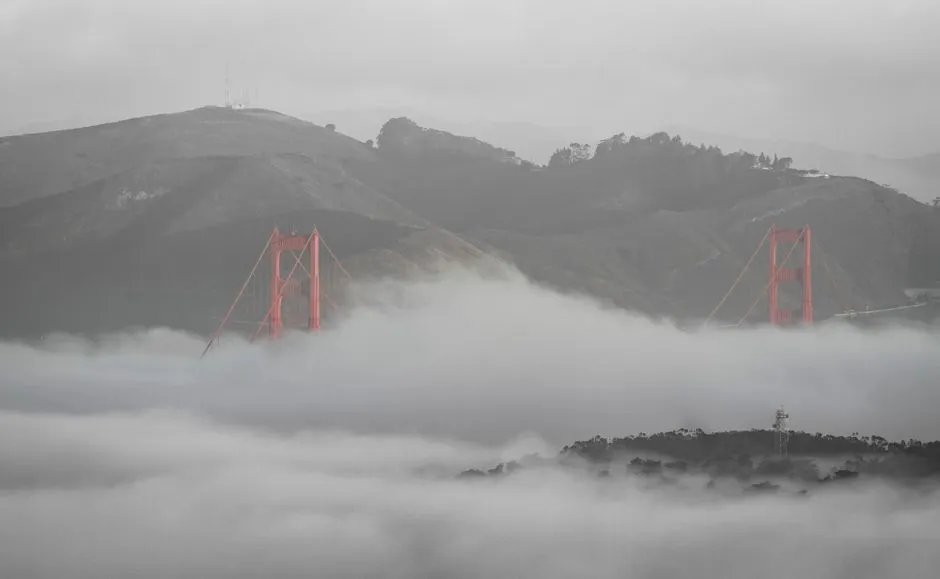
"Golden Gate Bridge emerging from fog with hills in the background by Stephen Leonardi / Pexels.
San Francisco's famous fog forms because of a unique interaction between warm air and cold ocean water. When warm Pacific air drifts eastward toward California, it passes over the California Current. This ocean current carries cold water from the north along the California coast. The warm air cools rapidly as it moves over the frigid water. Cold air cannot hold as much water vapor as warm air can. The cooling causes condensation, which means water vapor changes into tiny liquid droplets. These millions of droplets cluster together and form fog.
Scientists explain that this process creates a type of fog called advection fog. The temperature gradient between the warm air and cold water must be significant for fog to develop. Evidence shows that the California Current maintains temperatures around 50 to 55 degrees Fahrenheit year-round. Meanwhile, summer air temperatures over the Pacific Ocean can reach 70 degrees or higher. This contrast of at least 15 degrees creates ideal conditions for fog formation. The fog then drifts inland through gaps in the coastal mountains, with the Golden Gate serving as a natural pathway into the bay.
The fog has real effects on San Francisco's climate and ecosystems. Summer temperatures in the city rarely exceed 70 degrees because the fog acts like a natural air conditioner. Coastal redwood trees depend on fog for survival during dry summers. The trees capture moisture directly from fog through their needles, a process called fog drip. Scientists observe that fog can provide up to 40 percent of the water these ancient trees need. The fog also influences local culture, creating the gray, cool conditions known as June Gloom.
Understanding San Francisco's fog matters because it demonstrates how ocean currents shape regional weather patterns. The interaction between air temperature, water temperature, and condensation shows how Earth's systems connect. Climate scientists study this fog to understand how changing ocean temperatures may affect coastal climates in the future. The fog serves as a visible example of the water cycle in action and reminds us that weather results from complex interactions between the atmosphere and oceans.
Interesting Fact: San Francisco residents nicknamed the fog "Karl" through social media, and the fog now has its own Twitter account with thousands of followers who track its daily movements across the city.
Comprehension quiz (10 questions)
1. What causes San Francisco's fog to form?
2. What is condensation?
3. According to the passage, what temperature does the California Current maintain year-round?
4. What does the term 'temperature gradient' mean in the passage?
5. How does fog help coastal redwood trees?
6. Based on the passage, why do summer temperatures in San Francisco rarely exceed 70 degrees?
7. What can scientists learn by studying San Francisco's fog?
8. Why does the Golden Gate serve as a pathway for fog into the bay?
9. True or False: Cold air can hold more water vapor than warm air.
10. True or False: San Francisco residents nicknamed the fog 'Karl' through social media.
Perfect for the way you teach
- Build comprehension skills
- Auto-graded quiz
- Differentiated reading
- Read together at home
- Improve fluency
- Quiet reading time
- Reading curriculum support
- Independent practice
- Track Lexile growth