Reading Passage

Do Trees Cause Wind

Interactive passage with audio narration, comprehension questions, and printable PDF.

No ratings yet
Grades 5–8ScienceElaEnglish · SpanishInteractive · Printable
Aligned toMS-ESS2-5

What's included

Reading passage
Audio narration
Comprehension quiz
Writing activity
Glossary & flashcards
Differentiated version
Spanish translation

Do Trees Cause Wind preview and details

About this printable Do Trees Cause Wind science reading passage, NGSS-aligned (Grades 5-8)

This engaging 400-500 word reading passage addresses a common childhood misconception about wind formation. Aligned with NGSS standard MS-ESS2-5 and the disciplinary core idea MS-ESS2.D (Weather and Climate), students learn that wind results from air flowing from high-pressure areas to low-pressure areas. These pressure differences occur because of uneven solar heating across Earth's surface, not from trees swaying their branches. The passage includes real-world examples, scientific vocabulary development with 8-10 key terms, and clear explanations of atmospheric processes. Audio-integrated features support diverse learners, while differentiated versions and Spanish translations ensure accessibility for all middle school students. Activities include comprehension questions, writing prompts, and graphic organizers that help students analyze cause-and-effect relationships in Earth's weather systems.
Written by Workybooks TeamPublished by Workybooks
Preview

Sample passage and quiz from Do Trees Cause Wind

Reading passage and comprehension quiz preview

Are Trees the Cause of Wind
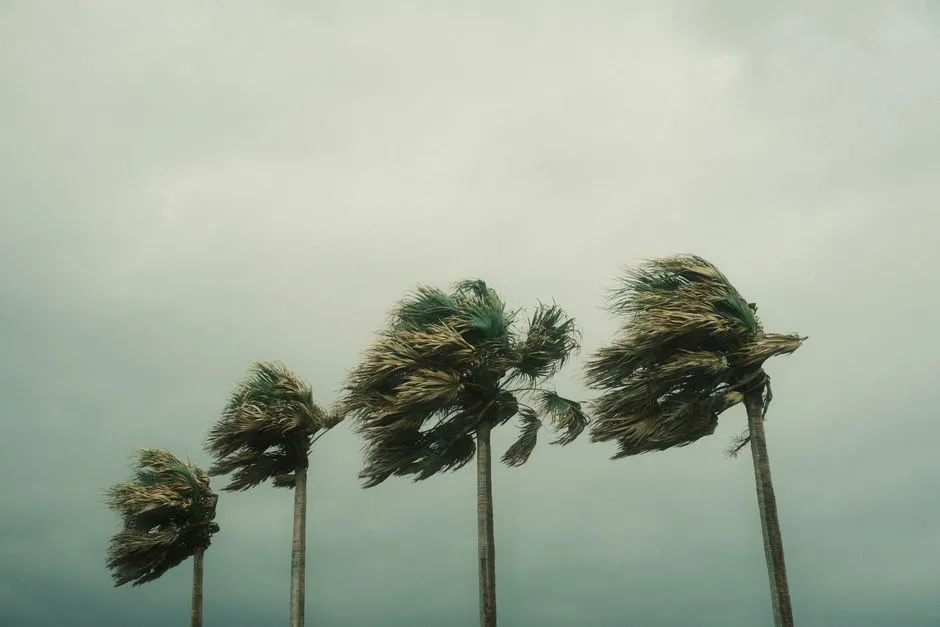
Palm trees bending under strong winds and cloudy skies during a tropical storm.

"Palm trees bending under strong winds and cloudy skies during a tropical storm." by Guilherme Christmann / Pexels.

Have you ever watched trees swaying back and forth on a breezy day? Some people think trees create wind by moving their branches. However, this idea is backward. Trees move because wind pushes them, not the other way around. Wind forms through a process that happens in Earth's atmosphere.

Wind occurs when air moves from areas of high pressure to areas of low pressure. Scientists explain that these pressure differences develop because the sun heats Earth's surface unevenly. Some areas receive more direct sunlight than others. Land near the equator gets more intense solar energy than land near the poles. Dark surfaces like asphalt absorb more heat than light-colored surfaces like snow. When air above a warm surface heats up, it becomes less dense and rises. This creates a low-pressure area below. Cooler, denser air from nearby high-pressure areas flows in to fill the space. This movement of air is what we call wind.

The process continues as Earth rotates and different surfaces heat and cool at different rates. Water and land absorb and release heat differently. Oceans warm up slowly but hold heat longer than land. These differences create convection currents in the atmosphere. Air constantly circulates as warm air rises and cool air sinks. The greater the temperature difference between two areas, the stronger the pressure difference becomes. Evidence shows that stronger pressure differences produce faster wind speeds.

Consider the sea breeze that develops along coastlines during sunny days. Land heats up faster than ocean water. Warm air over the land rises, creating low pressure. Cooler air from over the ocean moves inland to replace it. People at the beach feel this wind blowing from the water toward the land. At night, the pattern reverses because land cools faster than water. This creates a land breeze that blows from shore toward the ocean.

Understanding how wind forms matters for predicting weather patterns and understanding Earth's climate systems. Wind distributes heat and moisture around the planet. It influences temperature, precipitation, and storm development. Wind also affects ocean currents and helps shape landscapes through erosion. Trees and other objects respond to wind, but they do not cause it. The real cause lies in the interaction between solar energy and Earth's atmosphere.

Interesting Fact: The fastest wind speed ever recorded on Earth's surface was 253 miles per hour during Tropical Cyclone Olivia in 1996. This powerful wind resulted from an extreme pressure difference in the atmosphere, not from any trees waving their branches!

Comprehension quiz (10 questions)

1. According to the passage, what causes wind to form?

Trees waving their branches back and forth
Air moving from high-pressure areas to low-pressure areas
Ocean waves pushing air toward the land
Earth's rotation creating spinning air currents

2. Why does the sun create pressure differences in Earth's atmosphere?

The sun is too far away to heat Earth evenly
The sun moves around Earth at different speeds
The sun heats Earth's surface unevenly
The sun only shines during certain seasons

3. What does the term 'convection currents' mean in this passage?

The circular movement of air caused by warm air rising and cool air sinking
The way trees move when wind blows through their branches
The path that storms follow across the ocean
The temperature difference between day and night

4. What is the term for water that falls from clouds to Earth's surface?

Erosion
Convection
Precipitation
Atmosphere

5. Based on the passage, what can you infer about areas with greater temperature differences?

They have no wind at all
They produce stronger winds
They have more trees
They receive less sunlight

6. Why does a sea breeze blow from the ocean toward land during the day?

The ocean water pushes air toward shore
Land heats faster than water, creating low pressure over land
Trees along the coast pull the air inland
The moon's gravity pulls air from sea to land

7. How does understanding wind formation help people?

It helps predict weather patterns and understand climate
It helps trees grow taller and stronger
It prevents all storms from forming
It stops erosion from happening

8. If you wanted to apply the concept of pressure differences to predict wind, what would you need to know?

How many trees are in an area
The color of the ground surface
The temperature differences between two locations
The age of the rocks in the region

9. True or False: Trees create wind by waving their branches.

True
False

10. True or False: Oceans warm up more slowly than land but hold heat longer.

True
False
Who it's for

Perfect for the way you teach

Teachers
  • Build comprehension skills
  • Auto-graded quiz
  • Differentiated reading
Parents
  • Read together at home
  • Improve fluency
  • Quiet reading time
Homeschoolers
  • Reading curriculum support
  • Independent practice
  • Track Lexile growth
Topics

Reviews & Ratings

No reviews yet. Be the first to share your experience!

More reading you might love

19 more
Passage
Cold Fronts and Warm Fronts - reading educational content
Grades 5–8

Cold Fronts and Warm Fronts

weather and climate · MS-ESS2-5+1

$1.50
Passage
The Intertropical Convergence Zone (ITCZ): Earth's Weather Belt - reading educational content
Grades 5–8

The Intertropical Convergence Zone (ITCZ): Earth's Weather Belt

science · MS-ESS2-5+2

Free
Passage
What Is the Antarctic Polar Vortex - reading educational content
Grades 3–7

What Is the Antarctic Polar Vortex

weather and climate · MS-ESS2-5

Free
Passage
What Causes the Temperature to Decrease with Height in the Troposphere - reading educational content
Grades 3–7

What Causes the Temperature to Decrease with Height in the Troposphere

weather and climate · MS-ESS2-5

Free
Passage
Raining Frogs - reading educational content
Grades 5–8

Raining Frogs

life science · MS-ESS2-5

Free
Passage
How Adiabatic Cooling Makes Clouds - reading educational content
Grade 6

How Adiabatic Cooling Makes Clouds

weather and climate · MS-ESS2-5

$1.50
Passage
Hurricanes and Tropical Cyclones - reading educational content
Grades 5–8

Hurricanes and Tropical Cyclones

weather and climate · MS-ESS3-2+1

$1.50
Passage
Tornadoes - reading educational content
Grades 5–8

Tornadoes

weather and climate · MS-ESS3-2+1

$1.50
Passage
Weather Factors - reading educational content
Grades 5–8

Weather Factors

weather and climate · MS-ESS2-5

$1.50
Passage
Air Pressure - reading educational content
Grades 5–8

Air Pressure

science · MS-ESS2-5

$1.50
Passage
Wind - reading educational content
Grades 5–8

Wind

science · MS-ESS2-5+1

$1.50
Passage
Clouds and Precipitation - reading educational content
Grades 5–8

Clouds and Precipitation

weather and climate · MS-ESS2-5

$1.50
Passage
Air Masses - reading educational content
Grades 5–8

Air Masses

weather and climate · MS-ESS2-5

$1.50
Passage
Weather Maps and Forecasting - reading educational content
Grades 5–8

Weather Maps and Forecasting

weather and climate · MS-ESS2-5+1

$1.50
Passage
Weather Fronts - reading educational content
Grades 5–8

Weather Fronts

weather and climate · MS-ESS2-5

$1.50
Passage
What Is Meteorology - reading educational content
Grades 6–8

What Is Meteorology

earth and space science · MS-ESS2-5

$1.50
Passage
Why San Francisco Is Foggy - reading educational content
Grades 5–8

Why San Francisco Is Foggy

weather and climate · MS-ESS2-5

$1.50
Passage
How Do Scientists Measure Weather - reading educational content
Grades 5–8

How Do Scientists Measure Weather

weather and climate · MS-ESS2-5

$1.50
Passage
How Do Weather Satellites Work - reading educational content
Grades 5–8

How Do Weather Satellites Work

weather and climate · MS-ESS2-5

$1.50
Copyright © 2026 Workybooks. Made with ♥ in California.