How Does Climate Change Cause Habitat Loss? — Reading Comprehension
Rate this
Premium Resource
Present
Present in classroom. No work saved
Assign
Classroom with student accounts, Track progress
Quick Play
No student accounts, assign with a link
Grades
6
PRINT+DIGITAL RESOURCE
This learning resource is available in interactive and printable formats. The interactive worksheet can be played online and assigned to students. The Printable PDF version can be downloaded and printed for completion by hand.
This audio-integrated passage, "How Does Climate Change Cause Habitat Loss?", is designed for Grade 6 students and directly addresses NGSS MS-LS2-4. It explains how changes to physical components of an ecosystem, driven by climate change and global warming, lead to the destruction of natural habitats. Students will learn about the impact on animal populations and biodiversity. Key terms like 'habitat loss', 'global warming', and 'ecosystem' are defined to ensure clear understanding. This resource includes engaging activities to deepen comprehension of how climate change causes habitat loss and affects species.
CONTENT PREVIEW
Expand content preview
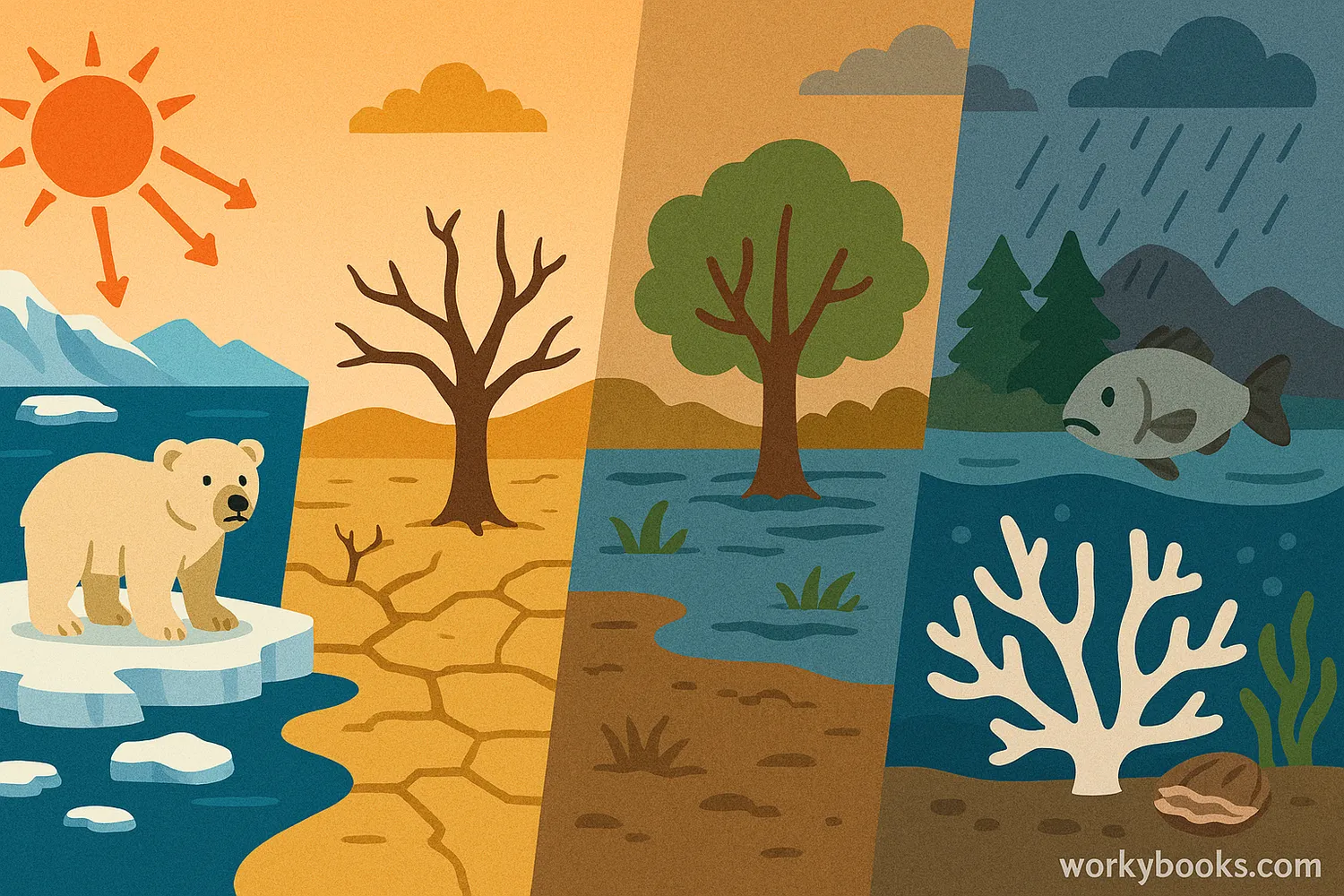
Climate change impacts: ice loss, drought, floods, acidic seas.
Climate change is a big problem that affects our planet in many ways. One of the most serious effects is habitat loss. A habitat is the natural home or environment of an animal, plant, or other organism. When a habitat is destroyed or changed too much, the living things that depend on it can no longer survive there.
So, how does climate change lead to habitat loss? It mostly comes down to global warming, which is the long-term heating of Earth's climate system observed since the pre-industrial period (between 1850 and 1900) due to human activities, primarily fossil fuel burning, which increases heat-trapping greenhouse gas levels in Earth's atmosphere. This warming causes many changes. For example, rising temperatures can melt glaciers and polar ice caps. This is a huge problem for animals like polar bears and seals, whose habitats are made of ice. As the ice melts, they lose their hunting grounds and places to raise their young, leading to a decrease in their populations.
Another way climate change causes habitat loss is through changes in weather patterns. Some areas experience more severe droughts, which means long periods without rain. Forests and grasslands dry out, making it impossible for many plants and animals to live there. Other areas might face more frequent and intense floods. Flooding can wash away homes, destroy plant life, and make habitats unsuitable for species that cannot adapt quickly. These extreme weather events directly alter ecosystems, which are communities of living organisms interacting with their physical environment.
Ocean acidification is another critical impact of climate change. As the ocean absorbs more carbon dioxide from the atmosphere, it becomes more acidic. This change harms marine life, especially creatures with shells like corals and oysters. Coral reefs are vital habitats for thousands of fish species, and their destruction due to acidification means a massive loss of shelter and food for these animals. This reduces biodiversity, which is the variety of life on Earth.
The loss of habitats means fewer places for animals and plants to live, find food, and reproduce. This can cause species to become endangered or even extinct. Protecting habitats is crucial for maintaining healthy ecosystems and the balance of nature. Understanding how climate change impacts these natural homes helps us work towards solutions to protect our planet's diverse life.
Interesting Fact: Scientists estimate that over 1 million species are currently at risk of extinction due to habitat loss, climate change, and other human activities.
What is a habitat?
Animal's homeA type of foodA human cityA big ocean
What is global warming primarily caused by?
Human activitiesVolcano eruptionsMoon phasesOcean currents
How does melting ice impact polar bears?
More places to swimLose hunting groundsEasier to find matesBetter food sources
How do droughts affect habitats?
Increase water levelsDry out plantsAttract more animalsMake oceans warmer
What does ocean acidification primarily harm?
Fish with scalesCreatures with shellsLarge whalesSeaweed growth
Why are coral reefs important habitats?
Provide oxygenHome for fishFilter ocean waterCause ocean currents
What happens to species when habitats are lost?
Increase in numbersBecome endangeredAdapt instantlyMigrate to Mars
Protecting habitats is important for maintaining healthy ecosystems.
TrueFalse
Which term means 'the variety of life on Earth'?
PopulationBiodiversityEcosystemAcidification
How does reduced biodiversity affect an ecosystem?
Makes it strongerMakes it more stableMakes it less resilientHas no impact
Perfect For:
👩🏫 Teachers
• Reading comprehension practice
• Auto-graded assessments
• Literacy skill development
👨👩👧👦 Parents
• Reading practice at home
• Comprehension improvement
• Educational reading time
🏠 Homeschoolers
• Reading curriculum support
• Independent reading practice
• Progress monitoring
Reading Features:
📖
Reading Passage
Engaging fiction or nonfiction text
❓
Comprehension Quiz
Auto-graded questions
📊
Instant Feedback
Immediate results and scoring
📄
Printable Version
Download for offline reading
🔊
Read Aloud
Voice-over with word highlighting
Reviews & Ratings
No reviews yet. Be the first to share your experience!
Related Content
What Is Earth Science?
This engaging middle school science passage introduces students to the field of Earth science, aligning with NGSS standa...
MS-ESS1MS-ESS2MS-ESS3SEP
Tools and Technology in Earth Science
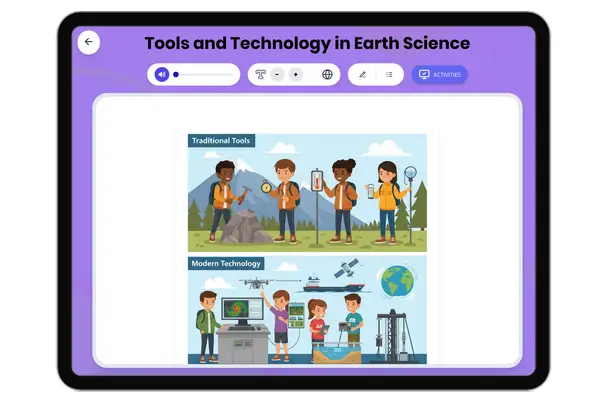
This middle school science reading passage explores the wide range of tools and technologies used in Earth science, from...
MS-ESS2-2MS-ESS3-2MS-ETS1-1MS-PS4-3
Transportation and Climate Change
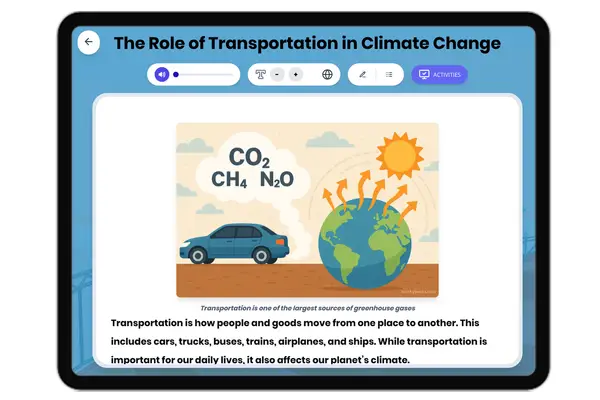
This engaging science passage for grades 6-8 explores the vital role that transportation plays in climate change. Studen...
Climate Change: Solutions and Mitigation
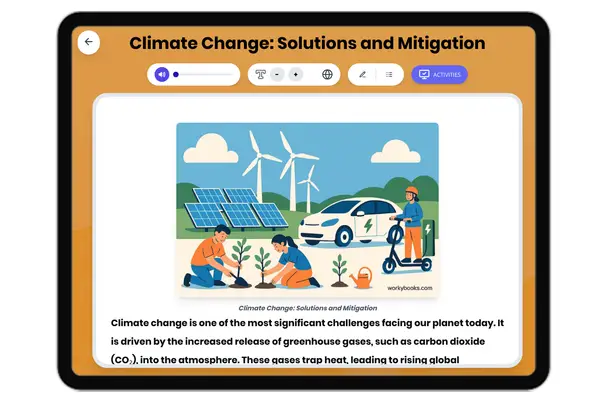
This passage explores scientific solutions and mitigation strategies for climate change, designed for middle school scie...
MS-ESS3-4MS-ESS3-5
Extreme Weather and Climate Change
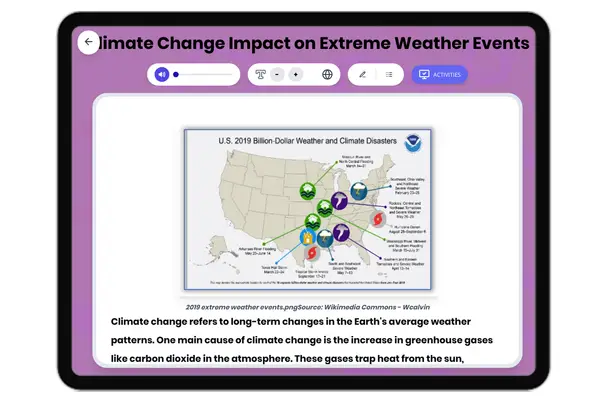
This Grade 6-8 science passage, aligned to NGSS standards, explores the impact of climate change on extreme weather even...
Climate Change: Causes
This comprehensive middle school science passage explores the causes of climate change by examining both natural and hum...
MS-ESS3-5MS-LS2-4
Effects of Climate Change
This comprehensive middle school science passage explores the effects of climate change on Earth's systems and life, ali...
MS-ESS3-5MS-LS4-4
Scientific Inquiry in Earth Science
This passage explores scientific inquiry in Earth science for grades 6-8, aligned with NGSS standards MS-ESS1-4, MS-ESS2...
MS-ESS1-4MS-ESS2-1MS-ESS3-5SEP
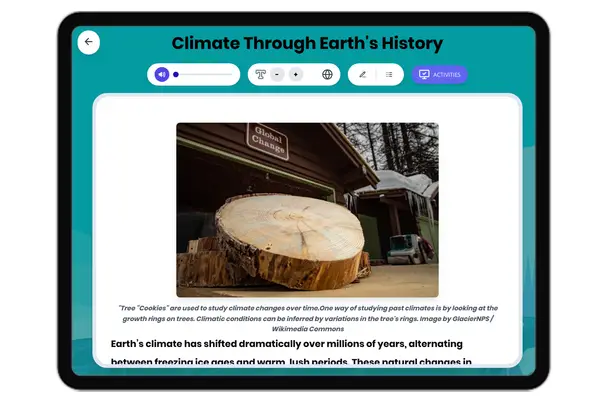
Climate Through Earth's History
This engaging passage for grades 6-8 explores how Earth's climate has naturally changed over millions of years, highligh...
MS-ESS1-4MS-ESS2-6
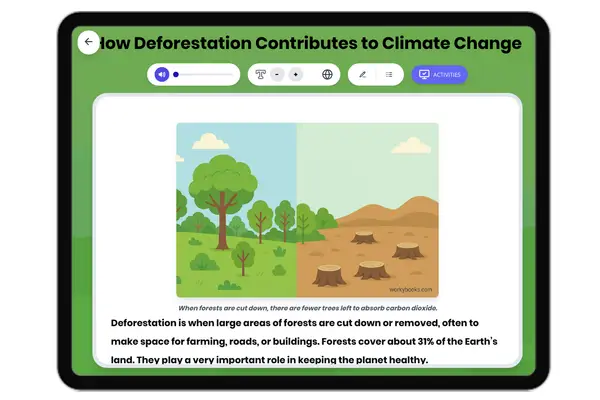
How Deforestation Contributes to Climate Change
This engaging science passage, aligned with NGSS standards, explains how deforestation contributes to climate change for...
Climate Change: Vulnerable Ecosystems
This middle school science passage, aligned with NGSS standards MS-ESS3-5 and MS-LS2-4, helps students understand how cl...
MS-ESS3-5MS-LS2-4
Climate Change Bird Migration
This educational passage, audio integrated, explores how climate change affects bird migration patterns. Students will l...
MS-LS2-4: CONSTRUCT AN ARGUMENT SUPPORTED BY EMPIRICAL EVIDENCE THAT CHANGES TO PHYSICAL OR BIOLOGICAL COMPONENTS OF AN ECOSYSTEM AFFECT POPULATIONS.
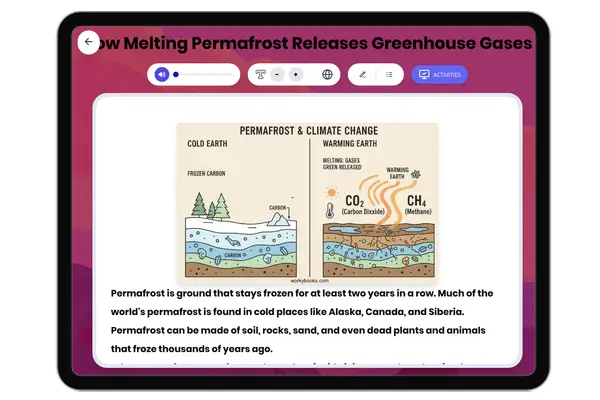
Permafrost and Climate Change
This engaging, NGSS-aligned science passage for grades 6-8 explores how melting permafrost releases greenhouse gases, im...
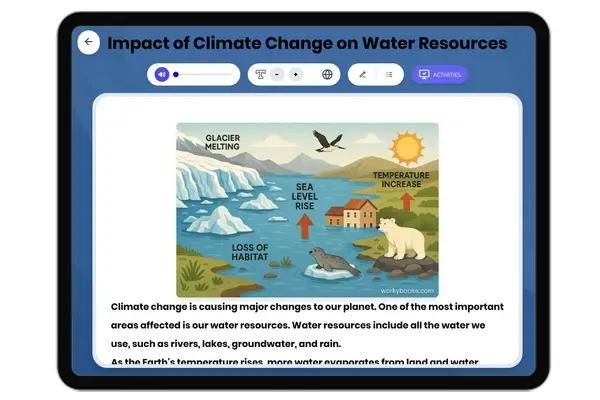
Impact of Climate Change on Water Resources
This engaging science passage for grades 6-8 explores the impact of climate change on water resources, aligning with NGS...
Heatwaves and Climate Change
This educational resource features an engaging, audio-integrated reading passage titled 'Heatwaves and Climate Change,' ...
Addressing Climate Change
This middle school science passage, aligned with NGSS standards MS-ESS3-4 and MS-ESS3-5, explores the mechanisms and sol...
MS-ESS3-4MS-ESS3-5
How Climate Change Affects Food Security
This grade 6-8 science passage, aligned with the NGSS standards, explores how climate change affects food security aroun...
What Is The Difference Between Global Warming And Climate Change?
This educational content, audio integrated, explores the crucial differences between global warming and climate change. ...
Climate Refugees
This engaging science passage for grades 6-8 introduces students to the topic of climate refugees and human migration. A...
Climate Change: Species Responses
This middle school science passage explores how species respond to climate change, aligning with NGSS standards MS-LS4-4...