How Does Permafrost Affect The Tundra Environment? — Reading Comprehension
Rate this
Premium Resource
Present
Present in classroom. No work saved
Assign
Classroom with student accounts, Track progress
Quick Play
No student accounts, assign with a link
Grades
6
PRINT+DIGITAL RESOURCE
This learning resource is available in interactive and printable formats. The interactive worksheet can be played online and assigned to students. The Printable PDF version can be downloaded and printed for completion by hand.
This educational reading passage, titled 'How Does Permafrost Affect The Tundra Environment?', provides a comprehensive look at the crucial role permafrost plays in the Arctic tundra. Designed for a 6th-grade reading level, it defines key terms like 'permafrost,' 'tundra,' and 'greenhouse gases,' and explores the complex relationship between frozen ground and the unique ecosystems it supports. The passage discusses the impacts of rising global temperatures, including the thawing of permafrost, the release of stored carbon, and the potential effects on the environment and human communities. It aligns with NGSS MS-ESS3-3, which focuses on applying scientific principles to design methods for monitoring and minimizing human impact on the environment. The content is audio-integrated, making it accessible for diverse learners and enhancing comprehension through auditory support. Students will learn about the delicate balance of the tundra and the importance of understanding environmental changes.
CONTENT PREVIEW
Expand content preview
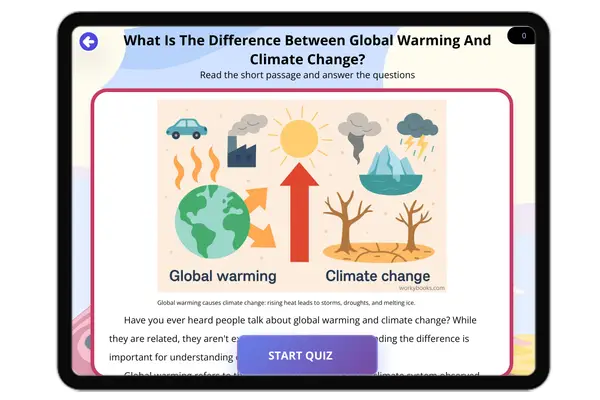
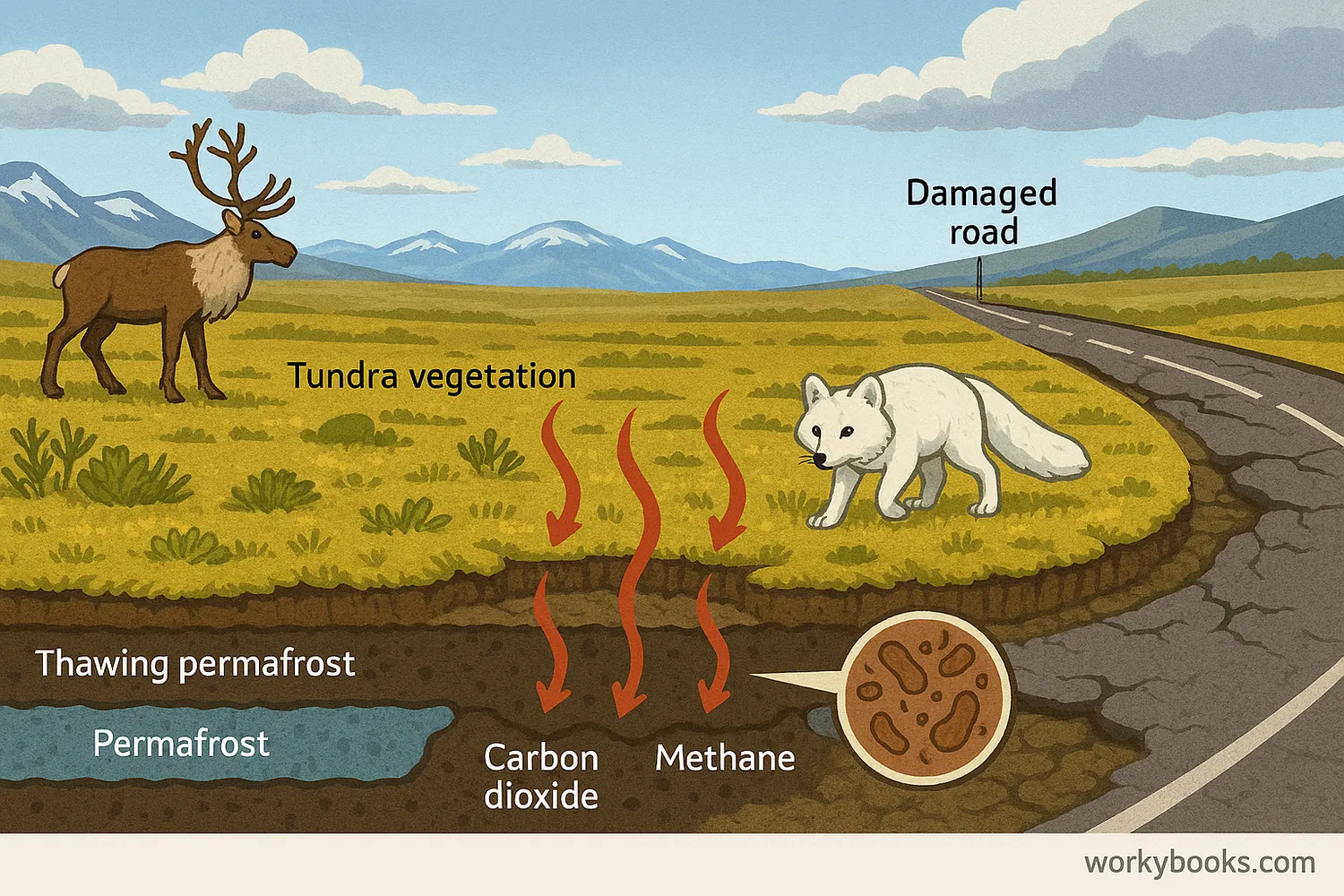
Thawing permafrost releases gases and destabilizes the tundra, impacting ecosystems and infrastructure.
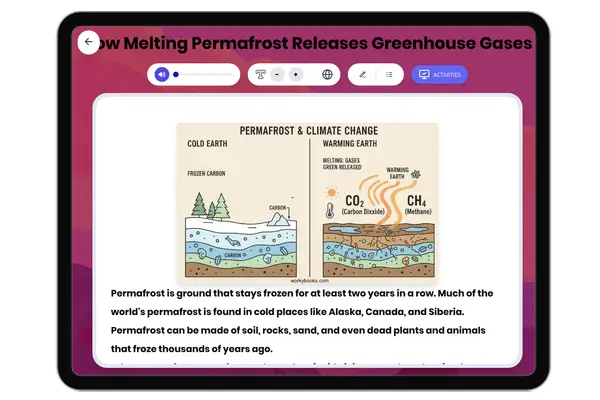
The tundra is a vast, treeless plain, mostly found in the Arctic regions of the world. It's known for its extremely cold temperatures, strong winds, and short growing seasons. One of the most important features of the tundra is permafrost. Permafrost is ground that stays frozen for at least two years in a row, and often for thousands of years. It can be made of soil, rock, or sediment, and often contains ice.
Imagine a giant freezer right under the ground. That's essentially what permafrost is! This frozen ground plays a huge role in the tundra ecosystem. Many plants, like mosses and lichens, grow on top of the permafrost, and their roots can't go very deep because of the frozen layer. This shallow root system means the plants in the tundra are often small and close to the ground. Animals like caribou and arctic foxes have adapted to live in this harsh environment, often relying on these specific plants for food.
But what happens when this frozen ground starts to melt? Due to climate change and rising global temperatures, permafrost is beginning to thaw in many parts of the Arctic. When permafrost thaws, it can cause the ground to become unstable. This instability can lead to landslides and a sinking of the ground, which damages roads, buildings, and other human structures. This has a significant impact on local communities and their infrastructure.
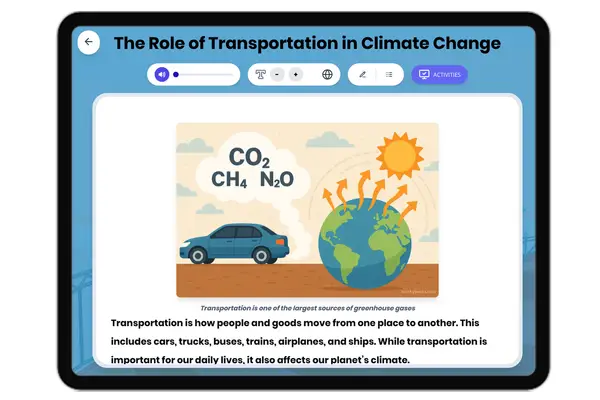
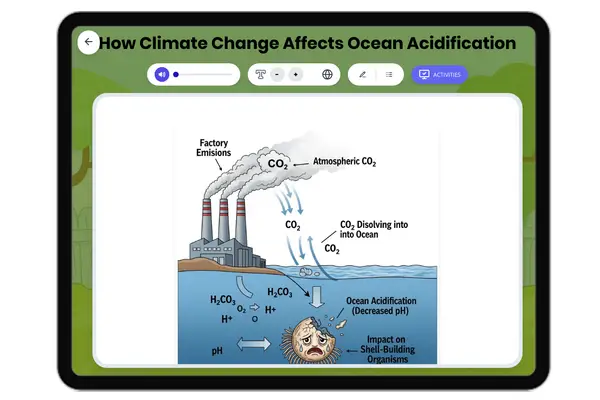
Even more concerning is what's trapped inside the permafrost. For thousands of years, dead plants and animals have been frozen within this ground. This organic material contains a lot of carbon. When the permafrost thaws, tiny organisms called microbes become active and start to decompose this material. This decomposition releases greenhouse gases, such as carbon dioxide and methane, into the atmosphere. These gases trap heat and contribute to even more global warming, creating a cycle of thawing and warming. This release of stored carbon can accelerate climate change, making it a critical environmental issue.
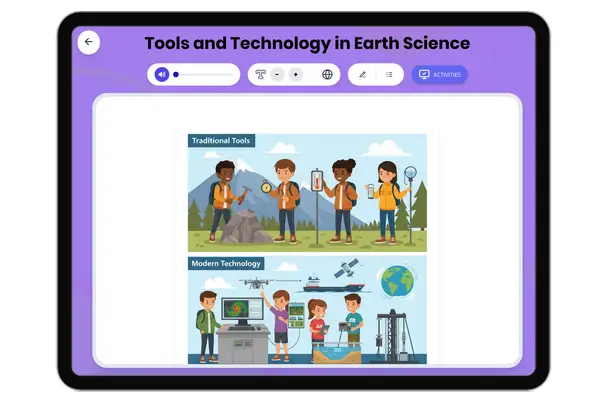
Scientists are actively studying permafrost to understand these changes better. Monitoring the rate of permafrost thaw and the release of greenhouse gases is essential. Understanding how permafrost affects the tundra is key to predicting future environmental changes and finding ways to minimize human impact on this fragile and unique part of our planet. Protecting the tundra environment is crucial for maintaining global climate stability.
Interesting Fact: Some permafrost is so old that scientists have found perfectly preserved woolly mammoths and other ancient animals frozen within it!