How Does Sea Level Rise Affect Wildlife? — Reading Comprehension
Rate this
Premium Resource
Present
Present in classroom. No work saved
Assign
Classroom with student accounts, Track progress
Quick Play
No student accounts, assign with a link
Grades
6
PRINT+DIGITAL RESOURCE
This learning resource is available in interactive and printable formats. The interactive worksheet can be played online and assigned to students. The Printable PDF version can be downloaded and printed for completion by hand.
This educational content features a reading passage titled 'How Does Sea Level Rise Affect Wildlife?' designed for Grade 6 students. It explores the critical topic of how rising sea levels impact coastal ecosystems and the diverse animal populations that depend on them. The passage, enriched with relevant SEO keywords and audio integration, explains concepts like habitat loss, saltwater intrusion, and climate change in simple language, defining key terms along the way. Aligned with NGSS MS-LS2-4, which focuses on how changes to ecosystems affect populations, this resource includes a reading comprehension quiz, a glossary of important vocabulary, and short answer questions to deepen understanding of environmental science.
CONTENT PREVIEW
Expand content preview
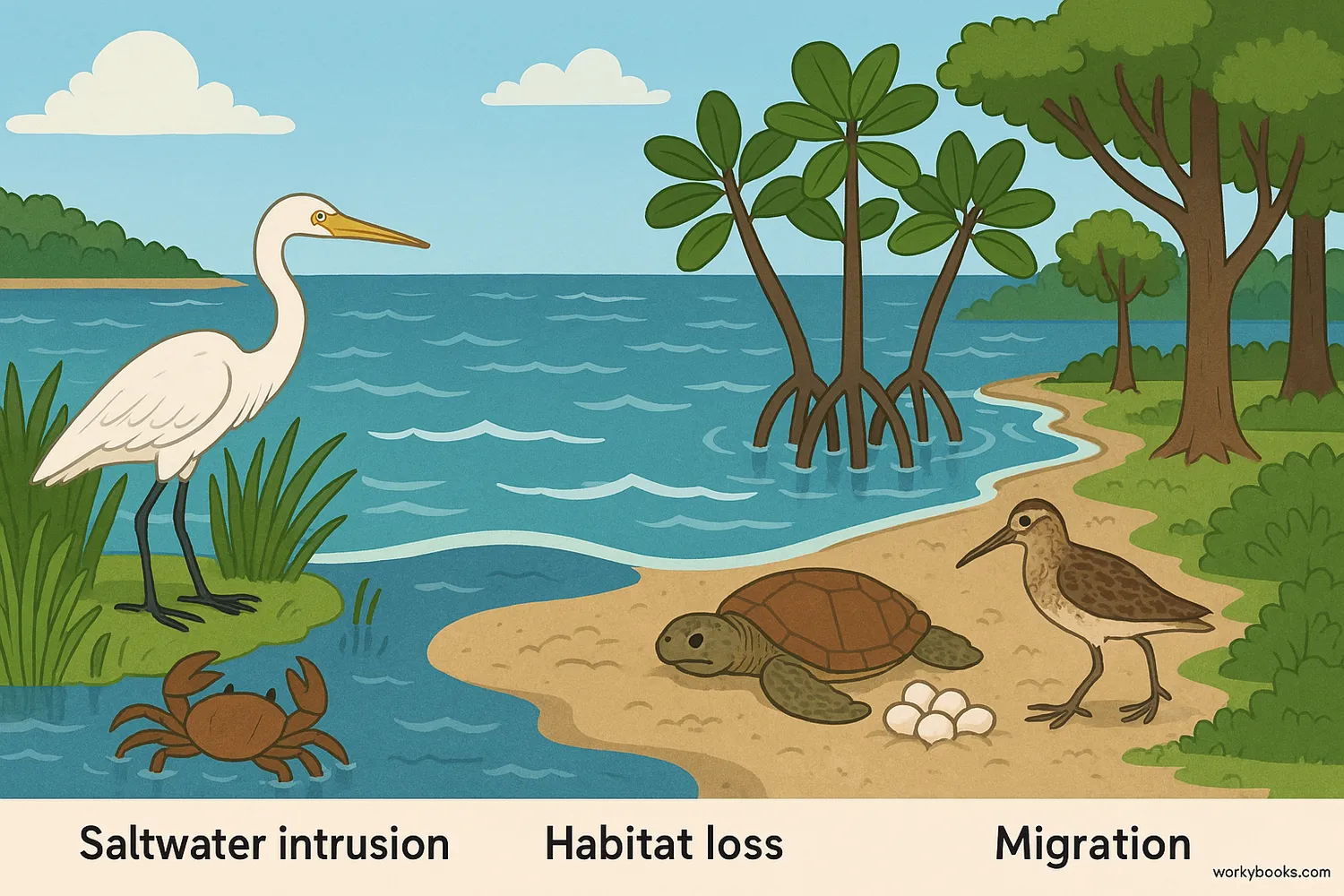
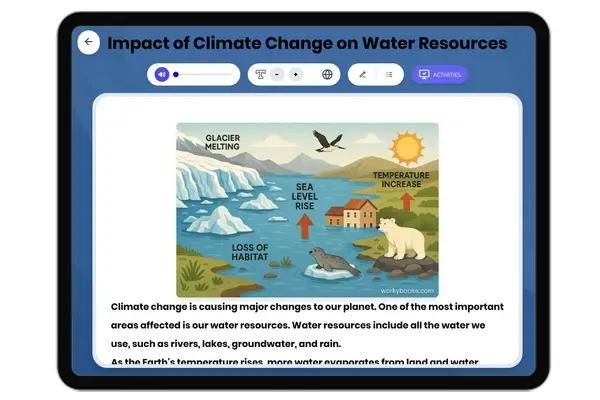
Rising seas threaten nesting beaches, wetlands, and forests, forcing wildlife to relocate or perish.
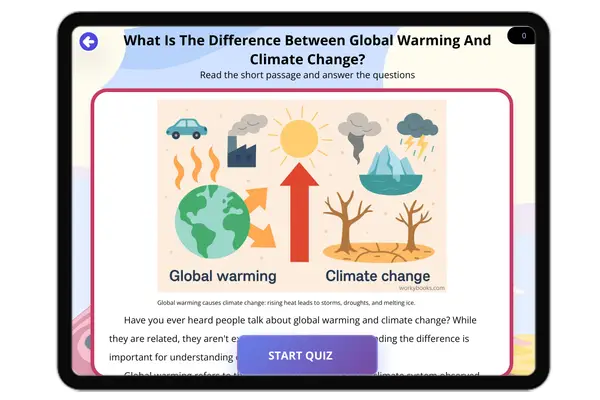
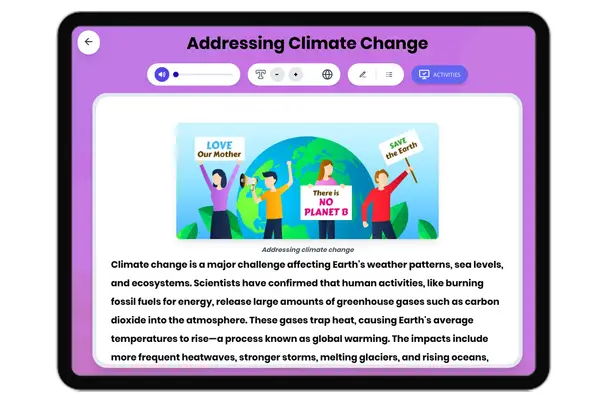
Our planet's climate is changing, and one of the most significant effects is sea level rise. This means the average height of the ocean's surface is slowly getting higher. It's mainly caused by two things: warmer temperatures making ocean water expand, and melting glaciers and ice sheets adding more water to the oceans. But what does this mean for the animals and plants that live near the coast? How does sea level rise affect wildlife?
One of the biggest impacts is habitat loss. Many animals, like certain birds, crabs, and sea turtles, rely on specific coastal areas such as beaches, marshes, and mangrove forests for survival. As sea levels rise, these areas become flooded more often or are completely submerged. For example, sea turtles lay their eggs on sandy beaches. If these beaches are underwater, they lose their nesting grounds, making it harder for baby turtles to hatch and survive. Coastal wetlands, which are important nurseries for many fish and shellfish, also shrink or disappear.
Another problem is saltwater intrusion. Normally, freshwater wetlands and soil near the coast are protected from the salty ocean water. But as sea levels rise, the saltwater pushes further inland. This can harm freshwater plants and animals that cannot survive in salty conditions. For instance, trees in coastal forests can die when their roots are exposed to too much salt, changing the entire forest ecosystem. This also affects the freshwater sources that many animals, and even humans, depend on.
Animals often have to move to new areas to find food, shelter, or breeding grounds. This is called migration. However, with rising sea levels, suitable new habitats might not be available, especially if there are human developments like roads or buildings blocking their path. This can lead to increased competition for resources in the remaining safe areas, and some populations might not survive these changes. Understanding these impacts is crucial for coastal conservation efforts and protecting biodiversity for future generations. Sea level rise is a serious environmental issue, and its effects on wildlife are a key part of climate change studies.
Interesting Fact: Even a small increase in sea level can have a huge impact because many coastal areas are very flat, meaning a little bit of vertical rise can cover a large horizontal area.
What are two main causes of sea level rise?
Warm water expanding, melting iceOcean currents, rainVolcanoes, earthquakesWind, solar flares
What is a major problem for sea turtles due to sea level rise?
Losing nesting beachesToo much foodMore predatorsCleaner water
Saltwater intrusion primarily affects which type of habitat?