How Individuals Can Reduce Their Carbon Footprint
Interactive passage with audio narration, comprehension questions, and printable PDF.
By completing this purchase you agree to our Terms of Use and Privacy Policy. Your subscription renews automatically until you cancel. You can cancel anytime from your account settings. All sales are final and non-refundable. Digital content is available for download in your account immediately upon purchase.
What's included
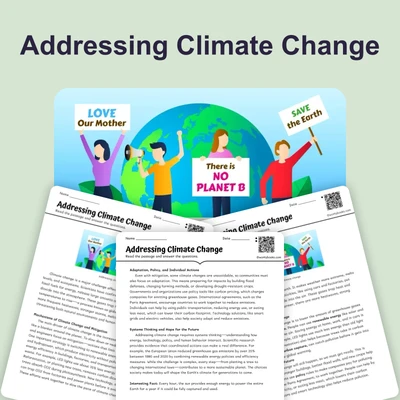
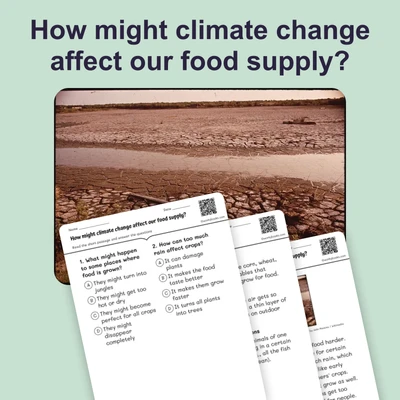
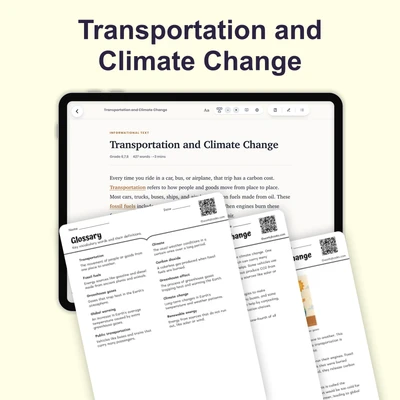
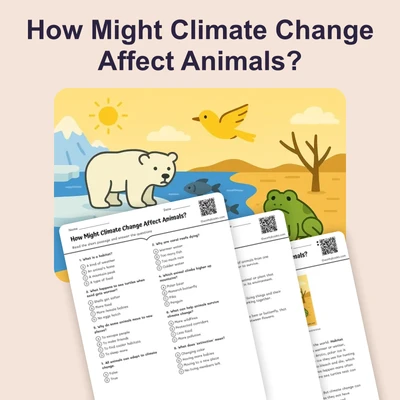
How Individuals Can Reduce Their Carbon Footprint preview and details
About this printable How Individuals Can Reduce Their Carbon Footprint science reading passage, NGSS-aligned (Grades 6-8)
Sample passage and quiz from How Individuals Can Reduce Their Carbon Footprint
Reading passage and comprehension quiz preview
How to Reduce Your Carbon Footprint
Your carbon footprint measures the total greenhouse gases you produce through daily activities. Scientists explain that reducing your carbon footprint helps slow climate change. The good news is that you can make a real difference through everyday choices. Evidence shows that focusing on a few key areas creates the biggest impact.
Energy use at home represents one of the largest sources of personal carbon emissions. Simple actions can reduce this footprint significantly. Switching off lights when you leave a room saves electricity. Unplugging devices and chargers when not in use prevents phantom energy waste. Adjusting your thermostat by just a few degrees makes a difference too. Wearing warmer clothes in winter and using fans in summer reduces heating and cooling needs. These small changes add up over time.
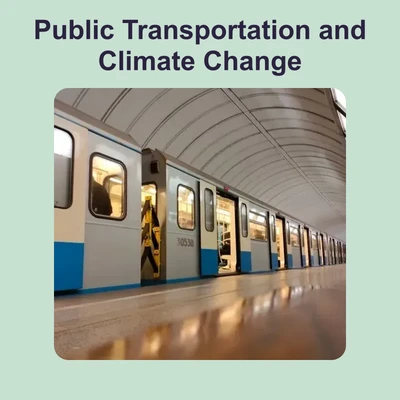
Transportation choices also matter greatly for your carbon footprint. Walking and biking produce zero emissions while keeping you healthy. Public transit like buses and trains carries many people at once. This means lower emissions per person compared to individual cars. Carpooling with friends or family reduces the number of vehicles on the road. Air travel creates especially high emissions, so choosing fewer flights when possible helps. Scientists observe that transportation accounts for a large portion of total greenhouse gas emissions.
Food choices represent another important area for mitigation. Wasting less food means less energy was used to grow, transport, and store food that ends up in landfills. Planning meals and saving leftovers prevents waste. Eating more plant-based foods generally requires less energy and land than meat production. Evidence shows that food waste in the United States totals about 30-40 percent of the food supply. Even small reductions in waste can make a meaningful difference.
Finally, buying less while reusing and recycling more helps reduce your footprint. Manufacturing new products requires significant energy and resources. Choosing reusable water bottles, bags, and containers prevents waste. Buying secondhand items gives products a longer life. Recycling materials like paper, plastic, and metal saves energy compared to making new materials. The key is focusing on choices that matter most rather than worrying about every tiny decision. No one is perfect, and small steps count. When millions of people take action together, individual choices add up to create real change.
Interesting Fact: If every American family replaced just one regular lightbulb with an energy-efficient LED bulb, the energy saved could light 3 million homes for a year.
Comprehension quiz (10 questions)
1. What does a carbon footprint measure?
2. Which action helps reduce energy use at home?
3. What does 'phantom energy' refer to in the passage?
4. According to the passage, which transportation method produces zero emissions?
5. What does the term 'mitigation' mean in the context of this passage?
6. Why does eating more plant-based foods help reduce your carbon footprint?
7. According to the passage, approximately what percent of the U.S. food supply is wasted?
8. Which statement best describes the passage's main message about reducing your carbon footprint?
9. True or False: Public transit like buses and trains produces lower emissions per person compared to individual cars.
10. True or False: Recycling materials requires more energy than making new materials from scratch.
Perfect for the way you teach
- Build comprehension skills
- Auto-graded quiz
- Differentiated reading
- Read together at home
- Improve fluency
- Quiet reading time
- Reading curriculum support
- Independent practice
- Track Lexile growth