How Are Minerals Extracted From the Earth
Interactive passage with audio narration, comprehension questions, and printable PDF.
By completing this purchase you agree to our Terms of Use and Privacy Policy. Your subscription renews automatically until you cancel. You can cancel anytime from your account settings. All sales are final and non-refundable. Digital content is available for download in your account immediately upon purchase.
What's included
How Are Minerals Extracted From the Earth preview and details
About this printable How Are Minerals Extracted From the Earth science reading passage, NGSS-aligned (Grades 6-8)
Sample passage and quiz from How Are Minerals Extracted From the Earth
Reading passage and comprehension quiz preview
How Minerals Are Mined
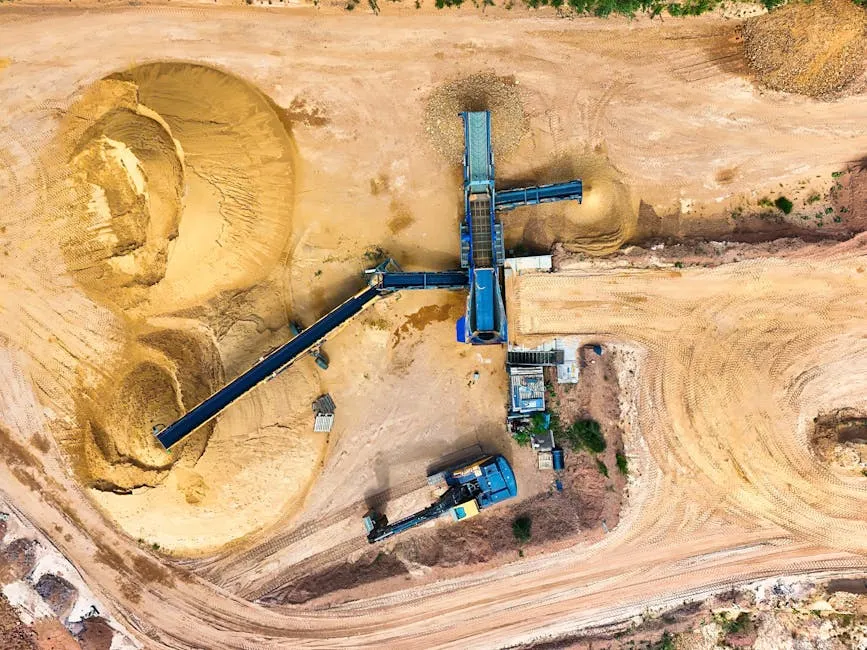
Surface mining is used when mineral deposits are located close to Earth's surface. Drone shot of a sand quarry with conveyor belts and machinery in operation. by Volker Braun / Pexels.
Minerals are natural substances found in Earth's crust that humans extract and use for countless purposes. Mining is the process of removing minerals from the ground. The method used to mine minerals depends on several factors, including how deep the mineral deposit is located, how concentrated the minerals are, and what type of rock surrounds them. Mining companies must carefully choose extraction methods that are both economically practical and physically possible.
Surface mining is used when mineral deposits are located close to Earth's surface, typically less than 100 meters deep. In open-pit mining, workers remove layers of soil and rock to create a large, bowl-shaped hole in the ground. Giant machines dig deeper and deeper until they reach the valuable minerals. This method is commonly used to extract copper, iron, and coal. Another surface technique called strip mining involves removing long strips of overlying rock and soil to access minerals that lie in horizontal layers. Strip mining is frequently used for coal deposits in relatively flat terrain.
When mineral deposits are located deep underground, subsurface mining becomes necessary. This method involves digging tunnels and shafts into Earth to reach the minerals. In shaft mining, workers create a vertical tunnel straight down to the mineral deposit, then dig horizontal tunnels to remove the valuable material. Another approach, called slope mining, uses a diagonal tunnel that follows the angle of the mineral deposit. Subsurface mining is more expensive and dangerous than surface mining, but it allows access to deeper, richer mineral deposits.
The choice between surface and subsurface mining depends heavily on the depth and concentration of the mineral deposit. If a deposit contains high concentrations of valuable minerals and lies near the surface, surface mining is usually more cost-effective. However, if the deposit is deep underground or if surface mining would require removing too much overlying rock, subsurface mining becomes the better option. Rock type also matters because harder rocks require more powerful equipment and more time to break through, increasing costs.
Large-scale mining operations create significant environmental impacts. Surface mining removes vegetation and topsoil, destroying habitats for plants and animals. The process can cause soil erosion and create large amounts of waste rock. Mining activities often contaminate nearby water sources with chemicals and sediment. Subsurface mining can cause the ground above to sink or collapse, and it produces acidic water that can pollute streams and rivers. Many countries now require mining companies to develop reclamation plans to restore mined land by replanting vegetation and reshaping the landscape.
Despite environmental concerns, mining remains essential because minerals are necessary for modern technology, construction, and manufacturing. Engineers continue developing new techniques to reduce mining's environmental footprint, such as using less water, recycling mining waste, and improving reclamation methods. Understanding the trade-offs between mineral extraction and environmental protection helps society make informed decisions about resource use.
Interesting Fact: The Bingham Canyon Mine in Utah is one of the largest open-pit mines in the world, measuring over 4 kilometers wide and 1.2 kilometers deep—so large it can be seen from space.
Comprehension quiz (10 questions)
1. What is mining?
2. Surface mining is typically used when mineral deposits are located at what depth?
3. What does the term 'mineral deposit' mean in the passage?
4. What does 'reclamation' mean in the context of mining?
5. Based on the passage, why would a mining company choose subsurface mining instead of surface mining?
6. What can be inferred about the relationship between rock type and mining costs?
7. If a mineral deposit contains high concentrations of valuable minerals and is located 50 meters below the surface, which mining method would most likely be used?
8. How might improved reclamation methods help balance mineral extraction with environmental protection?
9. Surface mining always causes less environmental damage than subsurface mining.
10. The Bingham Canyon Mine in Utah is so large it can be seen from space.
Perfect for the way you teach
- Build comprehension skills
- Auto-graded quiz
- Differentiated reading
- Read together at home
- Improve fluency
- Quiet reading time
- Reading curriculum support
- Independent practice
- Track Lexile growth