How Overconsumption Depletes Resources
Interactive passage with audio narration, comprehension questions, and printable PDF.
By completing this purchase you agree to our Terms of Use and Privacy Policy. Your subscription renews automatically until you cancel. You can cancel anytime from your account settings. All sales are final and non-refundable. Digital content is available for download in your account immediately upon purchase.
What's included
How Overconsumption Depletes Resources preview and details
About this printable How Overconsumption Depletes Resources science reading passage, NGSS-aligned (Grades 6-8)
Sample passage and quiz from How Overconsumption Depletes Resources
Reading passage and comprehension quiz preview
How Overconsumption Depletes Resources
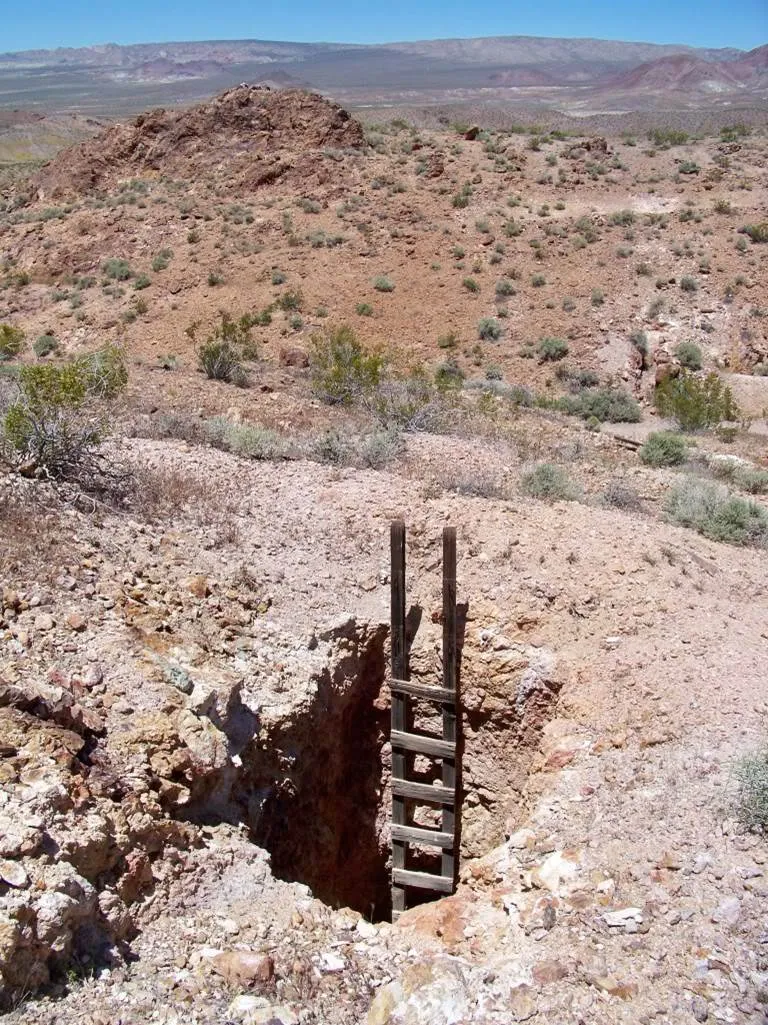
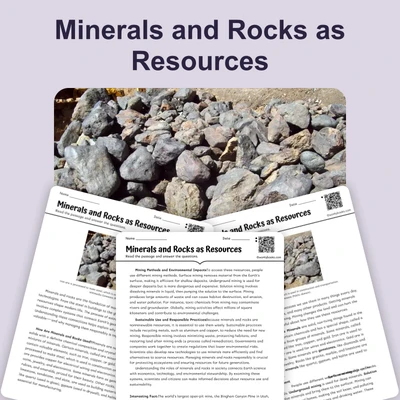
Resource depletion creates cascading effects throughout Earth's systems. "Abandoned Mine Lands (29716863261)" by blmcalifornia / Wikimedia Commons
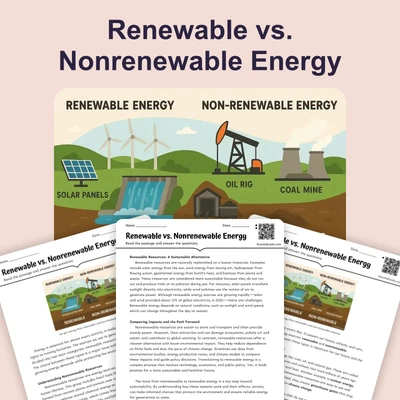
Earth provides many resources that humans need to survive and thrive. Resources are materials or substances found in nature that people use for various purposes. Some resources, called renewable resources, can be replaced naturally over time, such as trees, water, and solar energy. Other resources, called nonrenewable resources, exist in limited amounts and cannot be replaced once used, including coal, oil, natural gas, and most minerals. Understanding how we use these resources is critical because human activities are depleting them at alarming rates.
Two major factors drive resource depletion: population growth and rising per-capita consumption. Per-capita consumption means the average amount of resources each person uses. The global population has grown from about 3 billion people in 1960 to over 8 billion today. More people naturally need more resources for food, water, shelter, and energy. However, population growth alone does not tell the complete story. In many countries, people are consuming far more resources per person than ever before. For example, the average American uses about 25 times more energy than the average person in India. When both population and per-capita consumption increase together, the demand for Earth's resources multiplies rapidly.
This combined pressure affects different types of resources in specific ways. Mineral resources such as copper, iron, and rare earth elements are mined from the ground to make electronics, vehicles, and buildings. As demand increases, mining companies must dig deeper and process lower-quality ores, which requires more energy and creates more waste. Water resources face similar strain. Although water is technically renewable through the water cycle, many regions are withdrawing groundwater from underground aquifers faster than rainfall can replenish it. The Ogallala Aquifer beneath the Great Plains, which provides water for farming and drinking, has dropped significantly in many areas due to overconsumption.
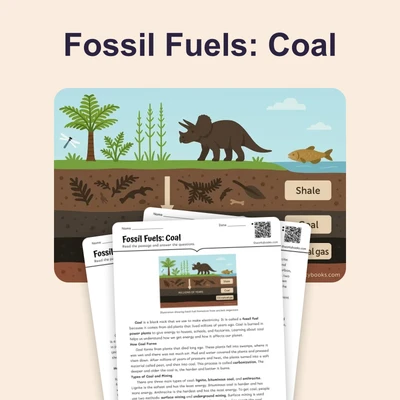
Energy resources show the clearest connection between consumption and depletion. Fossil fuels—coal, oil, and natural gas—formed over millions of years from ancient plant and animal remains. Humans are burning these fuels in just a few centuries. The International Energy Agency reports that global energy demand has increased by more than 50% since 1990. This rapid consumption not only depletes finite fuel reserves but also releases carbon dioxide into the atmosphere, changing Earth's climate system. The biosphere, which includes all living things and the areas they inhabit, also suffers from overconsumption. Forests are cleared for agriculture and development, oceans are overfished, and soil loses nutrients from intensive farming.
Resource depletion creates cascading effects throughout Earth's systems. When forests are removed, soil erodes more easily, water cycles change, and carbon storage decreases. When aquifers are drained, land can sink in a process called subsidence. When fossil fuels are burned excessively, atmospheric chemistry changes, affecting weather patterns and ocean chemistry. These interconnected systems mean that depleting one resource often damages others. The finite nature of nonrenewable resources makes this situation particularly concerning. Once deposits of copper, oil, or phosphorus are exhausted, they cannot be recreated on human timescales.
Addressing resource depletion requires understanding both parts of the equation: how many people need resources and how much each person consumes. Solutions include improving efficiency, developing renewable alternatives, recycling materials, and making conscious choices about consumption. Some countries have reduced per-capita resource use while maintaining quality of life through better technology and planning. However, as global population continues growing and more people seek higher living standards, the pressure on Earth's finite resources will likely intensify unless consumption patterns change significantly.
Interesting Fact: If everyone on Earth consumed resources at the same rate as the average American, we would need approximately five planet Earths to sustainably provide those resources.
Comprehension quiz (10 questions)
1. What is the main difference between renewable and nonrenewable resources?
2. According to the passage, what are the two major factors that drive resource depletion?
3. What does per-capita consumption mean?
4. Which resource example from the passage shows water being withdrawn faster than it can be replenished?
5. Based on the passage, why is the depletion of fossil fuels particularly concerning for Earth's systems?
6. What happens when forests are removed, according to the passage?
7. How much has global energy demand increased since 1990?
8. According to the passage, what is one way some countries have reduced per-capita resource use?
9. True or False: The global population has grown from about 3 billion in 1960 to over 8 billion today.
10. True or False: Once nonrenewable resources like copper and oil are exhausted, they can be recreated within a few years.
Perfect for the way you teach
- Build comprehension skills
- Auto-graded quiz
- Differentiated reading
- Read together at home
- Improve fluency
- Quiet reading time
- Reading curriculum support
- Independent practice
- Track Lexile growth