How Scientists Find Exoplanets
Interactive passage with audio narration, comprehension questions, and printable PDF.
By completing this purchase you agree to our Terms of Use and Privacy Policy. Your subscription renews automatically until you cancel. You can cancel anytime from your account settings. All sales are final and non-refundable. Digital content is available for download in your account immediately upon purchase.
What's included
How Scientists Find Exoplanets preview and details
About this printable How Scientists Find Exoplanets science reading passage, NGSS-aligned (Grades 5-8)
Sample passage and quiz from How Scientists Find Exoplanets
Reading passage and comprehension quiz preview
How Scientists Find Exoplanets
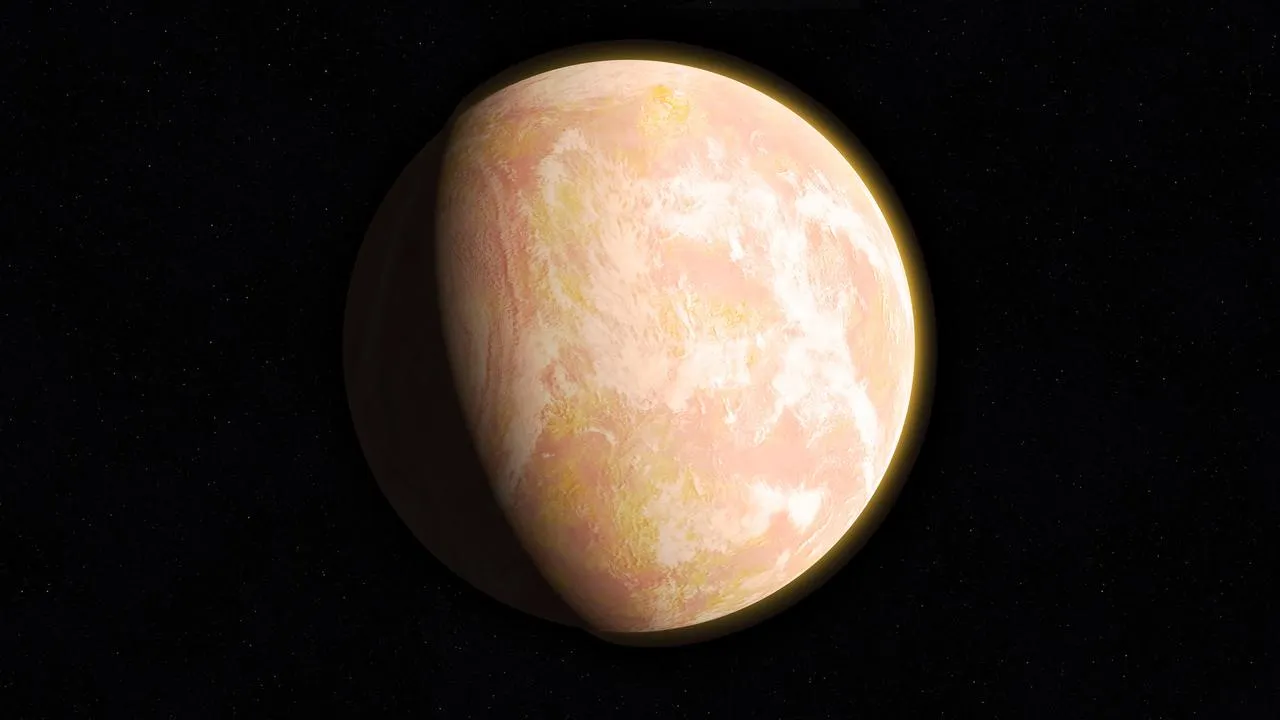
NASA Team Looks to Ancient Earth First to Study Hazy Exoplanets" / NASA
Exoplanets are planets that orbit stars outside our own solar system. Their discovery has changed our understanding of the universe and raised new questions about the possibility of life beyond Earth. Today, scientists have confirmed more than 5,500 exoplanets, with thousands more awaiting confirmation. This growing catalog shows that planetary systems are common in our galaxy, the Milky Way, and come in many different forms.
How Scientists Detect Exoplanets
Finding exoplanets is challenging because stars are much brighter than planets, making these distant worlds hard to see directly. Scientists use several detection methods to find exoplanets. The transit method detects exoplanets when they pass in front of their host star, causing the star’s light to dim slightly. Spacecraft like Kepler and TESS have used this method to discover thousands of exoplanets. Another technique is the radial velocity method, which measures how a planet’s gravity causes its star to wobble. This wobble shifts the star’s light spectrum, a phenomenon known as the Doppler shift. Direct imaging, where astronomers take pictures of exoplanets, is rare because stars outshine their planets by a factor of millions. Other advanced methods include gravitational microlensing and astrometry.
Types of Exoplanets and Their Diversity
Exoplanets come in many sizes and compositions, often quite different from planets in our solar system. Hot Jupiters are gas giants that orbit very close to their stars, making them extremely hot. Super-Earths are planets larger than Earth but smaller than Neptune, and they are the most common type found so far. Mini-Neptunes are similar in size to Neptune but have thick atmospheres. Some exoplanets are Earth-sized, but most discovered so far are larger. The variety of exoplanets tells us that planetary systems can form in many ways and that our solar system is just one example among billions.
Why Exoplanet Discovery Matters
The study of exoplanets helps scientists test theories about how planetary systems form and change over time. Data from exoplanet discoveries show that about 30% of Sun-like stars have at least one planet, and many have multiple planets. Understanding exoplanets also has practical benefits: it guides the search for life in the universe and may help us learn more about Earth’s own history. As detection methods improve, scientists hope to find more Earth-like planets and study their atmospheres for signs of life.
Exoplanet research connects to larger scientific principles, such as the formation and evolution of planetary systems and the conditions needed for life. The search for exoplanets demonstrates how technology and observation work together to expand our knowledge of the universe.
Interesting Fact: Astronomers have found exoplanets orbiting pulsars, which are rapidly spinning dead stars—these are some of the most extreme environments known!
Comprehension quiz (10 questions)
1. What is an exoplanet?
2. Which detection method uses the dimming of a star's light to find exoplanets?
3. Which space telescopes are mentioned as important to exoplanet discovery?
4. What does the radial velocity method detect in a star?
5. What is a 'hot Jupiter'?
6. What is the most common type of exoplanet discovered so far?
7. In context, what does the word 'transit' mean in astronomy?
8. What is the 'Doppler shift' used for in exoplanet studies?
9. True or False: Exoplanets have only been found around stars like the Sun.
10. True or False: Scientists have discovered over 5,500 exoplanets so far.
Perfect for the way you teach
- Build comprehension skills
- Auto-graded quiz
- Differentiated reading
- Read together at home
- Improve fluency
- Quiet reading time
- Reading curriculum support
- Independent practice
- Track Lexile growth