Making Smart Energy Choices โ Reading Comprehension
Rate this
Premium Resource
Present
Present in classroom. No work saved
Assign
Classroom with student accounts, Track progress
Quick Play
No student accounts, assign with a link
Grades
3
4
5
Standards
NGSS 4-ESS3-1
PRINT+DIGITAL RESOURCE
This learning resource is available in interactive and printable formats. The interactive worksheet can be played online and assigned to students. The Printable PDF version can be downloaded and printed for completion by hand.
This 250-word reading passage introduces fourth-grade students to the critical concept of making informed energy choices, aligned with NGSS standard 4-ESS3-1. Students explore the differences between renewable energy sources like solar and wind power, and nonrenewable energy sources such as coal, oil, and natural gas. The passage explains how different energy sources impact the environment, including air pollution and resource depletion. Students learn about trade-offs involved in energy decisions, such as cost versus environmental benefits. The content emphasizes how individuals and communities can make smart energy choices by conserving energy, using renewable sources, and considering long-term environmental effects. Audio integration supports diverse learners by providing read-aloud functionality. Vocabulary terms including renewable energy, nonrenewable energy, fossil fuels, and trade-offs are clearly defined within context. Real-world examples help students connect scientific concepts to everyday decisions about energy use at home and in their communities. This foundational understanding prepares students for hands-on investigations and critical thinking about energy and environmental stewardship.
CONTENT PREVIEW
Expand content preview
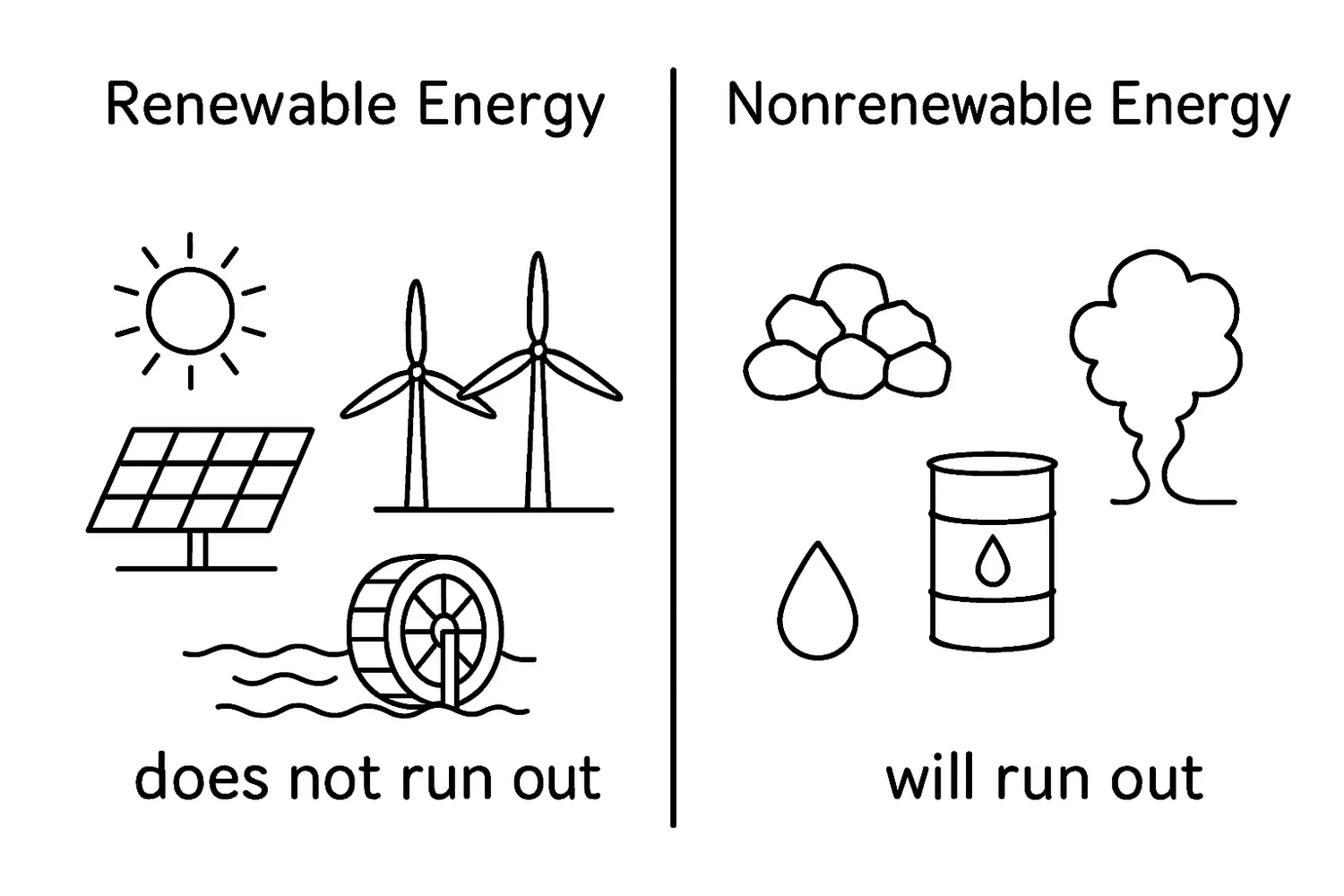
Renewable energy never runs out; nonrenewable energy will run out.
People use energy every day to power homes, schools, and cars. We get this energy from different sources, and some sources are better for the environment than others. Making smart energy choices means understanding where energy comes from and how it affects our planet.
Renewable energy comes from sources that nature replaces quickly, like sunlight, wind, and flowing water. Nonrenewable energy comes from sources that take millions of years to form, like coal, oil, and natural gas. These are called fossil fuels because they formed from ancient plants and animals. When we burn fossil fuels, they release pollution into the air and contribute to climate change. Once we use them up, they are gone forever.
Choosing energy sources involves trade-offs, which means giving up one thing to get another. Solar panels and wind turbines cost more money to install at first, but they create clean energy and save money over time. Fossil fuels are cheaper to use now, but they harm the environment and will run out someday.
Individuals and communities can make smart energy choices by conserving energy, using renewable sources when possible, and thinking about long-term effects. Turning off lights, using energy-efficient appliances, and supporting clean energy projects all help protect our planet for the future.
What are fossil fuels made from?
Ancient plants and animalsSunlight and windRocks and mineralsWater and ice
Which energy source is renewable?
CoalOilWindNatural gas
How long do fossil fuels take to form?
A few daysA few yearsMillions of yearsThousands of years
Why do solar panels save money over time?
They are very cheap to buyThey create clean energy without fuelThey work only at nightThey use fossil fuels
What happens when we burn fossil fuels?
They create more fossil fuelsThey release pollution into the airThey become renewable energyThey clean the environment
Which is a smart energy choice at home?
Leaving lights on all dayUsing more fossil fuelsTurning off lights when leaving a roomWasting electricity
Renewable energy sources will eventually run out.
TrueFalse
What does the word trade-off mean?
Getting everything you wantGiving up one thing for anotherBuying energy from a storeUsing only fossil fuels
Perfect For:
๐ฉโ๐ซ Teachers
โข Reading comprehension practice
โข Auto-graded assessments
โข Literacy skill development
๐จโ๐ฉโ๐งโ๐ฆ Parents
โข Reading practice at home
โข Comprehension improvement
โข Educational reading time
๐ Homeschoolers
โข Reading curriculum support
โข Independent reading practice
โข Progress monitoring
Reading Features:
๐
Reading Passage
Engaging fiction or nonfiction text
โ
Comprehension Quiz
Auto-graded questions
๐
Instant Feedback
Immediate results and scoring
๐
Printable Version
Download for offline reading
๐
Read Aloud
Voice-over with word highlighting
Reviews & Ratings
No reviews yet. Be the first to share your experience!
Related Content
How Hydropower Works
This engaging 250-word science passage explains how hydropower works for Grade 4-5 students. Aligned with NGSS 4-ESS3-1,...
NGSS 4-ESS3-1
Reducing Air Pollution
This engaging 250-word science passage introduces Grade 4-5 students to the technology used to reduce air pollution from...
NGSS 4-ESS3-1
How We Can Use Less Energy
This engaging 250-word science passage for Grade 4-5 students explores how people can reduce the environmental impact of...
NGSS 4-ESS3-1
How Mining Affects the Land
This comprehensive 250-word reading passage helps Grade 4-5 students understand the environmental impacts of mining oper...
NGSS 4-ESS3-1
Air Pollution from Burning Fuels
This comprehensive science passage on air pollution is designed for Grade 4-5 students and aligns with NGSS 4-ESS3-1 sta...
NGSS 4-ESS3-1
How Solar Energy Works
This engaging 250-word science passage explains how solar energy works for Grade 4-5 students. The reading explores how ...
NGSS 4-ESS3-1
Energy Sources in Nature
This engaging 250-word science passage for Grade 4-5 students explores Energy Sources in Nature, aligned with NGSS stand...
NGSS 4-ESS3-1
What Is Fuel
This engaging 250-word science passage introduces Grade 4-5 students to the concept of fuel as any material that stores ...
NGSS 4-ESS3-1
Renewable vs Nonrenewable
This comprehensive 250-word passage helps Grade 4-5 students understand the critical difference between renewable and no...
NGSS 4-ESS3-1
How We Use Coal for Energy
This comprehensive 250-word reading passage introduces fourth-grade students to coal as an energy resource, aligned with...
NGSS 4-ESS3-1
Biomass Energy
This engaging Grade 4-5 science passage explains biomass energy and how it works as a renewable energy source. Students ...
NGSS 4-ESS3-1
How Wind Energy Works
This 250-word reading passage introduces fourth-grade students to wind energy and how it works, aligned with NGSS standa...
NGSS 4-ESS3-1
How We Use Oil for Energy
This 250-word reading passage aligns with NGSS standard 4-ESS3-1 and introduces fourth-grade students to oil as a vital ...
NGSS 4-ESS3-1
How We Use Natural Gas for Energy
This 250-word reading passage introduces fourth-grade students to natural gas as an important energy resource. Aligned w...
NGSS 4-ESS3-1
How Are Fossil Fuels Formed
This 250-word reading passage introduces fourth-grade students to the formation of fossil fuels, aligned with NGSS stand...
NGSS 4-ESS3-1
Where Do We Find Fossil Fuels
This Grade 4 Earth Science reading passage aligns with NGSS standard 4-ESS3-1 and introduces students to the locations a...
NGSS 4-ESS3-1
Why Fossil Fuels Run Out
This 250-word reading passage introduces fourth-grade students to the concept of nonrenewable energy resources, specific...
NGSS 4-ESS3-1
Benefits of Renewable Energy
This 250-word reading passage introduces fourth-grade students to the benefits of renewable energy sources aligned with ...
NGSS 4-ESS3-1
Challenges of Renewable Energy
This 250-word reading passage introduces fourth-grade students to the challenges of renewable energy sources, aligned wi...
NGSS 4-ESS3-1
How Energy Use Affects the Environment
This 250-word informational reading passage aligns with NGSS standard 4-ESS3-1 and introduces fourth-grade students to t...