Reading PassagePremium

Mercury: The Smallest Planet

Interactive passage with audio narration, comprehension questions, and printable PDF.

No ratings yet
Grades 3–6ScienceElaEnglish · SpanishInteractive · Printable
Just this resource
$1.50
One-time purchase
Best value
Unlock everything
$49.99$29.99/yr
40% off until Aug 1 — 10,000+ resources
Renews at $49.99/year.
Unlock above to use these actions

What's included

Reading passage
Audio narration
Comprehension quiz
Writing activity
Glossary & flashcards
Differentiated version
Spanish translation

Mercury: The Smallest Planet preview and details

About this printable Mercury: The Smallest Planet science reading passage, NGSS-aligned (Grades 3-6)

This engaging Grade 4-5 science passage explores Mercury, the closest planet to the Sun. Students will learn about Mercury’s extreme temperature changes, why its days and nights are so different, and how it moves quickly around the Sun. The passage defines key science vocabulary words such as orbit, atmosphere, and rotation, making it easy for students to understand new concepts. Real-world connections help readers see how studying Mercury teaches scientists about our solar system and the importance of space exploration. The passage ends with an interesting science fact, and is fully audio integrated for accessibility. It aligns with NGSS standards and includes a glossary, a Spanish translation, reading comprehension questions, and writing activities to help students deepen their understanding of planetary science. The included AI image prompt can generate a simple, accurate illustration of Mercury.
Written by Workybooks TeamPublished by Workybooks
Preview

Sample passage and quiz from Mercury: The Smallest Planet

Reading passage and comprehension quiz preview

Facts About Mercury
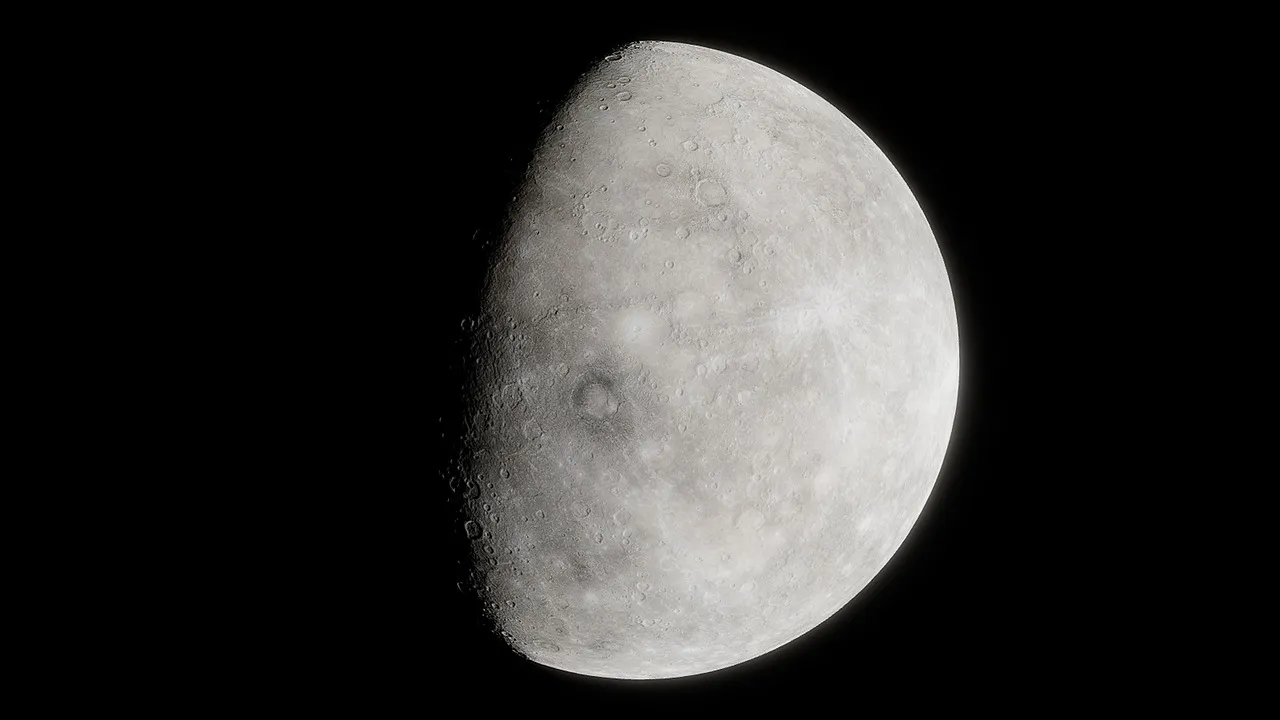
mercury, planet, space, universe, astronomy, mercury, mercury, mercury, mercury, mercury

"mercury, planet, space, universe, astronomy, mercury, mercury, mercury, mercury, mercury" by TheSpaceway / Pixabay. 

Mercury is the closest planet to the Sun in our solar system. It is a small, rocky planet that has some of the most extreme temperatures found anywhere. During the day, the Sun’s heat makes Mercury’s surface very hot, reaching up to 800 degrees Fahrenheit (430 degrees Celsius). At night, the temperature drops to -290 degrees Fahrenheit (-180 degrees Celsius). This is because Mercury has almost no atmosphere to keep heat in or protect it from the cold of space.

Mercury moves around the Sun in an orbit that is shorter than any other planet. It takes only 88 Earth days for Mercury to make one full trip around the Sun. This means a year on Mercury is much shorter than on Earth! But Mercury spins, or rotates, very slowly. It takes about 59 Earth days to turn once. Because of this, one day on Mercury (from sunrise to sunrise) lasts about 176 Earth days.

Without an atmosphere, Mercury’s sky is always black, even during the day. The surface of Mercury is covered with craters, like our Moon, because meteoroids hit the planet and leave marks. Scientists send space probes to study Mercury. These robots help us learn more about the planet’s surface, temperatures, and how planets form. Learning about Mercury helps us understand how planets change and survive in space.

Interesting Fact: A day on Mercury is longer than its year because it spins so slowly while zooming quickly around the Sun!

Comprehension quiz (8 questions)

1. How long is a year on Mercury?

88 Earth days
176 Earth days
365 Earth days
59 Earth days

2. Why is Mercury so hot during the day?

Close to the Sun
Covered in ice
Has thick clouds
Spins very fast

3. What covers Mercury’s surface?

Craters
Oceans
Mountains
Forests

4. What does Mercury lack that makes nights cold?

Atmosphere
Mountains
Water
Gravity

5. Why do scientists study Mercury?

To learn about planets
To find gold
For fun
To grow plants

6. What happens when meteoroids hit Mercury?

Make craters
Grow trees
Melt ice
Make rivers

7. Mercury has a thick atmosphere.

True
False

8. What does 'orbit' mean?

Path around something
Hole in a planet
Surface layer
Type of rock
Who it's for

Perfect for the way you teach

Teachers
  • Build comprehension skills
  • Auto-graded quiz
  • Differentiated reading
Parents
  • Read together at home
  • Improve fluency
  • Quiet reading time
Homeschoolers
  • Reading curriculum support
  • Independent practice
  • Track Lexile growth
Topics

Reviews & Ratings

No reviews yet. Be the first to share your experience!

More reading you might love

20 more
Passage
Earth: Our Home in Space - reading educational content

Earth: Our Home in Space

Reading Passage

$1.50
Passage
Tools and Technology in Earth Science - reading educational content

Tools and Technology in Earth Science

Reading Passage · MS-ESS2-2

$1.50
Passage
Earth's Place in the Universe - reading educational content

Earth's Place in the Universe

Reading Passage · 1-ESS1-1

Free
Passage
Escape Velocity and Space Travel - reading educational content

Escape Velocity and Space Travel

Reading Passage · MS-ESS1-2

$1.50
Passage
Space Stations - reading educational content

Space Stations

Reading Passage · MS-ESS1-3

$1.50
Passage
What Is Space Weather and How Does It Affect the Earth? - reading educational content

What Is Space Weather and How Does It Affect the Earth?

Reading Passage · MS-ESS2-2

$1.50
Passage
Scientific Inquiry in Earth Science - reading educational content

Scientific Inquiry in Earth Science

Reading Passage · MS-ESS1-4

$1.50
Passage
How Satellites Help Scientists Study Earth From Space - reading educational content

How Satellites Help Scientists Study Earth From Space

Reading Passage · MS-ESS2-1

$1.50
Passage
What Is Earth Science? - reading educational content

What Is Earth Science?

Reading Passage · MS-ESS1

$1.50
Passage
The Space Garden - reading educational content

The Space Garden

Reading Passage · RL.3.1

Free
Passage
Earth: Our Home Planet - reading educational content

Earth: Our Home Planet

Reading Passage · MS-ESS1-2

Free
Passage
Meteorite Impacts on Earth - reading educational content

Meteorite Impacts on Earth

Reading Passage

$1.50
Passage
Exploring Space: Rockets and Spacecraft - reading educational content

Exploring Space: Rockets and Spacecraft

Reading Passage · RI.4.4

Free
Passage
Earth's Rotation - reading educational content

Earth's Rotation

Reading Passage · MS-ESS1-1

$1.50
Coloring
International Space Station - coloring educational content

International Space Station

Coloring Page

Free
Passage
Facts About Earth - reading educational content

Facts About Earth

Reading Passage

$1.50
Passage
What Is the Science of Astronomy - reading educational content

What Is the Science of Astronomy

Reading Passage · MS-ESS1-1

$1.50
Passage
Earth's Moon Facts - reading educational content

Earth's Moon Facts

Reading Passage

$1.50
Passage
How Earth Science Fields Work Together - reading educational content

How Earth Science Fields Work Together

Reading Passage · MS-ESS2-1

$1.50
Passage
Measuring Distances in Space - reading educational content

Measuring Distances in Space

Reading Passage · MS-ESS1-3

$1.50
Copyright © 2026 Workybooks. Made with ♥ in California.