This learning resource is available in interactive and printable formats. The interactive worksheet can be played online and assigned to students. The Printable PDF version can be downloaded and printed for completion by hand.
This history reading passage explores the powerful story of Queen Nzinga, a 17th-century African leader who resisted the Portuguese slave trade in Angola. Students will learn about Nzinga’s strategies, leadership, and the impact of European colonization on African societies. The passage integrates key academic vocabulary and aligns with CA HSS 7.4.1 and CCSS RH.6-8.2. It includes a glossary, timeline, and activities such as multiple-choice questions, writing prompts, and graphic organizers. A Spanish translation and read aloud audio are also provided, making the material accessible and engaging for diverse learners. This resource supports the development of critical historical thinking skills and literacy, helping students understand the broader themes of resistance, agency, and the global consequences of the slave trade.
CONTENT PREVIEW
Expand content preview
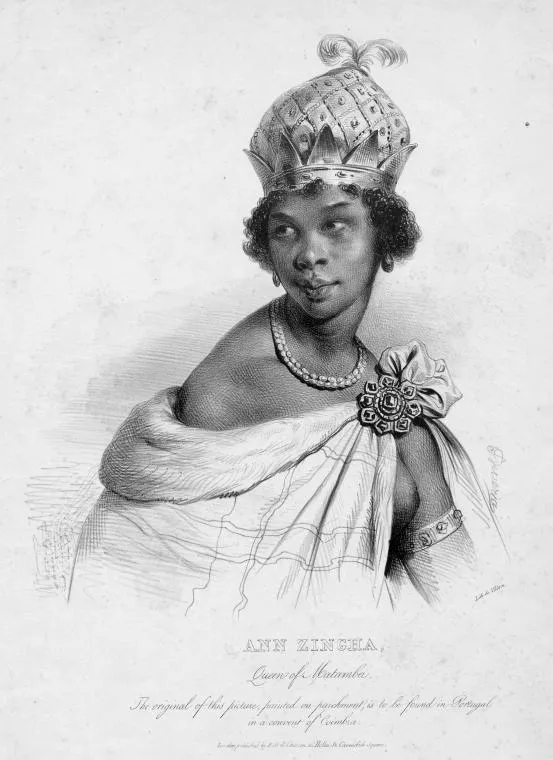
"Ann Zingha, queen of Matamba" by François Villain (litographer) / Source: Wikimedia Commons (Public domain).
Queen Nzinga of Ndongo and Matamba was a powerful African ruler in the 1600s. She is remembered for her fierce resistance against the Portuguese colonization of Central Africa and her determined fight to protect her people from the transatlantic slave trade. Nzinga’s actions challenged the growing European influence and changed the history of Angola.
Nzinga was born in 1583 in the kingdom of Ndongo, in present-day Angola. The Portuguese had arrived in the late 1400s, seeking to expand their trade networks. By the early 1600s, the Portuguese were capturing Africans to sell as slaves in the Americas. When Nzinga’s brother, the king, asked her to negotiate with the Portuguese in 1622, Nzinga demonstrated her skill as a diplomat. According to a famous account, the Portuguese governor did not offer her a chair during their meeting. Nzinga ordered a servant to kneel so she could sit at the same level, showing she was an equal to the Europeans.
After becoming queen in 1624, Nzinga led her people in a long struggle against Portuguese forces. She formed alliances with neighboring kingdoms and even with the Dutch, who were also fighting the Portuguese. Nzinga reorganized her army and used both military and political strategies to resist. For example, she welcomed runaway slaves and Portuguese soldiers into her territory, strengthening her resistance. Nzinga also moved her capital, adapting to the shifting geography of conflict. The struggle was harsh, and many people suffered, but Nzinga’s leadership kept her kingdom independent for decades.
Primary sources, such as Portuguese letters and missionary accounts, describe Nzinga as a clever and determined leader. Some sources call her “the Amazon of Africa” and describe her dressing as a man in battle to inspire her soldiers. Archaeological findings, such as fortified towns and evidence of trade, show that Ndongo and Matamba were complex societies with their own systems of governance and culture. Nzinga’s resistance slowed the spread of the slave trade in the region and inspired others to fight for their freedom.
Nzinga ruled until her death in 1663. Her story shows the power of agency—the ability of individuals and groups to shape history, even when facing powerful outside forces. Nzinga’s legacy reminds us that African societies were not just passive victims of the slave trade, but active participants in their own history. Her life connects to the larger theme of resistance to injustice, which can be seen in many societies throughout history.
Interesting Fact: Nzinga’s court included women warriors and advisors, and she was known for her intelligence and bravery.
Where was Queen Nzinga born?
Ndongo, Central AfricaLisbon, PortugalGhanaBrazil
Who did Nzinga negotiate with in 1622?
The DutchThe PortugueseThe BritishThe Spanish
What year did Nzinga become queen?
1600162216241663
Why did Nzinga form alliances?
To resist Portuguese powerTo trade goldTo explore new landsTo build forts
How did Nzinga show she was equal to Europeans?
By kneeling to themBy ordering a servant to kneelBy leaving the meetingBy giving gifts
What impact did Nzinga’s actions have?
They ended the slave tradeThey inspired resistanceThey started a war in EuropeThey built new cities
Nzinga’s leadership kept her kingdom independent. True or false?
TrueFalse
What does 'agency' mean in the passage?
Ability to travelAbility to shape historyAbility to speak languagesAbility to trade goods
Perfect For:
👩🏫 Teachers
• Reading comprehension practice
• Auto-graded assessments
• Literacy skill development
👨👩👧👦 Parents
• Reading practice at home
• Comprehension improvement
• Educational reading time
🏠 Homeschoolers
• Reading curriculum support
• Independent reading practice
• Progress monitoring
Reading Features:
📖
Reading Passage
Engaging fiction or nonfiction text
❓
Comprehension Quiz
Auto-graded questions
📊
Instant Feedback
Immediate results and scoring
📄
Printable Version
Download for offline reading
🔊
Read Aloud
Voice-over with word highlighting
Reviews & Ratings
No reviews yet. Be the first to share your experience!
Related Content
Great Awakening Colonial America
This engaging history reading passage explores the impact of the Great Awakening on colonial America. Through analysis o...
Quakers in Colonial America
This passage explores the role of the Quakers in Colonial America, focusing on their pursuit of peace, religious freedom...
D2.HIS.2.3-5D2.HIS.3.3-5RI.4.3RI.4.4
Indentured Servants in Colonial America
This comprehensive passage and activity set explores the crucial but complex role of indentured servants in colonial Ame...
D2.HIS.2.3-5D2.HIS.3.3-5RI.4.3RI.4.4
Cities in Colonial America
This engaging U.S. history reading passage explores the rise of colonial American cities such as Boston, Philadelphia, a...
HSS 5.4.68.1RI.6-8.1RI.6-8.7
Why Europeans Immigrated to Colonial America
This passage examines the complex reasons why Europeans immigrated to Colonial America, exploring both push and pull fac...
D2.HIS.2.3-5D2.HIS.3.3-5RI.4.3RI.4.4
Colonial Social Classes
This comprehensive history reading passage delves into the complex social classes of Colonial America, exploring their o...
D2.HIS.2.3-5D2.HIS.3.3-5RI.4.3RI.4.4
Colonial Slave Resistance
This U.S. History reading passage explores the complex topic of slave resistance in colonial America, examining the many...
D2.HIS.2.3-5D2.HIS.3.3-5RI.4.3RI.4.4
Benjamin Franklin in Colonial America
This U.S. History reading passage explores the life and influence of Benjamin Franklin, a key colonial leader whose idea...
HSS 5.58.1RI.6-8.1RI.6-8.3
How the Middle Colonies Were Governed
This engaging history reading passage explores how the Middle Colonies of Colonial America—such as New York, New Jersey,...
D2.HIS.2.3-5D2.HIS.3.3-5RI.4.3RI.4.4
Colonial Printing Press
This passage explores the revolutionary impact of the colonial printing press in America, examining how it enabled the s...
HSS 5.58.1RI.6-8.1RI.6-8.2
Labor Shortages in the American Colonies
This passage examines the causes and effects of labor shortages in the American colonies, focusing on the economic and s...
Life in the Southern Colonies
This engaging reading passage explores Colonial America's Southern Colonies, focusing on how geography, climate, and peo...
D2.HIS.4.3-5D2.GEO.4.3-5RI.4.3RI.4.4
Frontier Life in Colonial America
This passage examines the realities of frontier life in colonial America, highlighting both the promise and peril faced ...
HSS 5.4.68.1RI.6-8.1RI.6-8.2
Colonial Jobs: Blacksmiths, Bakers, and Craftsmen
This engaging history reading passage explores the vital roles of blacksmiths, bakers, and craftsmen in colonial America...
D2.HIS.2.3-5D2.HIS.3.3-5RI.4.3RI.4.4
Colonial Apprenticeship System
This comprehensive passage explores the Colonial Apprenticeship System and its role in education during Colonial America...
HSS 5.4.6RI.6-8.1RI.6-8.2
Native American Allies in Colonial Wars
This passage examines the complex role of Native American nations as allies and adversaries during the colonial wars of ...
D2.HIS.2.3-5D2.HIS.3.3-5RI.4.3RI.4.4
Colonial Clothing and Homemade Goods
This engaging U.S. history passage explores the daily life of early American colonists with a focus on colonial clothing...
D2.HIS.2.3-5RI.4.3RI.4.4
African Diaspora Americas
This engaging history reading passage explores the fact that more Africans than Europeans arrived in the Americas during...
Colonial Women's Lives
This history reading passage examines the complex roles, rights, and daily experiences of women in colonial America. Stu...
D2.HIS.2.3-5D2.HIS.3.3-5RI.4.3RI.4.4
Colonial Games and Entertainment
This engaging history reading passage explores the types of games and entertainment enjoyed by children and families in ...