Reading PassagePremium

The 1998 Ice Storm

Interactive passage with audio narration, comprehension questions, and printable PDF.

No ratings yet
Grades 5–8ScienceElaEnglish · SpanishInteractive · Printable
Aligned toMS-ESS3-2
Just this resource
$1.50
One-time purchase
Best value
Unlock everything
$49.99$29.99/yr
40% off until Aug 1 — 10,000+ resources
Renews at $49.99/year.
Unlock above to use these actions

What's included

Reading passage
Audio narration
Comprehension quiz
Writing activity
Glossary & flashcards
Differentiated version
Spanish translation

The 1998 Ice Storm preview and details

About this printable The 1998 Ice Storm science reading passage, NGSS-aligned (Grades 5-8)

This engaging middle school science reading passage examines the 1998 Ice Storm, one of the most devastating weather disasters in North American history. Aligned with NGSS standard MS-ESS3-2 and DCI MS-ESS3.B (Natural Hazards), students explore how five days of freezing rain coated eastern Canada and the northeastern United States in up to 4 inches of ice. The passage explains the atmospheric conditions that created this rare weather event and its catastrophic effects: over 1,000 transmission towers collapsed, approximately 4 million people lost electrical power for weeks, 35 people died, and damage reached $4-6 billion. Students learn about ice accumulation, infrastructure vulnerability, and how natural hazards impact human societies. Audio-integrated features support diverse learners. The passage includes vocabulary development with key terms like freezing rain, transmission towers, and infrastructure, plus comprehension activities, writing prompts, and graphic organizers that help students analyze cause-and-effect relationships in natural disasters.
Written by Workybooks TeamPublished by Workybooks
Preview

Sample passage and quiz from The 1998 Ice Storm

Reading passage and comprehension quiz preview

The Great Ice Storm of 1998
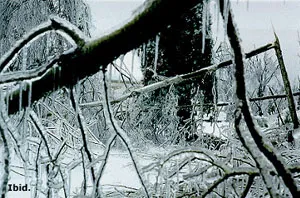
FEMA - 1008 - Photograph by John Ferguson taken on 01-25-1998 in New York

"FEMA - 1008 - Photograph by John Ferguson taken on 01-25-1998 in New York" by John Ferguson / Wikimedia Commons 

The 1998 Ice Storm was one of the most destructive natural disasters in North American history. In early January 1998, an unusual weather pattern brought five consecutive days of freezing rain to eastern Canada and the northeastern United States. This storm coated everything in up to 4 inches of solid ice.

Freezing rain occurs when supercooled water droplets fall through a layer of cold air near the ground. These droplets remain liquid even though their temperature is below freezing. When they hit surfaces like trees, roads, or power lines, they instantly freeze into a layer of ice called glaze ice. During the 1998 storm, ice accumulated day after day. Evidence shows that some areas received over 100 millimeters of freezing rain, far more than most infrastructure can withstand.

The weight of the ice caused catastrophic damage. Over 1,000 electrical transmission towers collapsed under the enormous load. These tall metal structures carry high-voltage power lines across long distances. When they fell, they created a domino effect that knocked down other towers. About 4 million people lost electrical power. Some communities remained without electricity for more than a month during the coldest part of winter. Scientists explain that the combination of prolonged freezing rain and vulnerable infrastructure made this disaster especially severe.

The storm's impact extended beyond power outages. Trees snapped under the ice weight, blocking roads and damaging buildings. The disaster killed 35 people and caused between $4 and $6 billion in damage. Emergency workers struggled to restore services in dangerous conditions. The 1998 Ice Storm demonstrated how natural hazards can severely disrupt modern society. Understanding these events helps communities prepare better infrastructure and emergency response plans for future extreme weather.

Interesting Fact: Some transmission towers accumulated over 110 pounds of ice per foot of cable. That weight is similar to having a large adult sitting on every foot of power line.

Comprehension quiz (10 questions)

1. How many days did freezing rain fall during the 1998 Ice Storm?

Three days
Five days
Seven days
Ten days

2. What happens to supercooled water droplets when they hit surfaces during freezing rain?

They evaporate into the air
They bounce off and fall to the ground
They instantly freeze into ice
They remain liquid and flow away

3. How many transmission towers collapsed during the 1998 Ice Storm?

About 100 towers
About 500 towers
Over 1,000 towers
Over 5,000 towers

4. In the passage, what does the term 'infrastructure' mean?

Natural weather patterns
Basic physical systems like power lines and roads
Types of frozen precipitation
Emergency response teams

5. What does the term 'glaze ice' refer to in the passage?

Ice that forms on lakes and rivers
Snow that has been compressed
A smooth layer of ice from freezing rain
Ice crystals that form in clouds

6. Why did the collapse of transmission towers create a 'domino effect'?

The towers were arranged in a circle
Falling towers knocked down other connected towers
All towers were designed to fall together
Wind pushed the towers over one by one

7. Based on the passage, what made the 1998 Ice Storm especially destructive?

It happened during summer when people were unprepared
Only one area was affected by the storm
The combination of prolonged freezing rain and vulnerable infrastructure
There were no emergency workers available

8. If a similar ice storm occurred today, which infrastructure would likely be most at risk based on the passage?

Underground water pipes
Electrical transmission towers and power lines
Subway tunnels
Cell phone towers made of concrete

9. The 1998 Ice Storm only affected the United States.

True
False

10. Some people were without electrical power for more than a month after the storm.

True
False
Who it's for

Perfect for the way you teach

Teachers
  • Build comprehension skills
  • Auto-graded quiz
  • Differentiated reading
Parents
  • Read together at home
  • Improve fluency
  • Quiet reading time
Homeschoolers
  • Reading curriculum support
  • Independent practice
  • Track Lexile growth
Topics

Reviews & Ratings

No reviews yet. Be the first to share your experience!

More reading you might love

20 more
Passage
Natural Disaster: Earthquake - reading educational content
Grades 4–5

Natural Disaster: Earthquake

weather and climate · RI.3.1

Free
Passage
Obsidian: The Natural Glass Rock - reading educational content
Grades 5–8

Obsidian: The Natural Glass Rock

science · MS-ESS2-3

Free
Passage
All About Seismometers - reading educational content
Grades 5–8

All About Seismometers

science · MS-ESS3-2

Free
Passage
What Is the Difference Between Magma and Lava? - reading educational content
Grades 5–8

What Is the Difference Between Magma and Lava?

science · MS-ESS2-3

$1.50
Passage
Tools and Technology in Earth Science - reading educational content
Grades 5–8

Tools and Technology in Earth Science

science · MS-ESS2-2

$1.50
Passage
Types of Maps  - reading educational content
Grades 5–8

Types of Maps

earth science · MS-ESS2-2

$1.50
Passage
Mass Movements - reading educational content
Grades 5–8

Mass Movements

science · MS-ESS2-1

$1.50
Passage
What Causes Earthquakes? - reading educational content
Grades 5–8

What Causes Earthquakes?

science · MS-ESS2-2

$1.50
Passage
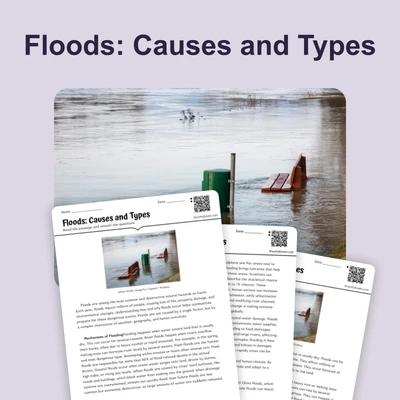
Floods: Causes and Types - reading educational content
Grades 5–8

Floods: Causes and Types

weather and climate · MS-ESS3-2

$1.50
Passage
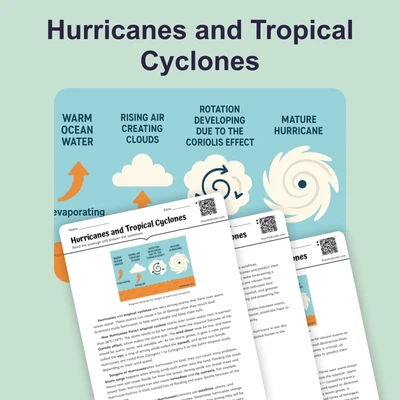
Hurricanes and Tropical Cyclones - reading educational content
Grades 5–8

Hurricanes and Tropical Cyclones

weather and climate · MS-ESS3-2

$1.50
Passage
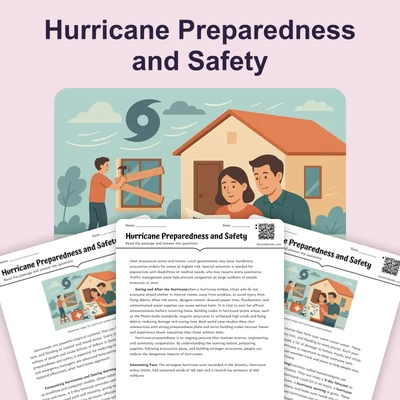
Hurricane Preparedness and Safety - reading educational content
Grades 5–8

Hurricane Preparedness and Safety

weather and climate · MS-ESS3-2

$1.50
Passage
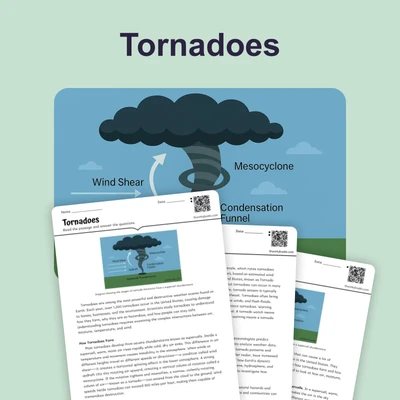
Tornadoes - reading educational content
Grades 5–8

Tornadoes

weather and climate · MS-ESS3-2

$1.50
Passage
Tsunamis - reading educational content
Grades 5–8

Tsunamis

science · MS-ESS3-2

$1.50
Passage
Tsunami Warning and Safety - reading educational content
Grades 5–8

Tsunami Warning and Safety

science · MS-ESS3-2

$1.50
Passage
Earthquake Hazards and Damage - reading educational content
Grades 5–8

Earthquake Hazards and Damage

science · MS-ESS3-2

$1.50
Passage
Earthquake Zones and Patterns - reading educational content
Grades 5–8

Earthquake Zones and Patterns

science · MS-ESS2-2

$1.50
Passage
Seismic Waves - reading educational content
Grades 5–8

Seismic Waves

science · MS-ESS2-2

$1.50
Passage
Measuring Earthquakes - reading educational content
Grades 5–8

Measuring Earthquakes

science · MS-ESS2-2

$1.50
Passage
Earthquake Safety and Preparedness - reading educational content
Grades 5–8

Earthquake Safety and Preparedness

science · MS-ESS3-2

$1.50
Passage
Volcanic Eruptions and Products - reading educational content
Grades 5–8

Volcanic Eruptions and Products

science · MS-ESS2-2

$1.50
Copyright © 2026 Workybooks. Made with ♥ in California.