This learning resource is available in interactive and printable formats. The interactive worksheet can be played online and assigned to students. The Printable PDF version can be downloaded and printed for completion by hand.
This engaging science passage introduces Grade 4-5 students to the fascinating world of fossils and how they reveal clues about Earth's history. Students will learn key scientific concepts such as how fossils are formed, what they can tell us about extinct plants and animals, and why studying fossils is important for understanding changes in our planet. The passage defines important vocabulary terms in bold, provides real-world examples, and ends with an 'Interesting Fact.' The resource is fully aligned with NGSS (Next Generation Science Standards) and is designed to build science literacy and critical thinking skills. It includes a Spanish translation, a glossary of key terms, multiple-choice comprehension questions, and writing activities that encourage students to connect science to their own lives. Audio integration is available to support diverse learners and make science accessible to all. This resource is ideal for classroom use, homework, or independent study.
CONTENT PREVIEW
Expand content preview
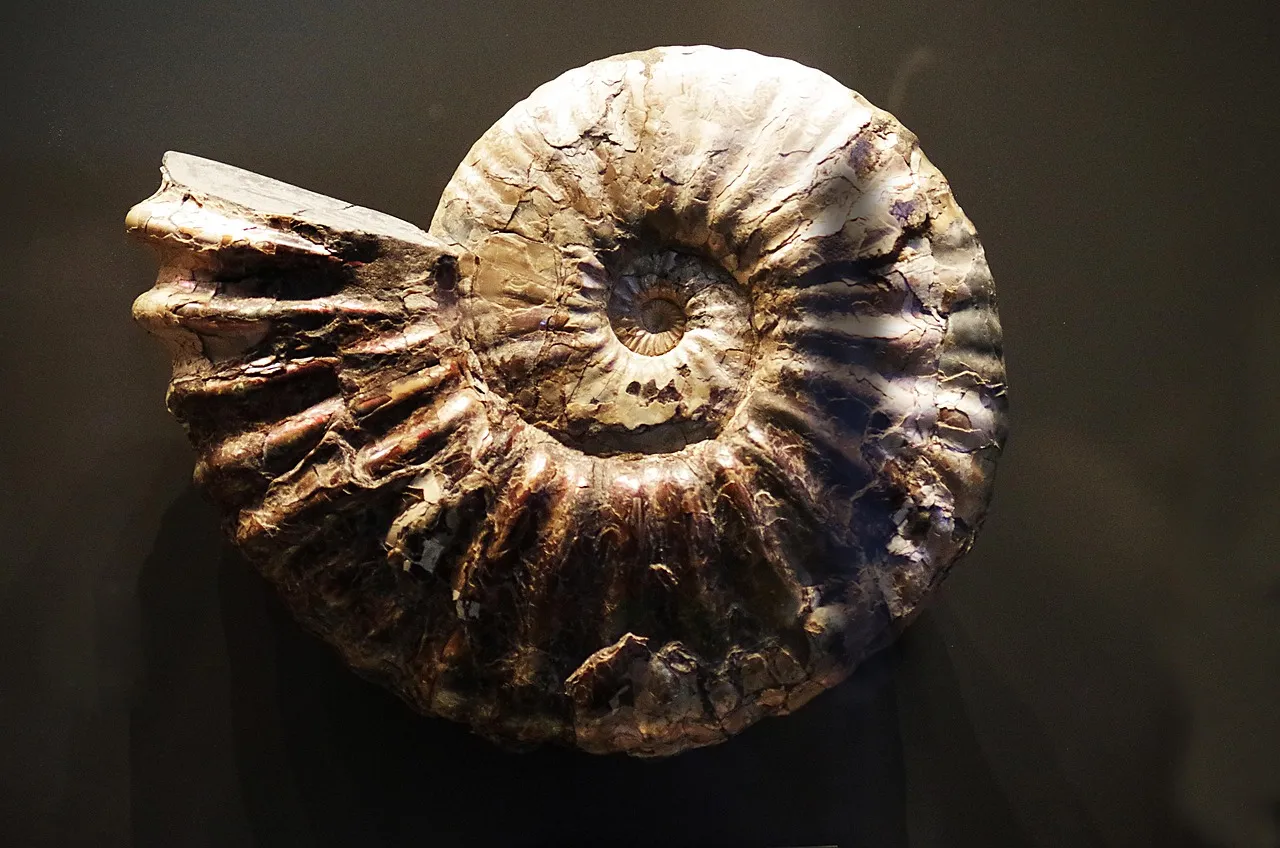
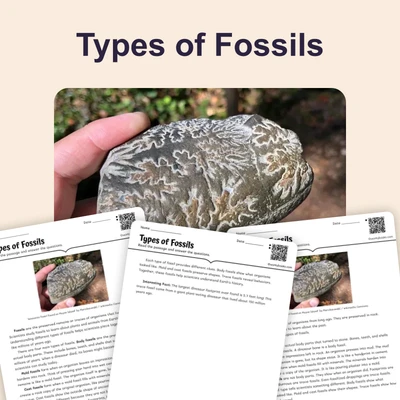
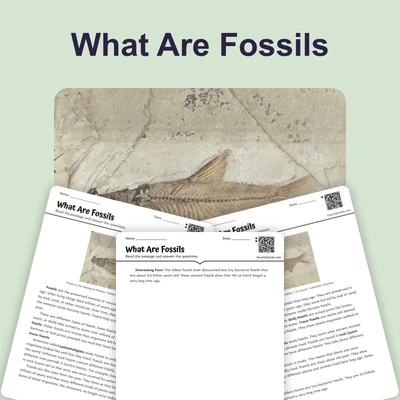
Fossils are the remains or traces of plants and animals that lived a very long time ago. Image by Ajale / Source: Pixabay.
Fossils are the preserved remains or traces of plants and animals that lived long ago. A fossil might be a bone, a shell, a footprint, or even an imprint of a leaf in rock. Scientists study fossils to learn about Earth's history because fossils provide important clues about the past.
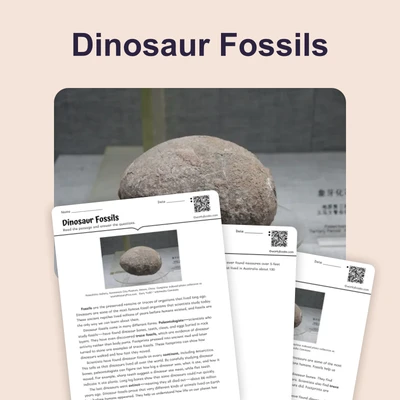
Fossils tell us what kinds of organisms lived millions of years ago. When scientists find dinosaur fossils, they can figure out what dinosaurs looked like, how big they were, and what they ate. Fossils also reveal information about ancient environments—the surroundings where organisms lived. For example, if scientists find a fish fossil in the middle of a desert, they know that area was once covered by water. This shows that Earth's surface has changed over time.
Fossils also show that life on Earth has changed dramatically. The organisms preserved in fossils look very different from plants and animals alive today. Some fossils are of organisms that are now extinct—they no longer exist anywhere on Earth. Dinosaurs are the most famous extinct organisms. By studying fossils, scientists learn that some species disappeared while new species appeared over millions of years.
Fossils are found most often in sedimentary rock—rock formed from layers of mud, sand, and other materials that settled at the bottom of oceans, lakes, and rivers. Fossils are one of the best tools scientists have for understanding Earth's long history.
Interesting Fact: The oldest fossils ever discovered are about 3.5 billion years old! They are fossils of tiny bacteria-like organisms that lived in ancient oceans.
What are fossils?
Rocks found in museumsRemains of ancient plants and animalsTools used by scientistsTypes of sedimentary layers
Where are most fossils found?
In volcanic rockOn mountain topsIn sedimentary rockIn ice and snow
What does extinct mean?
Very old organismsOrganisms that live in waterOrganisms no longer existing on EarthOrganisms found in deserts
What does a fish fossil in a desert tell scientists?
Fish once lived in desertsThe area was once underwaterDeserts are good for fossilsFish can survive without water
How do fossils show that life has changed?
Ancient organisms look different from today's organismsAll fossils look exactly the sameFossils only show modern animalsFossils prove nothing has changed
Why do scientists study dinosaur fossils?
To find out what dinosaurs ate and looked likeTo collect them for museums onlyTo prove dinosaurs still existTo make rocks more interesting
Fossils can only be bones and shells.
TrueFalse
What is an environment?
A type of fossilThe surroundings where organisms liveA kind of rockAn extinct animal
Perfect For:
👩🏫 Teachers
• Reading comprehension practice
• Auto-graded assessments
• Literacy skill development
👨👩👧👦 Parents
• Reading practice at home
• Comprehension improvement
• Educational reading time
🏠 Homeschoolers
• Reading curriculum support
• Independent reading practice
• Progress monitoring
Reading Features:
📖
Reading Passage
Engaging fiction or nonfiction text
❓
Comprehension Quiz
Auto-graded questions
📊
Instant Feedback
Immediate results and scoring
📄
Printable Version
Download for offline reading
🔊
Read Aloud
Voice-over with word highlighting
Reviews & Ratings
No reviews yet. Be the first to share your experience!
Related Content
Tools and Technology in Earth Science
This middle school science reading passage explores the wide range of tools and technologies used in Earth science, from...
MS-ESS2-2MS-ESS3-2MS-ETS1-1MS-PS4-3
Scientific Inquiry in Earth Science
This passage explores scientific inquiry in Earth science for grades 6-8, aligned with NGSS standards MS-ESS1-4, MS-ESS2...
MS-ESS1-4MS-ESS2-1MS-ESS3-5SEP
What Is Earth Science?
This engaging middle school science passage introduces students to the field of Earth science, aligning with NGSS standa...
MS-ESS1MS-ESS2MS-ESS3SEP
Earth: Our Home in Space
This engaging Grade 4-5 science passage, aligned to NGSS, introduces students to Earth's special place in the solar syst...
Earth's Spheres
This middle school science passage introduces students to Earth's four major spheres: the geosphere, hydrosphere, atmosp...
MS-ESS2-4MS-ESS2-6
What Is Space Weather and How Does It Affect the Earth?
This NGSS-aligned science passage for middle school explains what space weather is and how it affects Earth. Students le...
MS-ESS2-2
Earth's Energy Balance
This engaging, NGSS-aligned science passage for grades 6–8 explores Earth's energy balance, a key process that keeps our...
MS-ESS2-6
Earth's Rotation
This middle school science passage, aligned with NGSS standard MS-ESS1-1, focuses on Earth's rotation—how Earth spins on...
MS-ESS1-1
Earth's Land and Water
This 250-word reading passage introduces fourth-grade students to the fundamental concept of how land and water are dist...
NGSS 4-ESS2-2ESS2.B
Earth's Interior
This comprehensive passage for grades 6-8 explores Earth's layered interior, including the crust, mantle, outer core, an...
MS-ESS2-1MS-ESS2-2
Facts About Earth
This engaging science reading passage introduces Grade 4 and 5 students to Earth, our home planet. Aligned with NGSS sta...
Meteorite Impacts on Earth
This engaging science reading passage for Grades 4-5 explores meteorite impacts on Earth, aligning with NGSS standards. ...
Venus: Earth's Twin?
This comprehensive science passage for grades 6-8 examines Venus—often called Earth's twin—by exploring its similarities...
MS-ESS1-2MS-ESS1-3
Earth Changes Over Millions of Years
This engaging, audio-integrated science passage for Grade 4-5 students explores how Earth has changed over millions of y...
Volcano Patterns on Earth
This Grade 4 science reading passage introduces students to volcano patterns on Earth, aligned with NGSS standard 4-ESS2...
NGSS 4-ESS2-2
Earth's Moon Facts
This engaging science passage, 'The Moon: Earth's Companion,' is designed for Grade 4-5 students and aligns with NGSS ge...
Earth's Quick and Slow Changes
In 'Earth's Quick and Slow Changes,' students categorize 12 Earth events by their speed of occurrence, enhancing underst...
Earth: Our Home Planet
This comprehensive science passage for grades 6-8 explores Earth’s unique characteristics and the interconnected systems...
MS-ESS1-2
Earth's Revolution
This middle school science passage explores the science behind Earth's revolution around the Sun, closely aligned with N...
MS-ESS1-1
Earthquake Patterns on Earth
This engaging 250-word reading passage introduces fourth-grade students to earthquake patterns on Earth, aligned with NG...