What is Renewable Energy and How Does it Help? — Reading Comprehension
Rate this
Premium Resource
Present
Present in classroom. No work saved
Assign
Classroom with student accounts, Track progress
Quick Play
No student accounts, assign with a link
Grades
6
7
8
PRINT+DIGITAL RESOURCE
This learning resource is available in interactive and printable formats. The interactive worksheet can be played online and assigned to students. The Printable PDF version can be downloaded and printed for completion by hand.
This engaging science passage for Grades 6-8 explains what renewable energy is, why it is important, and how it helps people and the planet. Students will learn about key types of renewable energy, such as solar, wind, and hydropower, and how they are used in real-world applications. The passage introduces important vocabulary terms, defines key concepts, and highlights the benefits of using renewable energy to fight pollution and climate change. It ends with an interesting science fact and provides a glossary for easy reference. The resource is aligned to the Next Generation Science Standards (NGSS) and includes an audio-integrated reading experience. Students can check their understanding with a multiple-choice quiz and expand their thinking with writing prompts that encourage them to connect science concepts to their everyday lives.
CONTENT PREVIEW
Expand content preview
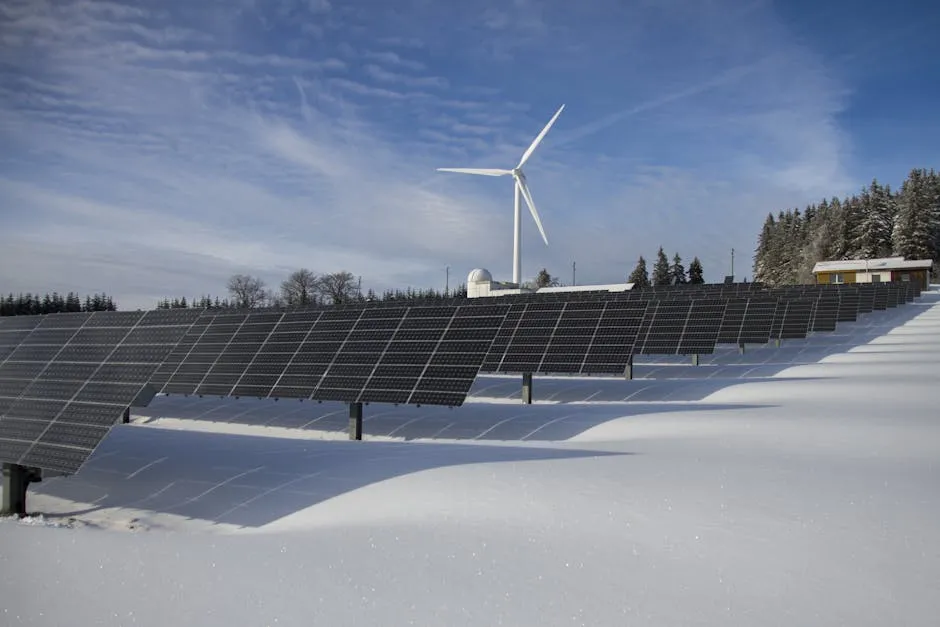
Solar panels and wind turbine in a snowy landscape, showcasing renewable energy sources. Source: Pexels - Pixabay
Renewable energy is energy that comes from natural sources that can be replaced in a short period of time. Unlike fossil fuels like coal, oil, and natural gas—which take millions of years to form—renewable energy comes from sources that won't run out soon. These sources include sunlight, wind, water, and even plants.
One major type of renewable energy is solar energy. Solar energy comes from the sun's rays. Special panels, called solar panels, collect sunlight and turn it into electricity. Solar panels are often placed on rooftops, in fields, or even in space. They help power homes, schools, and businesses without causing pollution.
Wind energy is another important type. Large machines called wind turbines have blades that spin when the wind blows. This spinning motion turns a generator inside the turbine, which creates electricity. Wind farms, which have many wind turbines, can produce enough energy to power thousands of homes.
Hydropower uses the movement of water to make electricity. Dams are built on rivers to trap water in a reservoir. When water is released, it flows through turbines, spinning them and making power. Hydropower is one of the oldest and most widely used forms of renewable energy.
Other types of renewable energy include biomass and geothermal energy. Biomass uses plant materials and animal waste to create fuel or electricity. Geothermal energy comes from heat inside the Earth. Special power plants use this heat to make electricity or warm buildings.
Switching to renewable energy has many benefits. It helps reduce pollution because these sources do not release harmful gases into the air, like burning fossil fuels does. Using more renewable energy can slow down climate change by cutting down the amount of greenhouse gases in the atmosphere. Renewable energy also helps countries use their own natural resources instead of importing fuels from far away.
All over the world, people are building more solar panels, wind turbines, and hydropower plants. Schools, cities, and businesses are choosing clean energy to help protect the environment for future generations.
Interesting Fact: The world's largest solar power plant is in India and can produce enough electricity for over 700,000 homes!
What is renewable energy?
Energy from natural sourcesEnergy from only oilEnergy that cannot be replacedEnergy from ancient animals
What do solar panels collect?
WindSunlightWaterSoil
What spins the blades of wind turbines?
SunlightWaterWindFire
Why is renewable energy important?
It causes more pollutionIt runs out quicklyIt protects the environmentIt uses more fossil fuels
How does hydropower produce energy?
Burning oilMoving water spins turbinesSolar panelsWind blowing on blades
Which source is NOT renewable?
SolarWindCoalHydropower
Renewable energy never causes pollution.
TrueFalse
What is geothermal energy?
Energy from plantsEnergy from the sunHeat from inside EarthEnergy from water
Perfect For:
👩🏫 Teachers
• Reading comprehension practice
• Auto-graded assessments
• Literacy skill development
👨👩👧👦 Parents
• Reading practice at home
• Comprehension improvement
• Educational reading time
🏠 Homeschoolers
• Reading curriculum support
• Independent reading practice
• Progress monitoring
Reading Features:
📖
Reading Passage
Engaging fiction or nonfiction text
❓
Comprehension Quiz
Auto-graded questions
📊
Instant Feedback
Immediate results and scoring
📄
Printable Version
Download for offline reading
🔊
Read Aloud
Voice-over with word highlighting
Reviews & Ratings
No reviews yet. Be the first to share your experience!
Related Content
What Is Earth Science?
This engaging middle school science passage introduces students to the field of Earth science, aligning with NGSS standa...
MS-ESS1MS-ESS2MS-ESS3SEP
Transportation and Climate Change
This engaging science passage for grades 6-8 explores the vital role that transportation plays in climate change. Studen...
Tools and Technology in Earth Science
This middle school science reading passage explores the wide range of tools and technologies used in Earth science, from...
MS-ESS2-2MS-ESS3-2MS-ETS1-1MS-PS4-3
Climate Change: Solutions and Mitigation
This passage explores scientific solutions and mitigation strategies for climate change, designed for middle school scie...
MS-ESS3-4MS-ESS3-5
Extreme Weather and Climate Change
This Grade 6-8 science passage, aligned to NGSS standards, explores the impact of climate change on extreme weather even...
Climate Change: Causes
This comprehensive middle school science passage explores the causes of climate change by examining both natural and hum...
MS-ESS3-5MS-LS2-4
Effects of Climate Change
This comprehensive middle school science passage explores the effects of climate change on Earth's systems and life, ali...
MS-ESS3-5MS-LS4-4
Climate Change Bird Migration
This educational passage, audio integrated, explores how climate change affects bird migration patterns. Students will l...
MS-LS2-4: CONSTRUCT AN ARGUMENT SUPPORTED BY EMPIRICAL EVIDENCE THAT CHANGES TO PHYSICAL OR BIOLOGICAL COMPONENTS OF AN ECOSYSTEM AFFECT POPULATIONS.
Climate Through Earth's History
This engaging passage for grades 6-8 explores how Earth's climate has naturally changed over millions of years, highligh...
MS-ESS1-4MS-ESS2-6
Climate Change: Vulnerable Ecosystems
This middle school science passage, aligned with NGSS standards MS-ESS3-5 and MS-LS2-4, helps students understand how cl...
MS-ESS3-5MS-LS2-4
How Deforestation Contributes to Climate Change
This engaging science passage, aligned with NGSS standards, explains how deforestation contributes to climate change for...
Permafrost and Climate Change
This engaging, NGSS-aligned science passage for grades 6-8 explores how melting permafrost releases greenhouse gases, im...
Scientific Inquiry in Earth Science
This passage explores scientific inquiry in Earth science for grades 6-8, aligned with NGSS standards MS-ESS1-4, MS-ESS2...
MS-ESS1-4MS-ESS2-1MS-ESS3-5SEP
Impact of Climate Change on Water Resources
This engaging science passage for grades 6-8 explores the impact of climate change on water resources, aligning with NGS...
Heatwaves and Climate Change
This educational resource features an engaging, audio-integrated reading passage titled 'Heatwaves and Climate Change,' ...
How Climate Change Affects Food Security
This grade 6-8 science passage, aligned with the NGSS standards, explores how climate change affects food security aroun...
What Is The Difference Between Global Warming And Climate Change?
This educational content, audio integrated, explores the crucial differences between global warming and climate change. ...
Addressing Climate Change
This middle school science passage, aligned with NGSS standards MS-ESS3-4 and MS-ESS3-5, explores the mechanisms and sol...
MS-ESS3-4MS-ESS3-5
Climate Change: Species Responses
This middle school science passage explores how species respond to climate change, aligning with NGSS standards MS-LS4-4...
MS-LS4-4MS-LS4-6
How Climate Change Affects Ocean Acidification
This comprehensive science passage explores how climate change impacts ocean acidification and why this process is impor...