What Is The Difference Between Greenhouse Gases And Aerosols? — Reading Comprehension
Rate this
Premium Resource
Present
Present in classroom. No work saved
Assign
Classroom with student accounts, Track progress
Quick Play
No student accounts, assign with a link
Grades
6
PRINT+DIGITAL RESOURCE
This learning resource is available in interactive and printable formats. The interactive worksheet can be played online and assigned to students. The Printable PDF version can be downloaded and printed for completion by hand.
This educational content package, audio integrated, focuses on the critical distinction between greenhouse gases and aerosols, two key factors influencing Earth's climate. Designed for a 6th-grade reading level, the passage explains how greenhouse gases trap heat, leading to global warming, while aerosols can have both warming and cooling effects depending on their type. Students will learn about the science behind these atmospheric components and their roles in climate change. The content aligns with NGSS standard MS-ESS3-5, encouraging students to ask questions about factors contributing to rising global temperatures. Activities include reading comprehension questions, a glossary of important terms like 'atmosphere,' 'emission,' and 'fossil fuels,' and short answer questions, making it a comprehensive learning resource on an important environmental topic.
CONTENT PREVIEW
Expand content preview
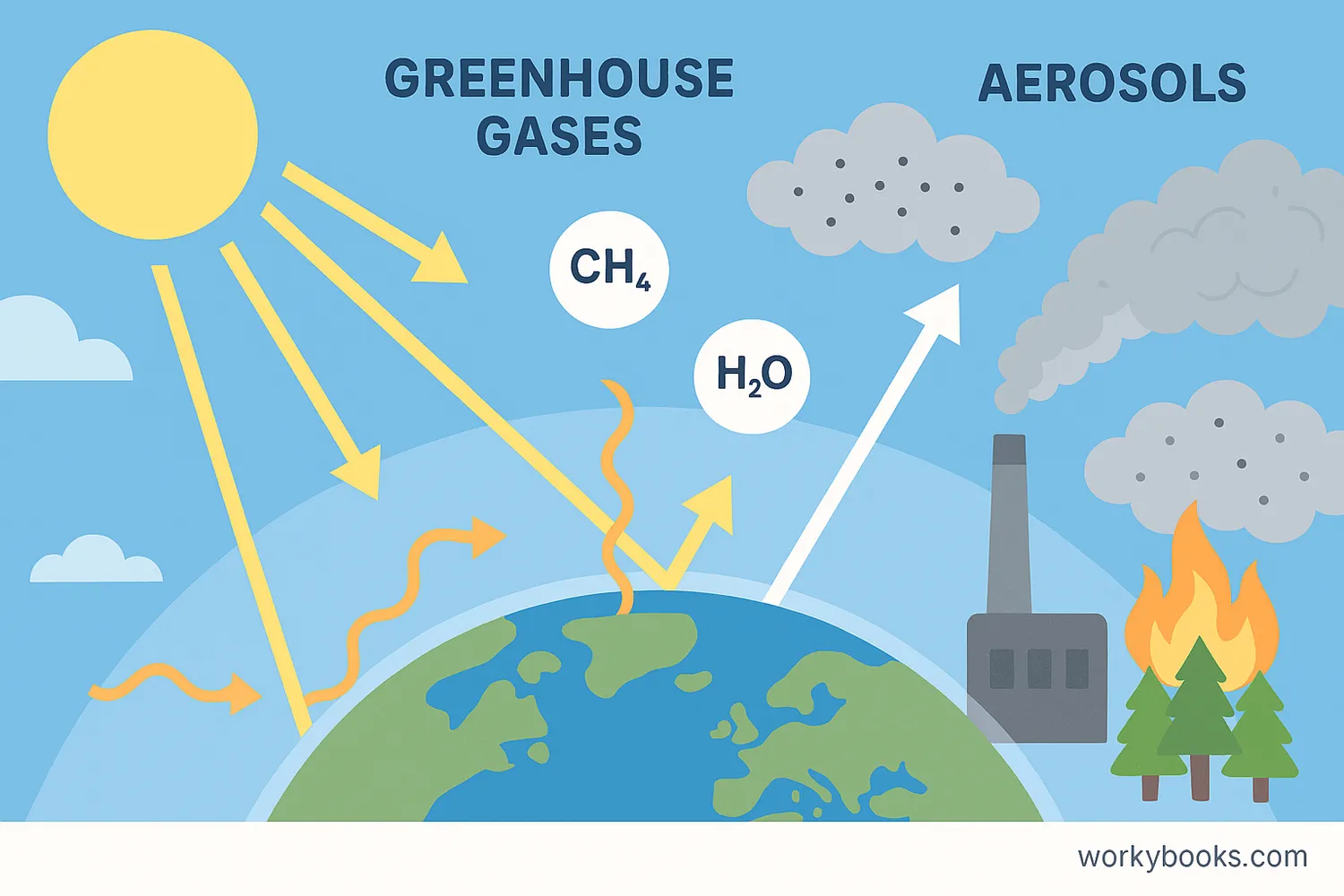
Greenhouse gases warm Earth; aerosols can cool or warm depending on their type.
Have you ever wondered what causes our planet's temperature to change? Two important things in Earth's atmosphere, called greenhouse gases and aerosols, play big roles. While both are tiny particles or gases in the air, they affect our planet very differently, especially when it comes to global warming and climate change.
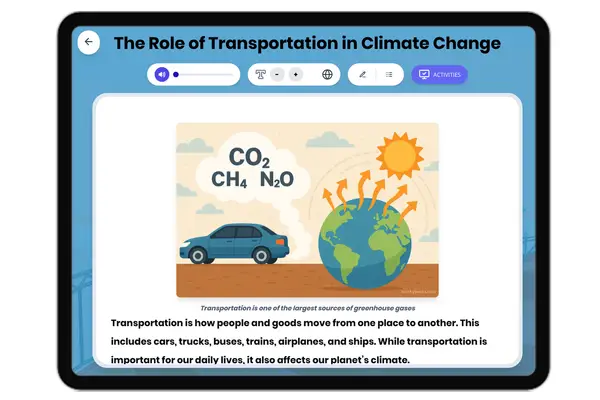
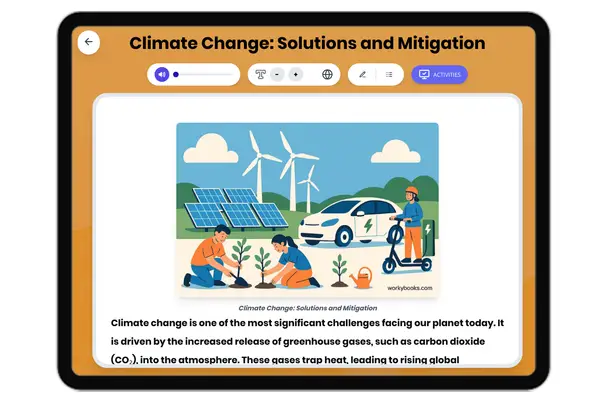
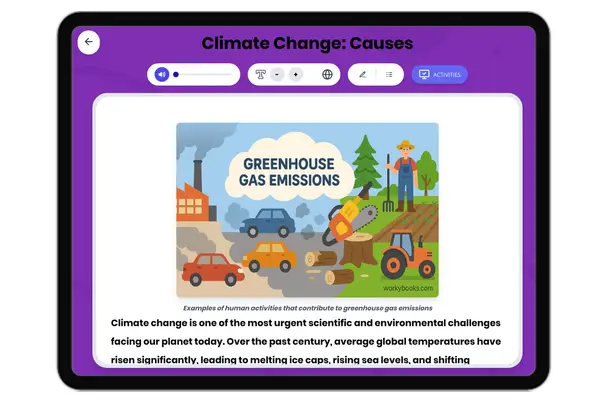
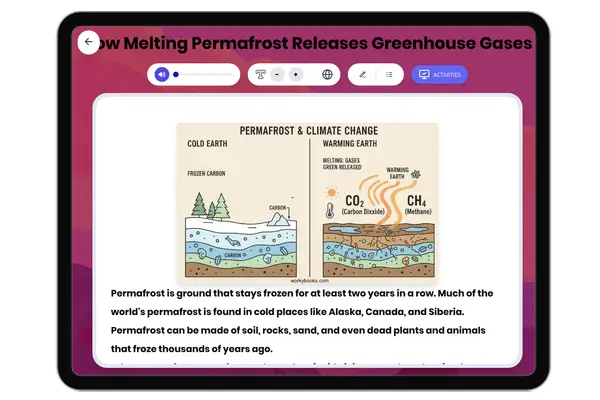
Let's start with greenhouse gases. Imagine Earth is like a giant greenhouse. A greenhouse has glass walls that let sunlight in to warm the plants inside, but they trap some of the heat, keeping the greenhouse warm. Greenhouse gases work in a similar way. They are gases like carbon dioxide, methane, and water vapor. These gases let sunlight pass through to warm Earth's surface. But when Earth's surface warms up and radiates heat back into space, these gases trap some of that heat. This natural process is called the greenhouse effect, and it's essential for keeping our planet warm enough to live on. Without it, Earth would be too cold. However, when there are too many greenhouse gases, mostly from human activities like burning fossil fuels (coal, oil, and natural gas) for energy, they trap too much heat. This extra trapped heat causes Earth's average temperature to rise, leading to global warming and climate change.
Now, let's look at aerosols. Aerosols are tiny solid or liquid particles floating in the air. Unlike greenhouse gases, which are invisible gases, aerosols can sometimes be seen, like in smoke or haze. Aerosols come from both natural sources, such as volcanoes and sea spray, and human activities, like burning wood or industrial emissions. Their effect on climate is more complex. Some aerosols, like tiny white sulfate particles from factories, reflect sunlight back into space. This can have a cooling effect on Earth. Think of it like putting on a light-colored shirt on a sunny day – it helps keep you cooler. Other aerosols, like black carbon (soot) from fires, absorb sunlight and can cause warming. Because of these different effects, the overall impact of aerosols on climate can vary greatly. Scientists study both greenhouse gases and aerosols carefully to understand how they contribute to changes in global temperatures.
In summary, greenhouse gases primarily warm the planet by trapping heat, while aerosols can either warm or cool the planet depending on their type. Both are important for understanding Earth's climate.
Interesting Fact: A single volcanic eruption can release millions of tons of aerosols into the atmosphere, temporarily cooling parts of the planet!