Difference Between Polar Regions And Tropical Regions
Interactive passage with audio narration, comprehension questions, and printable PDF.
By completing this purchase you agree to our Terms of Use and Privacy Policy. Your subscription renews automatically until you cancel. You can cancel anytime from your account settings. All sales are final and non-refundable. Digital content is available for download in your account immediately upon purchase.
What's included
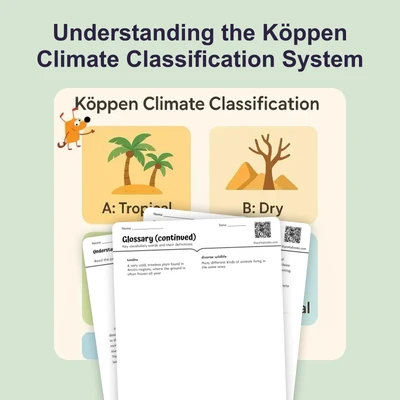
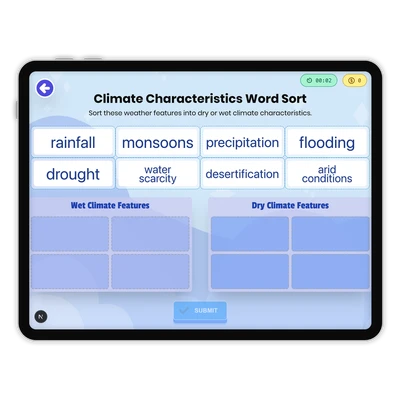
Difference Between Polar Regions And Tropical Regions preview and details
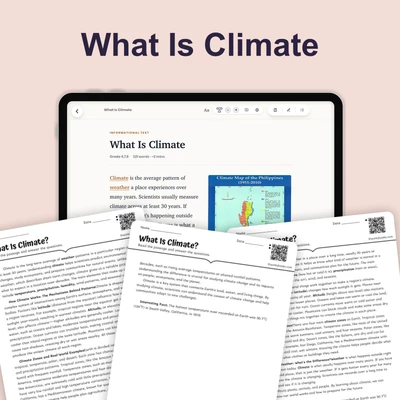
About this printable Difference Between Polar Regions And Tropical Regions science reading passage, NGSS-aligned (Grade 6)
Sample passage and quiz from Difference Between Polar Regions And Tropical Regions
Reading passage and comprehension quiz preview
What Is The Difference Between Polar Regions And Tropical Regions In Climate Change?
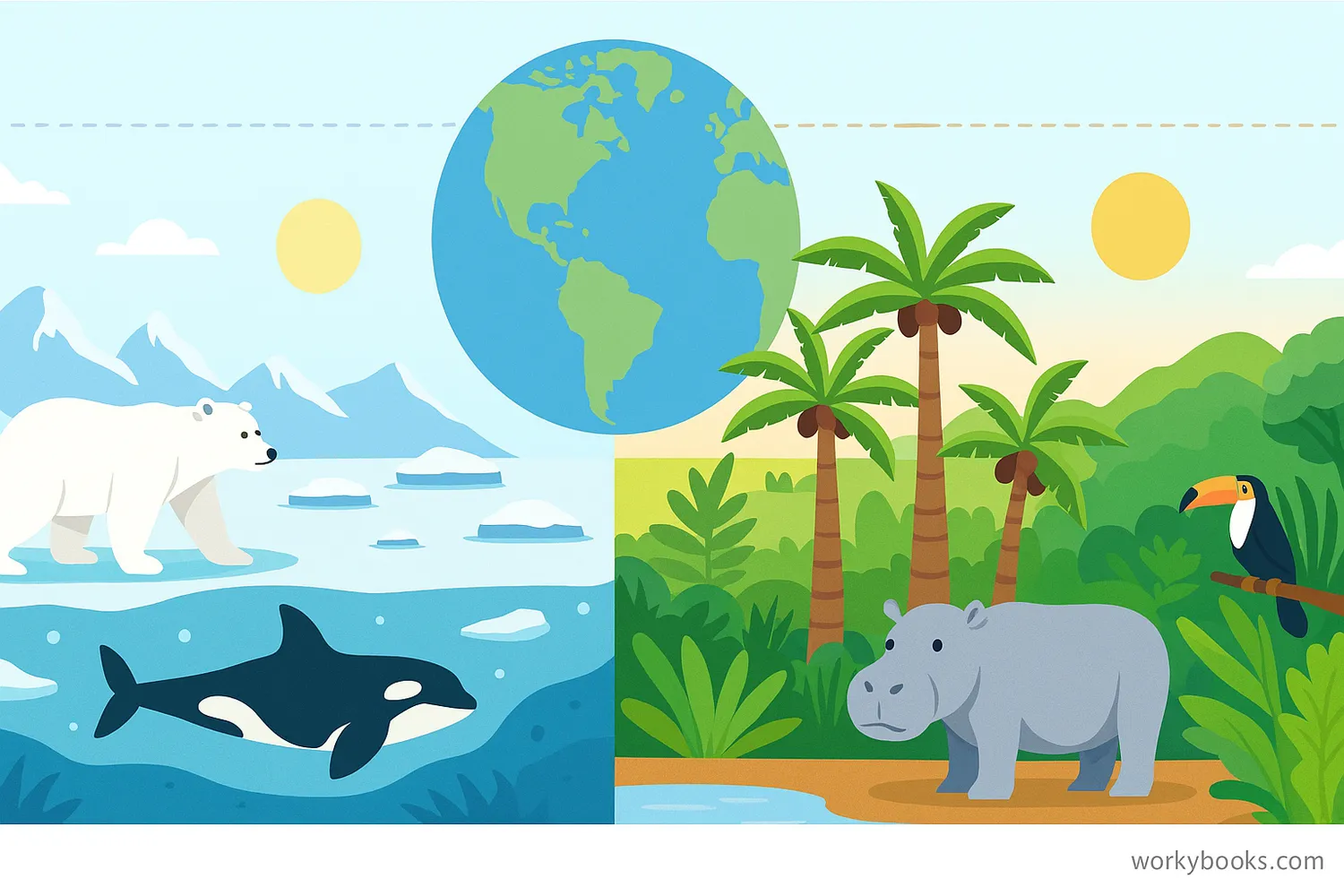
Our Earth has many different climates, from very cold to very hot. Two of the most interesting and important regions are the polar regions and the tropical regions. Understanding the differences between these regions, especially in the context of climate change, is vital for understanding our planet.
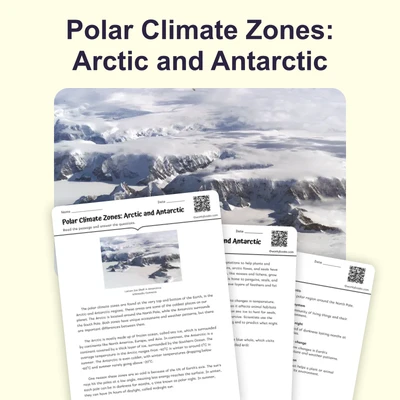
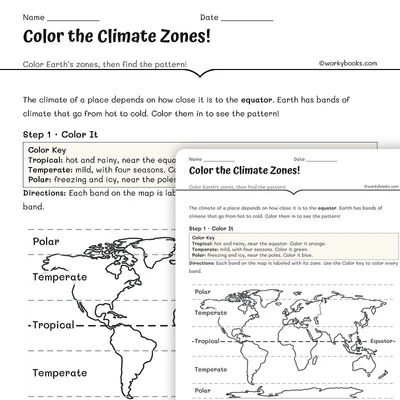
The polar regions are located at the top and bottom of the Earth, around the North Pole (the Arctic) and the South Pole (Antarctica). These areas are known for being extremely cold. They receive very little direct sunlight because the sun's rays hit the Earth at a very low angle. This means temperatures are below freezing for most of the year, leading to vast sheets of ice and snow. The wildlife here, like polar bears and penguins, are specially adapted to these harsh, cold conditions. The polar regions play a big role in regulating Earth's temperature because their white ice reflects sunlight back into space, helping to cool the planet.
In contrast, the tropical regions are located around the equator, the imaginary line that circles the middle of the Earth. These areas receive the most direct sunlight throughout the year. Because of this direct sunlight, tropical regions are very warm and often humid. They don't have distinct seasons like summer, autumn, winter, and spring; instead, they usually have wet and dry seasons. Rainforests, with their incredible biodiversity and lush plant life, are common in tropical regions. Examples include the Amazon rainforest and the jungles of Southeast Asia.
Climate change, often called global warming, is affecting both of these regions, but in different ways. In the polar regions, temperatures are rising much faster than the global average. This causes the ice and glaciers to melt at an alarming rate. When polar ice melts, it contributes to sea level rise, threatening coastal communities worldwide. Also, less ice means less sunlight reflected, leading to even more warming, a process called a positive feedback loop. The melting ice also affects polar wildlife, as their habitats disappear.
Tropical regions are also experiencing significant impacts from climate change. Warmer ocean temperatures can lead to more frequent and intense extreme weather events, such as hurricanes and typhoons. Changes in rainfall patterns can cause longer droughts in some areas and more severe flooding in others, impacting agriculture and water supplies. Rising temperatures also put stress on delicate ecosystems like coral reefs.
Interesting Fact: Antarctica is the coldest, windiest, and highest continent on Earth, even though it's surrounded by water!
Comprehension quiz (10 questions)
1. Which region receives the most direct sunlight?
2. What is a common feature of tropical regions?
3. True or False: Polar regions are warming faster than the global average.
4. Which term describes the gradual increase of Earth's temperature?
5. How does melting polar ice affect coastal areas?
6. Why do polar regions help cool the planet?
7. How might climate change impact tropical agriculture?
8. What is a 'positive feedback loop' in polar warming?
9. If an area has no distinct seasons and heavy rainfall, which region is it most likely in?
10. Which of these is NOT an impact on tropical regions due to climate change?
Perfect for the way you teach
- Build comprehension skills
- Auto-graded quiz
- Differentiated reading
- Read together at home
- Improve fluency
- Quiet reading time
- Reading curriculum support
- Independent practice
- Track Lexile growth