Premium
What Is The Difference Between Water Vapour And Carbon Dioxide As Greenhouse Gases?
Interactive passage with audio narration, comprehension questions, and printable PDF.
Just this resource
$1.50
One-time purchase
Best value
Unlock everything
$19.99/yr
5,000+ resources, AI tools
Unlock above to use these actions
- Format
- Interactive (Online), Printable (PDF)
- Grades
- 6
- Subjects
- science
- Languages
- English, Spanish
What's included
Reading passage
Reading comprehension
Audio narration
With word word highlighting
Comprehension quiz
Auto-graded
Writing activity
Open-ended response
Glossary & flashcards
Vocabulary practice
Differentiated version
Adapted for varied levels
Spanish translation
Bilingual support
About this reader
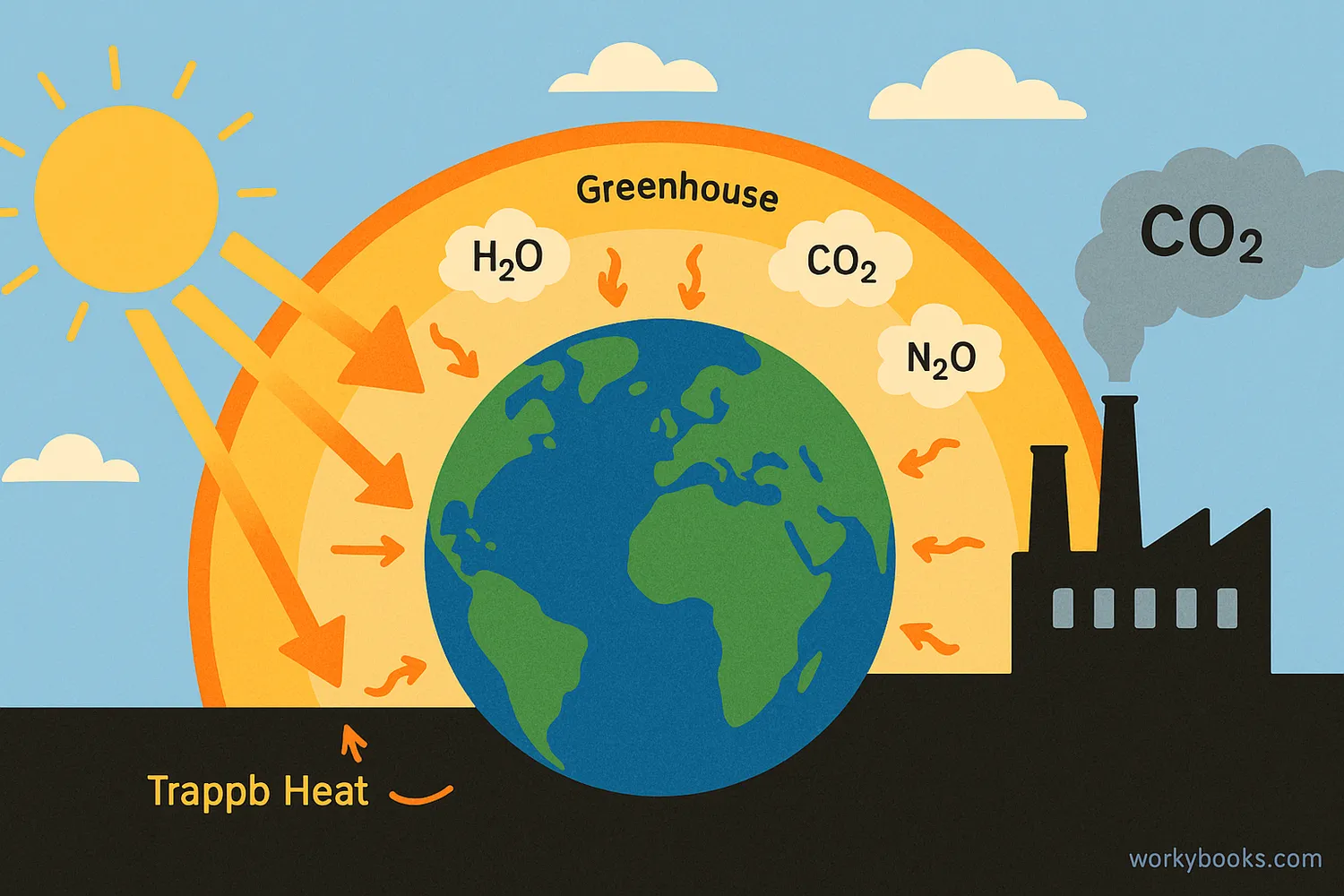
This educational passage, audio integrated for diverse learners, explores the crucial differences between water vapour and carbon dioxide as greenhouse gases. It clarifies how each contributes to the Earth's natural warming effect and explains why understanding these differences is important for studying climate change. Aligned with NGSS MS-ESS3-5, students will gain insight into the factors causing the rise in global temperatures over the past century, making connections between atmospheric composition and the planet's heat balance. Key terms like 'greenhouse effect' and 'infrared radiation' are defined simply to enhance comprehension.
Written by Workybooks TeamPublished by Workybooks
Preview
Sample passage and quiz content
Who it's for
Perfect for the way you teach
Teachers
- Build comprehension skills
- Auto-graded quiz
- Differentiated reading
Parents
- Read together at home
- Improve fluency
- Quiet reading time
Homeschoolers
- Reading curriculum support
- Independent practice
- Track Lexile growth
Topics
water vapourcarbon dioxidegreenhouse gasesclimate changeglobal warmingEarth's atmosphereinfrared radiationglobal temperatures