Reading PassagePremium

What Makes Earth Unique

Interactive passage with audio narration, comprehension questions, and printable PDF.

No ratings yet
Grades 5–8ScienceElaEnglish · SpanishInteractive · Printable
Aligned toMS-ESS1-3
Just this resource
$1.50
One-time purchase
Best value
Unlock everything
$49.99$29.99/yr
40% off until Aug 1 — 10,000+ resources
Renews at $49.99/year.
Unlock above to use these actions

What's included

Reading passage
Audio narration
Comprehension quiz
Writing activity
Glossary & flashcards
Differentiated version
Spanish translation

What Makes Earth Unique preview and details

About this printable What Makes Earth Unique science reading passage, NGSS-aligned (Grades 5-8)

This 400-500 word informational science reading passage for grades 6-8 examines what makes Earth a unique planet in our solar system. Aligned with NGSS standard MS-ESS1-3 and Disciplinary Core Idea MS-ESS1.B, the passage explores Earth's distinctive combination of features that allow life to exist: liquid water, a protective atmosphere, a magnetic field, and a stable position in the habitable zone. Students learn that while individual features may exist on other planets, Earth's combination of all these characteristics is what truly sets it apart. The passage includes audio integration for enhanced accessibility, vocabulary development with 8-10 key science terms, and real-world examples that connect to Earth systems. Differentiated versions support English Language Learners and struggling readers while maintaining content depth. Comprehensive activities include multiple-choice questions, writing prompts, and graphic organizers that develop scientific reasoning and analysis skills appropriate for middle school learners.
Written by Workybooks TeamPublished by Workybooks
Preview

Sample passage and quiz from What Makes Earth Unique

Reading passage and comprehension quiz preview

What Makes Earth Unique
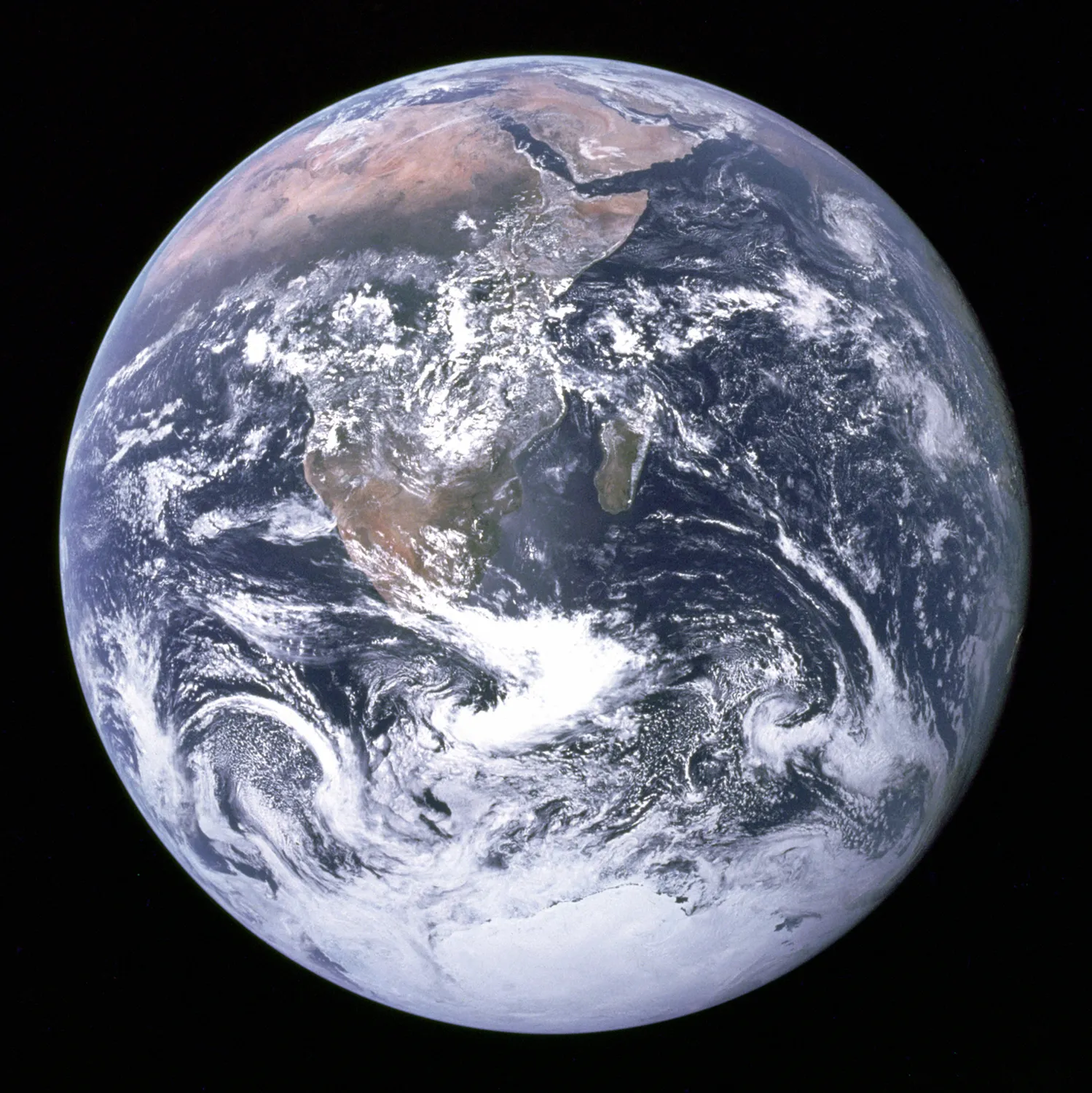
The Earth seen from Apollo 17

"The Earth seen from Apollo 17" by NASA/Apollo 17 crew; taken by either Harrison Schmitt or Ron Evans/ Wikimedia Commons 

Earth stands out among the planets in our solar system because of a special combination of features. No single feature makes Earth completely unique. However, the combination of liquid water, a protective atmosphere, a magnetic field, and a stable position in the habitable zone creates conditions that allow life to exist. Scientists explain that this combination is what truly sets Earth apart.

Liquid water covers about 70 percent of Earth's surface. Water can exist as a solid, liquid, or gas on our planet. This happens because Earth's temperature and atmospheric pressure fall within a narrow range. The atmosphere provides a protective blanket of gases around Earth. It shields the surface from harmful solar radiation and helps regulate temperature. The atmosphere also contains oxygen, which most living things need to survive. Evidence shows that Earth's atmosphere developed over billions of years through natural processes.

Earth's magnetic field acts like an invisible shield in space. The field forms because of movement in Earth's liquid iron core. This shield deflects charged particles from the Sun called solar wind. Without this protection, solar wind could strip away the atmosphere over time. Mars may have lost much of its atmosphere this way because its magnetic field is very weak.

Earth orbits the Sun at just the right distance. This region is called the habitable zone, or the Goldilocks zone. In this zone, temperatures allow liquid water to exist on a planet's surface. Venus orbits too close to the Sun and became too hot. Mars orbits too far away and became too cold. Earth's position, combined with its atmosphere and magnetic field, maintains stable temperatures. This stability has allowed life to develop and change over billions of years.

Scientists continue to search for planets around other stars that might have similar conditions. They look for rocky planets in habitable zones with signs of atmospheres. However, finding all of Earth's features together remains rare. The combination of features on Earth shows how many factors must work together to support life. Understanding what makes Earth unique helps scientists appreciate how special our planet is. It also guides the search for life beyond our solar system.

Interesting Fact: Earth's magnetic field is not permanent and has reversed many times throughout history. Evidence in ancient rocks shows that the north and south magnetic poles have switched places hundreds of times over millions of years.

Comprehension quiz (10 questions)

1. What makes Earth truly unique compared to other planets?

It has liquid water on its surface
It has a protective atmosphere
The combination of several life-supporting features
It has a strong magnetic field

2. What percentage of Earth's surface is covered by liquid water?

About 50 percent
About 70 percent
About 80 percent
About 90 percent

3. What does Earth's magnetic field protect the planet from?

Asteroids and comets
Solar wind and charged particles
Extreme cold temperatures
Gravity from other planets

4. In the passage, what does the term 'habitable zone' mean?

The area where humans can build cities
The region around a star where liquid water can exist
The part of Earth where most life is found
The zone protected by Earth's magnetic field

5. Why might Mars have lost much of its atmosphere?

It is too small to hold an atmosphere
It has no water on its surface
Its magnetic field is very weak
It orbits too far from the Sun

6. Based on the passage, what can you infer about Venus?

It once had conditions similar to Earth
Its position makes it too hot for liquid water
It has a stronger magnetic field than Earth
It will eventually move into the habitable zone

7. If a planet had liquid water but no magnetic field, what would likely happen over time?

The water would freeze completely
The atmosphere could be stripped away by solar wind
The planet would move out of the habitable zone
Life would develop more quickly

8. How does Earth's atmosphere help support life?

It creates the magnetic field
It provides oxygen and regulates temperature
It produces liquid water
It controls Earth's orbit around the Sun

9. True or False: Earth's magnetic field has remained in the same position throughout history.

True
False

10. True or False: Scientists have found many planets with the same combination of features as Earth.

True
False
Who it's for

Perfect for the way you teach

Teachers
  • Build comprehension skills
  • Auto-graded quiz
  • Differentiated reading
Parents
  • Read together at home
  • Improve fluency
  • Quiet reading time
Homeschoolers
  • Reading curriculum support
  • Independent practice
  • Track Lexile growth
Topics

Reviews & Ratings

No reviews yet. Be the first to share your experience!

More reading you might love

20 more
Passage
Sunspots and Solar Flares - reading educational content
Grades 4–5

Sunspots and Solar Flares

earth science · RI.4.1

Free
Passage
The Hottest Planet in the Solar System - reading educational content
Grades 3–7

The Hottest Planet in the Solar System

science · MS-ESS1-3

Free
Passage
Mercury: Closest to the Sun - reading educational content
Grades 5–8

Mercury: Closest to the Sun

science · MS-ESS1-2

$1.50
Passage
Venus: Earth's Twin? - reading educational content
Grades 5–8

Venus: Earth's Twin?

science · MS-ESS1-2

$1.50
Passage
Mars: The Red Planet - reading educational content
Grades 5–8

Mars: The Red Planet

science · MS-ESS1-2

$1.50
Passage
What Is the Solar System? - reading educational content
Grades 5–8

What Is the Solar System?

science · MS-ESS1-2

$1.50
Passage
Structure of the Solar System - reading educational content
Grades 5–8

Structure of the Solar System

science · MS-ESS1-2

$1.50
Passage
Scale of the Solar System - reading educational content
Grades 5–8

Scale of the Solar System

science · MS-ESS1-3

$1.50
Passage
Exploration of the Solar System - reading educational content
Grades 5–8

Exploration of the Solar System

science · MS-ESS1-3

$1.50
Passage
Optical Telescopes - reading educational content
Grades 5–8

Optical Telescopes

science · MS-ESS1-3

$1.50
Passage
Future of Alien Search - reading educational content
Grades 5–8

Future of Alien Search

science · MS-ESS1-3

$1.50
Passage
Communicating with Aliens - reading educational content
Grades 5–8

Communicating with Aliens

science · MS-ESS1-3

$1.50
Passage
Measuring Distances in Space - reading educational content
Grades 5–8

Measuring Distances in Space

earth science · MS-ESS1-3

$1.50
Passage
 Astronomy - reading educational content
Grades 5–8

Astronomy

earth science · MS-ESS1-2

$1.50
Passage
The Solar System - reading educational content
Grades 5–8

The Solar System

science · MS-ESS1-2

$1.50
Passage
The Inner Planets - reading educational content
Grades 5–8

The Inner Planets

science · MS-ESS1-2

$1.50
Passage
The Outer Planets - reading educational content
Grades 5–8

The Outer Planets

science · MS-ESS1-2

$1.50
Passage
Light-Years and Cosmic Distances - reading educational content
Grades 5–8

Light-Years and Cosmic Distances

science · MS-ESS1-3

$1.50
Passage
Space Stations - reading educational content
Grades 5–8

Space Stations

science · MS-ESS1-3

$1.50
Passage
Types of Spacecraft - reading educational content
Grades 5–8

Types of Spacecraft

science · MS-ESS1-3

$1.50
Copyright © 2026 Workybooks. Made with ♥ in California.