What Were the Ice Age Megafauna
Interactive passage with audio narration, comprehension questions, and printable PDF.
By completing this purchase you agree to our Terms of Use and Privacy Policy. Your subscription renews automatically until you cancel. You can cancel anytime from your account settings. All sales are final and non-refundable. Digital content is available for download in your account immediately upon purchase.
What's included
What Were the Ice Age Megafauna preview and details
About this printable What Were the Ice Age Megafauna science reading passage, NGSS-aligned (Grades 5-8)
Sample passage and quiz from What Were the Ice Age Megafauna
Reading passage and comprehension quiz preview
What Were the Megafauna
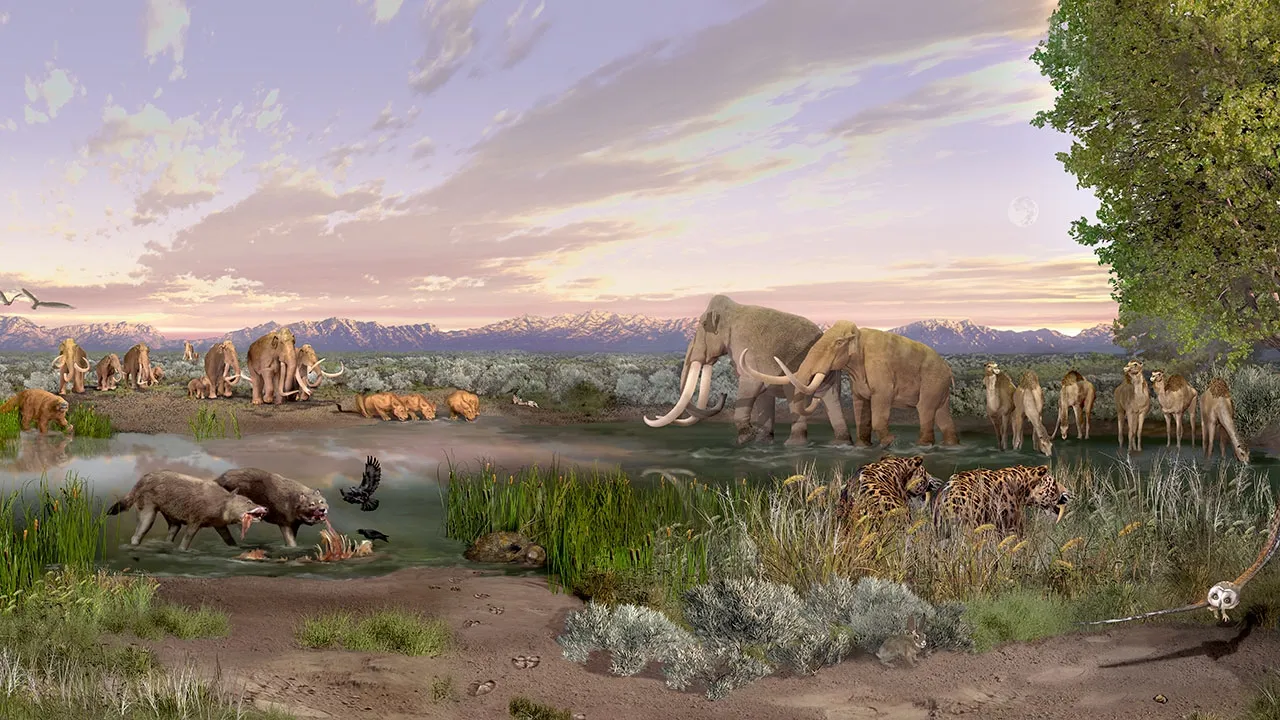
"Paleontological landscape painting, White Sands National Park, United States" by uncredited National Park Service (NPS) artist / Wikimedia Commons
Megafauna were giant animals that lived during the Pleistocene epoch, commonly known as the Ice Age. Scientists define megafauna as animals weighing more than 100 pounds. These massive creatures roamed Earth from about 2.6 million years ago until most disappeared between 50,000 and 10,000 years ago. Megafauna lived on every continent except Antarctica.
Many different types of megafauna existed during the Ice Age. Woolly mammoths stood up to 11 feet tall and had long, curved tusks. Mastodons were similar to mammoths but had different teeth for eating plants. Giant ground sloths grew as large as modern elephants and could stand on their hind legs. Saber-toothed cats hunted with blade-like canine teeth up to seven inches long. Short-faced bears were among the largest predators, standing 12 feet tall on their hind legs. Woolly rhinos had thick fur and two horns adapted for cold climates.
Evidence shows that most megafauna went extinct relatively quickly in Earth's history. Scientists study fossils, bones, and preserved remains to understand what happened. In Siberia, researchers have found frozen woolly mammoths with intact skin and fur. These discoveries provide important clues about how these animals lived. Scientists debate several possible causes for megafauna extinction. Climate change at the end of the Ice Age altered habitats and food sources. Human hunting may have reduced populations faster than animals could reproduce. Disease could have spread among megafauna populations. Most scientists think a combination of these factors led to extinction.
Modern megafauna still exist today, though they face similar threats. Elephants are related to extinct mammoths and mastodons. Rhinoceroses share ancestry with woolly rhinos. Whales represent the largest megafauna in ocean environments. These animals remind us that megafauna were mammals, not dinosaurs. Dinosaurs went extinct 66 million years ago, long before megafauna appeared. Understanding what happened to Ice Age megafauna can help scientists protect modern large animals from extinction.
Interesting Fact: Scientists extracted DNA from a woolly mammoth tooth frozen for over one million years. This represents the oldest DNA ever recovered and helps researchers understand how these animals evolved over time.
Comprehension quiz (10 questions)
1. What is the scientific definition of megafauna?
2. On which continent did megafauna NOT live?
3. Based on the passage, what does the word 'extinct' mean?
4. What evidence do scientists use to study megafauna?
5. Why do scientists think megafauna went extinct?
6. How are modern elephants related to Ice Age megafauna?
7. What can frozen woolly mammoth remains teach scientists?
8. What feature made saber-toothed cats effective hunters?
9. True or False: Megafauna and dinosaurs lived at the same time.
10. True or False: All megafauna are now extinct.
Perfect for the way you teach
- Build comprehension skills
- Auto-graded quiz
- Differentiated reading
- Read together at home
- Improve fluency
- Quiet reading time
- Reading curriculum support
- Independent practice
- Track Lexile growth