Where is Alluvial Soil Found
Interactive passage with audio narration, comprehension questions, and printable PDF.
By completing this purchase you agree to our Terms of Use and Privacy Policy. Your subscription renews automatically until you cancel. You can cancel anytime from your account settings. All sales are final and non-refundable. Digital content is available for download in your account immediately upon purchase.
What's included
Where is Alluvial Soil Found preview and details
About this printable Where is Alluvial Soil Found science reading passage, NGSS-aligned (Grade 6)
Sample passage and quiz from Where is Alluvial Soil Found
Reading passage and comprehension quiz preview
What is the Earth's Biosphere?
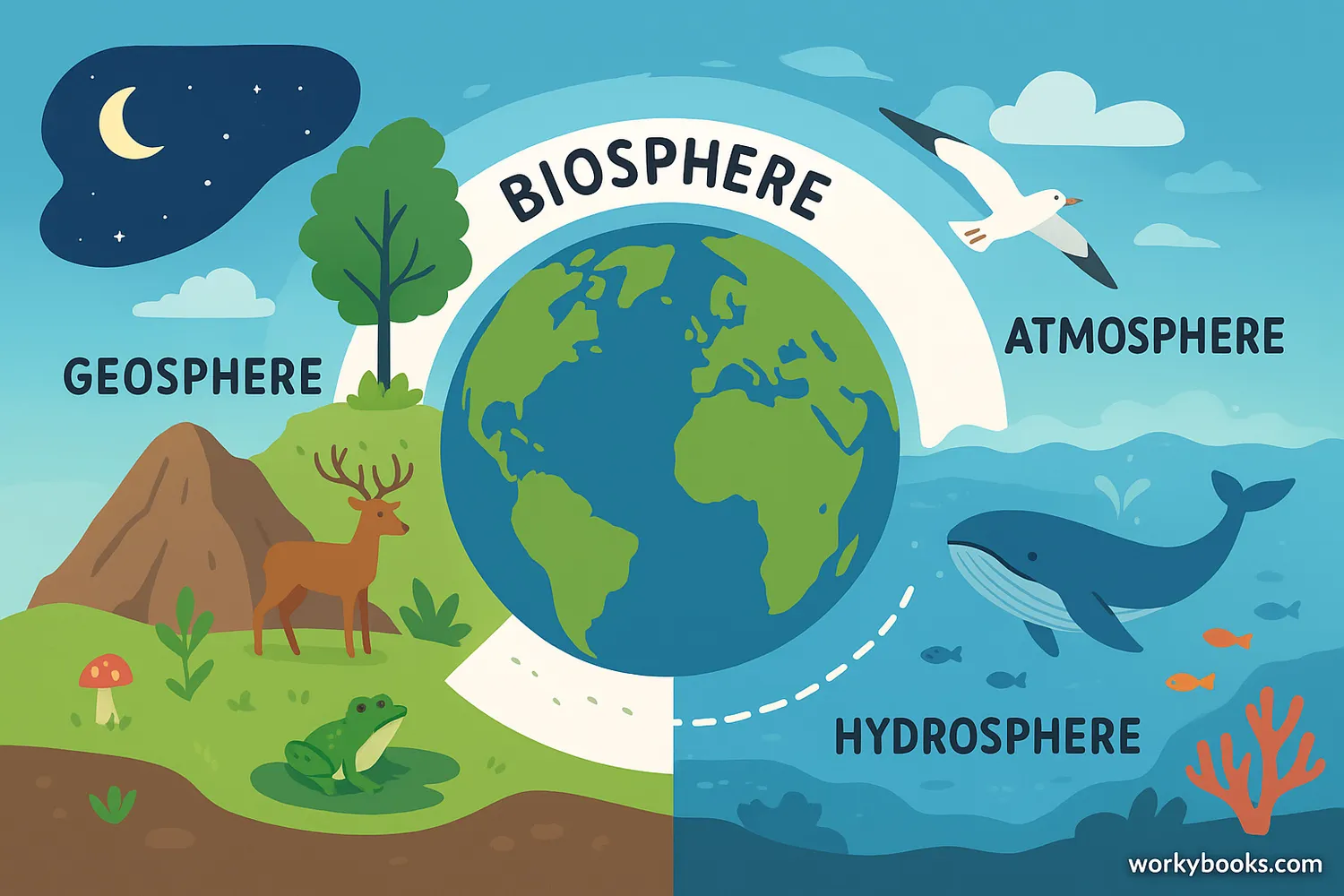
Have you ever thought about all the living things on Earth, from the smallest bacteria to the largest whales? All of these living things, and the places where they live, make up what scientists call the biosphere. The biosphere is like a giant blanket of life that covers our planet. The word 'biosphere' comes from two Greek words: 'bio' meaning life, and 'sphaira' meaning sphere or globe. So, it literally means 'sphere of life'.
The Earth is made up of several big systems that interact with each other. Besides the biosphere, there's the geosphere (all the rocks, land, and soil), the hydrosphere (all the water on Earth, like oceans, rivers, and lakes), and the atmosphere (the air surrounding our planet). The biosphere doesn't exist alone; it constantly interacts with these other spheres in amazing ways. Understanding the biosphere helps us grasp how all life on Earth is connected and how crucial these connections are for our planet's health.
Where can you find the biosphere? Everywhere life exists! It stretches from the deepest parts of the oceans to the highest mountain peaks and even a few miles into the atmosphere. For example, deep-sea creatures live in the ocean (hydrosphere), plants grow in the soil (geosphere), and birds fly through the air (atmosphere). These are all parts of the biosphere.
Let's look at some interactions. Plants (biosphere) take nutrients from the soil (geosphere) and water (hydrosphere) to grow. They also take carbon dioxide from the air (atmosphere) and release oxygen. Animals (biosphere) drink water (hydrosphere) and breathe air (atmosphere). When animals and plants die, their remains become part of the soil (geosphere), enriching it with nutrients for new life. These cycles show how intertwined the Earth's systems are.
Ecosystems are smaller parts of the biosphere. An ecosystem includes all the living things (like plants, animals, and bacteria) and the non-living things (like water, sunlight, and soil) in a specific area. A forest, a pond, or even a desert are all examples of ecosystems within the larger biosphere. Each ecosystem has a delicate balance, and if one part changes, it can affect everything else.
Protecting the biosphere is incredibly important because it's where we live! Climate change, pollution, and deforestation are all human activities that can negatively impact the biosphere. When we protect forests, clean our water, and reduce air pollution, we are helping to maintain the health of the biosphere, which in turn supports all life on Earth, including ourselves. Understanding these vital connections is key to being responsible inhabitants of our planet.
Fun Fact: The deepest known point where life exists on Earth is in the Mariana Trench, over 11,000 meters deep, where tiny microbes thrive despite immense pressure!
Comprehension quiz (10 questions)
1. What does 'bio' mean in 'biosphere'?
2. Which sphere includes all rocks and soil?
3. How do plants interact with the atmosphere?
4. What makes up an ecosystem?
5. Why is protecting the biosphere important?
6. Where does the biosphere extend to?
7. How do dead organisms affect the geosphere?
8. Which human activity harms the biosphere?
9. What model demonstrates sphere interaction best?
10. How would ocean pollution impact the biosphere?
Perfect for the way you teach
- Build comprehension skills
- Auto-graded quiz
- Differentiated reading
- Read together at home
- Improve fluency
- Quiet reading time
- Reading curriculum support
- Independent practice
- Track Lexile growth