This learning resource is available in interactive and printable formats. The interactive worksheet can be played online and assigned to students. The Printable PDF version can be downloaded and printed for completion by hand.
This comprehensive middle school science passage explores the concept of mineral streak and its importance in identifying minerals. Students learn how streak is the color of a mineral's powder produced by rubbing it across an unglazed porcelain plate. The passage explains why streak is more reliable than surface color for mineral identification, focusing on how impurities affect surface appearance but not the streak color. Hematite serves as the key example, demonstrating how a mineral with a metallic gray or black surface produces a distinctive red-brown streak. Aligned with NGSS standard MS-ESS3-1, this audio-integrated resource includes differentiated reading levels, Spanish translations, vocabulary support, comprehension questions, writing activities, and graphic organizers to help students understand this essential geological property and scientific testing method.
CONTENT PREVIEW
Expand content preview
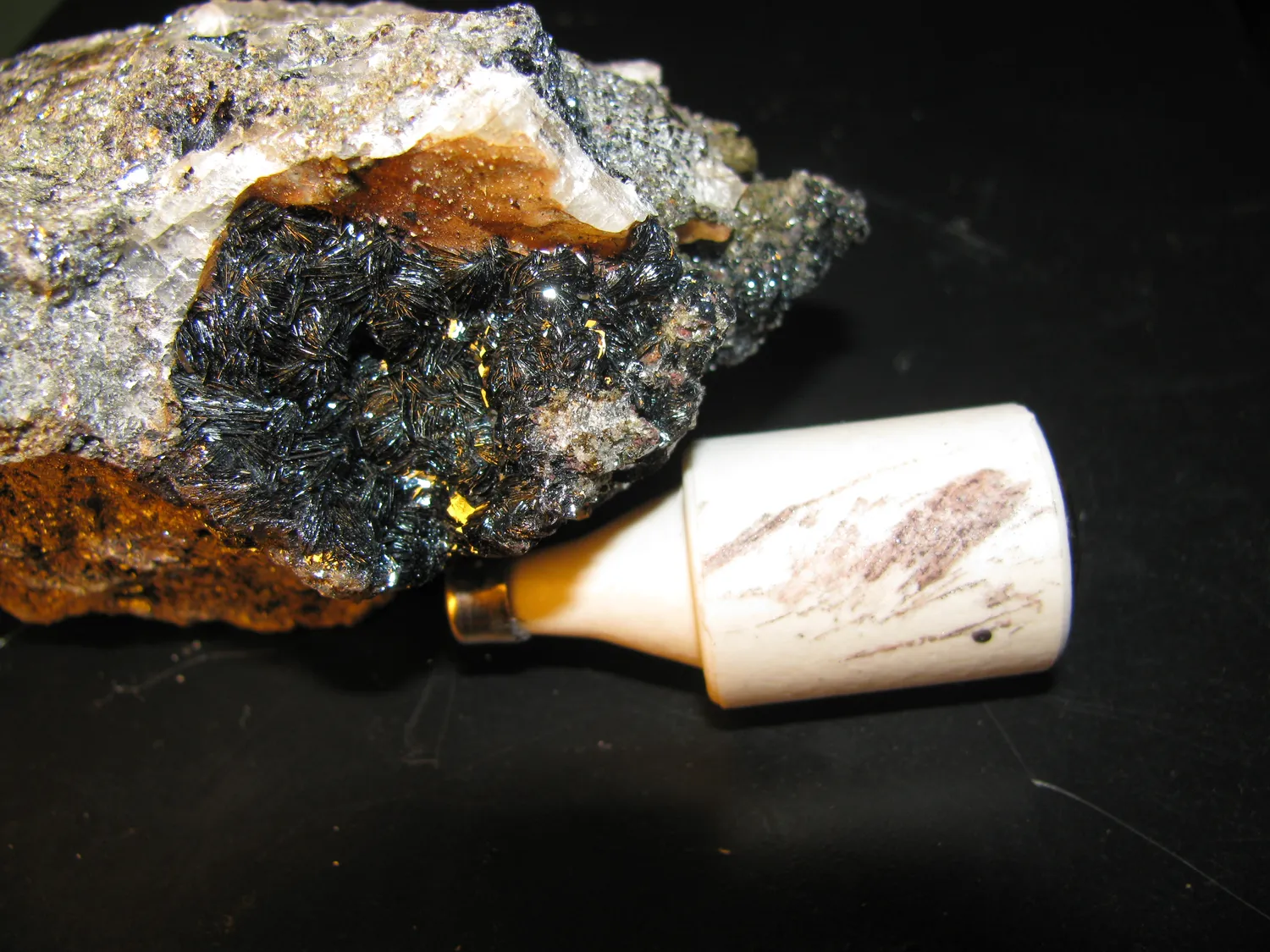
Geologists use many different tests to identify minerals. Streak is the color of a mineral's powder that appears when you rub the mineral across an unglazed porcelain plate. Hematite with streak" by Kittil hagen / Wikimedia Commons (Public domain).
Geologists use many different tests to identify minerals. One of the most useful tests is the streak test. Streak is the color of a mineral's powder that appears when you rub the mineral across an unglazed porcelain plate. This simple test provides important information that helps scientists identify unknown minerals.
The streak test works because it reveals the true color of a mineral in powdered form. To perform this test, a geologist takes a piece of unglazed porcelain called a streak plate and scrapes the mineral across its rough surface. The friction breaks off tiny particles of the mineral, leaving behind a line of powder. The color of this powder is the mineral's streak. Different minerals produce different streak colors, making this property valuable for identification.
Streak is more reliable than a mineral's surface color for identification purposes. Many minerals contain impurities, which are small amounts of other elements mixed into the mineral's structure. These impurities can change the surface color of a mineral significantly. For example, the mineral quartz is usually clear or white, but impurities can make it appear purple, pink, yellow, or even black. However, impurities do not change the streak color because the streak test breaks the mineral into such fine particles that the true chemical composition shows through.
Hematite provides an excellent example of why streak is more reliable than surface color. Hematite is an iron oxide mineral that often appears metallic gray or black on its surface. Some samples look shiny like metal, while others appear dull and reddish. Despite these different surface appearances, all hematite samples produce the same distinctive red-brown streak when tested. This consistent streak color allows geologists to identify hematite even when surface colors vary. The red-brown streak comes from iron oxide in the mineral's chemical structure, which remains constant regardless of how the surface looks.
Not all minerals leave a visible streak. Very hard minerals like quartz and diamond are harder than the porcelain plate itself. When you try to streak these minerals, they scratch the plate instead of leaving powder behind. In these cases, geologists say the mineral has a white or colorless streak, or they note that the mineral is too hard to streak. This information is still useful because it tells scientists the mineral has a hardness greater than 7 on the Mohs scale.
The streak test connects to broader scientific practices of careful observation and systematic testing. Scientists use multiple properties to identify minerals because relying on just one characteristic can lead to mistakes. By combining streak testing with other tests such as hardness, luster, and crystal shape, geologists can accurately identify minerals. This careful approach to identification helps scientists understand Earth's materials and locate valuable mineral resources.
Interesting Fact: The mineral pyrite is called "fool's gold" because its shiny gold surface fooled many prospectors, but a simple streak test reveals the truth—pyrite leaves a greenish-black streak while real gold leaves a golden-yellow streak.
What is streak?
The color of a mineral's powder when rubbed on a porcelain plateThe surface color of a mineralThe shape of a mineral crystalThe weight of a mineral sample
Why is streak more reliable than surface color for identifying minerals?
Streak is easier to see than surface colorImpurities change surface color but not streak colorStreak tests are faster than looking at surface colorAll minerals have the same streak color
What color streak does hematite produce?
BlackWhiteRed-brownGray
What does the term 'impurities' mean in the context of minerals?
Dirt on the surface of a mineralSmall amounts of other elements mixed into the mineral's structureCracks or breaks in a mineralThe powder left by a streak test
What happens when you try to streak a very hard mineral like quartz or diamond?
It leaves a colored powder on the plateIt breaks into small piecesIt scratches the plate instead of leaving powderIt melts from the friction
Based on the passage, why do scientists use multiple tests to identify minerals?
To make the work take longerBecause one test alone can lead to mistakesBecause streak tests do not workTo practice different scientific methods
If a mineral has a hardness greater than 7 on the Mohs scale, what will likely happen during a streak test?
It will leave a very dark streakIt will leave a white or colorless streakIt will be too hard to produce a streak and may scratch the plateIt will break the porcelain plate completely
How does the streak test help geologists understand Earth's materials?
It tells them the age of rocksIt helps them accurately identify mineralsIt measures the temperature of mineralsIt shows where minerals came from
All samples of hematite produce the same red-brown streak regardless of their surface color.
TrueFalse
Impurities in minerals affect both the surface color and the streak color equally.
TrueFalse
Perfect For:
👩🏫 Teachers
• Reading comprehension practice
• Auto-graded assessments
• Literacy skill development
👨👩👧👦 Parents
• Reading practice at home
• Comprehension improvement
• Educational reading time
🏠 Homeschoolers
• Reading curriculum support
• Independent reading practice
• Progress monitoring
Reading Features:
📖
Reading Passage
Engaging fiction or nonfiction text
❓
Comprehension Quiz
Auto-graded questions
📊
Instant Feedback
Immediate results and scoring
📄
Printable Version
Download for offline reading
🔊
Read Aloud
Voice-over with word highlighting
Reviews & Ratings
No reviews yet. Be the first to share your experience!
Related Content
How Do Solar Panels Work?
This middle school reading passage explains how solar panels work by turning sunlight into electricity. The passage desc...
MS-ESS3-1
How Do Wind Turbines Work?
This NGSS-aligned reading passage for middle school students explains how wind turbines convert the energy of moving air...
MS-ESS3-1
How Does a Hydroelectric Dam Work?
This NGSS-aligned science passage for middle school students explains how hydroelectric dams work to produce clean, rene...
MS-ESS3-1
What Is Biofuel?
This NGSS-aligned middle school science passage explains what biofuel is, how it is made, and why it is important as a c...
MS-ESS3-1
What Is Tidal Energy?
This engaging reading passage for middle school students introduces tidal energy, a form of renewable energy that uses t...
MS-ESS3-1
What Is Wave Energy?
This passage introduces middle school students to wave energy—a clean, renewable energy source that comes from the movem...
MS-ESS3-1
What Is Green Energy?
This science passage introduces middle school students to the concept of green energy—clean, renewable energy that comes...
MS-ESS3-1
Igneous Rocks
This comprehensive passage introduces middle school students to igneous rocks, focusing on how these rocks form from mol...
MS-ESS2-1MS-ESS3-1
Sedimentary Rocks
This comprehensive middle school science passage introduces students to sedimentary rocks, detailing their step-by-step ...
MS-ESS2-1MS-ESS2-3MS-ESS3-1
Metamorphic Rocks
This engaging middle school science passage introduces students to the fascinating world of metamorphic rocks. Aligned w...
MS-ESS2-1MS-ESS3-1
Topographic Maps
This comprehensive passage introduces middle school students to topographic maps, with a focus on how these maps represe...
MS-ESS2-2MS-ESS3-1SEP.4SEP.7
Minerals and Rocks as Resources
This middle school science passage, aligned to NGSS standards MS-ESS3-1 and MS-ESS3-4, explores the critical role that m...
MS-ESS3-1MS-ESS3-4
Benefits of Volcanic Activity
This middle school science passage explores the many positive impacts of volcanic activity, aligning with NGSS standards...
MS-ESS2-2MS-ESS3-1
Groundwater
This middle school science passage explores the essential topic of groundwater, aligned to NGSS standards MS-ESS2-4 and ...
MS-ESS2-4MS-ESS3-1
Distribution of Water on Earth
This middle school science reading passage explores the distribution of water on Earth, aligned with NGSS standards MS-E...
MS-ESS2-4MS-ESS3-1
Water as a Resource
This middle school science passage examines water as a critical resource, focusing on how it is used, managed, and conse...
MS-ESS3-1MS-ESS3-4
Water Quality
This middle school science reading passage covers the topic of water quality, aligned with NGSS standards MS-ESS3-1 and ...
MS-ESS3-1MS-ESS3-3
Why Is Uranium Found in Certain Rock Types
This informative science reading passage for middle school students (grades 6-8) explains why uranium concentrates in ce...
MS-ESS3-1
How Minerals Are Mined
This comprehensive 650-word informational science reading passage teaches middle school students (grades 6-8) about mine...
MS-ESS3-1
Why Are Resources Unevenly Distributed on Earth
This comprehensive 650-word reading passage explains why natural resources are unevenly distributed across Earth's surfa...