Why Did Pleistocene Ice Ages Happen
Interactive passage with audio narration, comprehension questions, and printable PDF.
By completing this purchase you agree to our Terms of Use and Privacy Policy. Your subscription renews automatically until you cancel. You can cancel anytime from your account settings. All sales are final and non-refundable. Digital content is available for download in your account immediately upon purchase.
What's included
Why Did Pleistocene Ice Ages Happen preview and details
About this printable Why Did Pleistocene Ice Ages Happen science reading passage, NGSS-aligned (Grades 5-8)
Sample passage and quiz from Why Did Pleistocene Ice Ages Happen
Reading passage and comprehension quiz preview
Why Did Pleistocene Ice Ages Happen
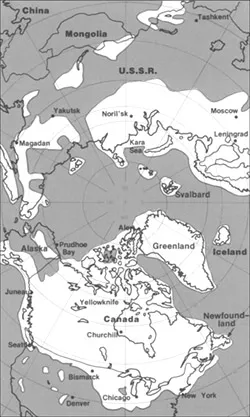
"Pleistocene north ice map" / Wikimedia Commons
The Pleistocene ice ages occurred because Earth's orbit changed slightly over thousands of years. These small changes altered how much sunlight different parts of Earth received during different seasons. Between 2.6 million and 11,700 years ago, our planet experienced repeated cycles of extreme cooling and warming. Scientists explain that these cycles created massive ice sheets that covered much of North America and Europe.
Earth's orbit around the sun is not perfectly circular. The shape of Earth's orbit changes over about 100,000 years. Earth's axial tilt also shifts slightly over 41,000 years. Additionally, Earth wobbles on its axis like a spinning top over 26,000 years. These three changes are called Milankovitch cycles. They work together to change the distribution of sunlight across Earth's surface. When the Northern Hemisphere received less summer sunlight, snow and ice from winter did not melt completely. Over thousands of years, this ice accumulated into thick glaciers.
Evidence shows that ice sheets grew to be more than two miles thick in some places. These massive ice formations reflected sunlight back into space, which caused even more cooling. This process is called a feedback loop. Ocean levels dropped by about 400 feet because so much water was frozen in ice sheets. Land bridges appeared between continents, allowing animals and early humans to migrate to new areas. The Pleistocene Epoch included multiple glacial periods separated by warmer times called interglacial periods.
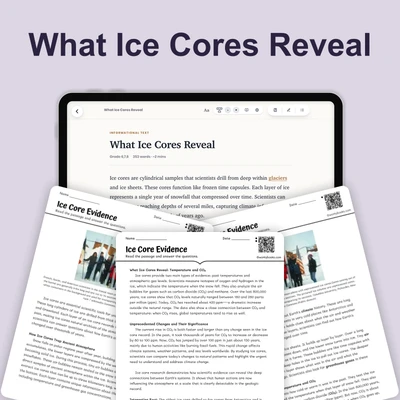
Scientists study ice cores from Antarctica and Greenland to understand these ancient climate patterns. The ice contains trapped air bubbles that preserve atmospheric conditions from hundreds of thousands of years ago. This evidence helps researchers reconstruct temperature and carbon dioxide levels during the ice ages. Mammoths, saber-toothed cats, and giant ground sloths adapted to survive in these cold environments. Early humans also lived through multiple ice ages, developing tools and strategies to hunt and gather food.
Understanding Pleistocene ice ages matters because it shows how sensitive Earth's climate can be to small changes. These natural cycles demonstrate that climate change operates on different timescales. Current climate change differs because human activities are causing rapid warming rather than the slow orbital changes that triggered ice ages. Studying past climate helps scientists predict future changes and understand Earth's complex climate system.
Interesting Fact: During the last ice age peak about 20,000 years ago, you could have walked from Asia to North America across a land bridge called Beringia where the Bering Strait is today.
Comprehension quiz (10 questions)
1. What was the main cause of the Pleistocene ice ages?
2. How long did the Pleistocene Epoch last?
3. What are Milankovitch cycles?
4. In the passage, what does the term 'feedback loop' mean?
5. What does the term 'interglacial periods' refer to in the passage?
6. Why did ocean levels drop during glacial periods?
7. How do scientists study ancient climate patterns from the Pleistocene?
8. What happened when the Northern Hemisphere received less summer sunlight?
9. Ice sheets during the Pleistocene could be more than two miles thick in some places.
10. Current climate change is happening at the same slow rate as the Pleistocene ice age cycles.
Perfect for the way you teach
- Build comprehension skills
- Auto-graded quiz
- Differentiated reading
- Read together at home
- Improve fluency
- Quiet reading time
- Reading curriculum support
- Independent practice
- Track Lexile growth