Why Did Pompeii Disappear
Interactive passage with audio narration, comprehension questions, and printable PDF.
By completing this purchase you agree to our Terms of Use and Privacy Policy. Your subscription renews automatically until you cancel. You can cancel anytime from your account settings. All sales are final and non-refundable. Digital content is available for download in your account immediately upon purchase.
What's included
Why Did Pompeii Disappear preview and details
About this printable Why Did Pompeii Disappear science reading passage, NGSS-aligned (Grades 5-8)
Sample passage and quiz from Why Did Pompeii Disappear
Reading passage and comprehension quiz preview
Why Did Pompeii Disappear
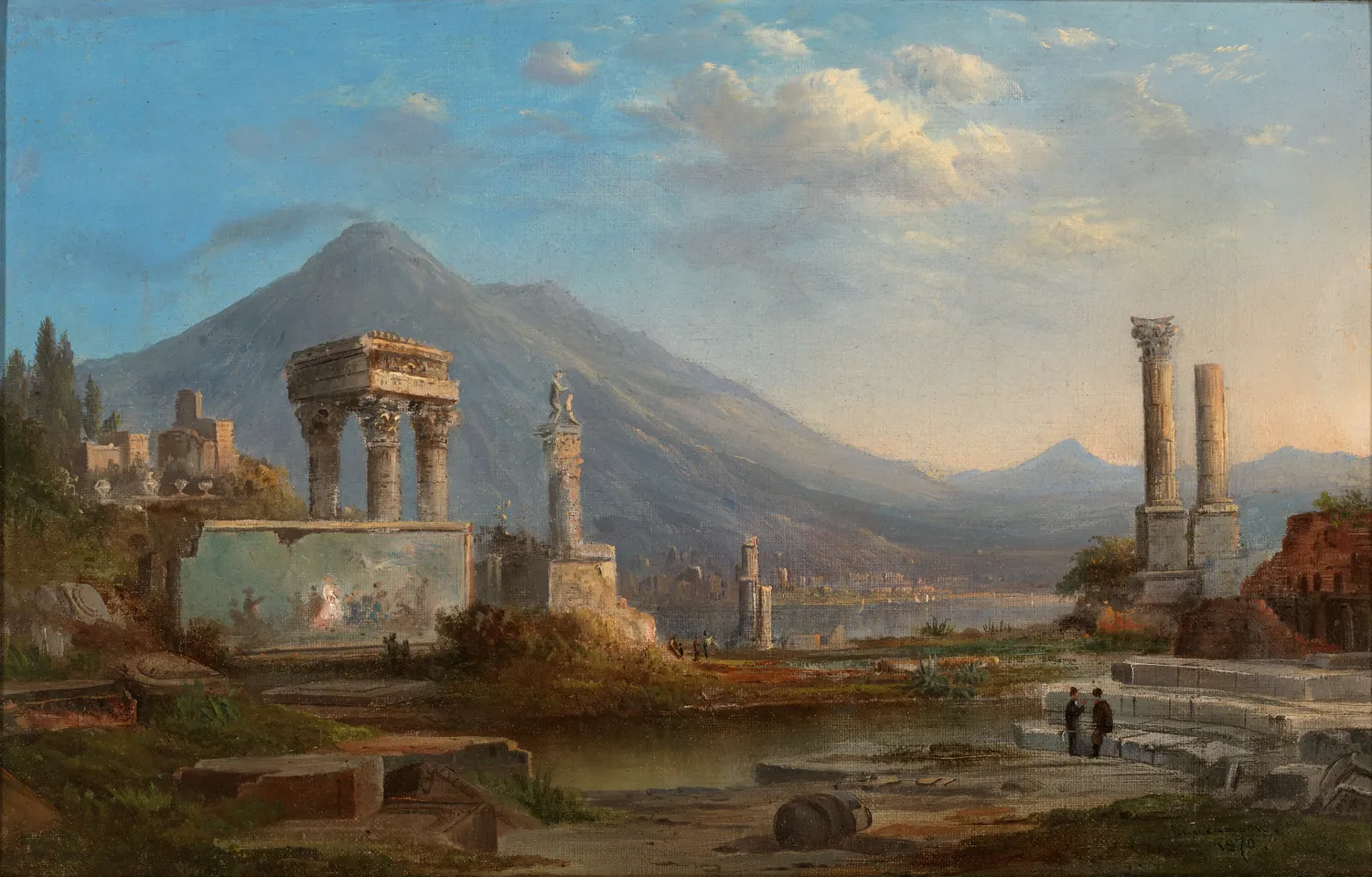
"Vesuvius and Pompeii" by Smithsonian American Art Museum / Smithsonian.
Pompeii disappeared because Mount Vesuvius erupted violently in 79 AD. The eruption buried the entire Roman city under many feet of volcanic ash and debris. Thousands of people died in one of history's most famous natural disasters. Scientists explain that this catastrophic event happened in stages, each more deadly than the last.
The eruption began around midday on August 24th when the volcano exploded. A massive column of ash, rock fragments called pumice, and gas shot nearly 20 miles into the sky. Evidence shows that this eruption column spread volcanic material across the region. For hours, ash and pumice rained down on Pompeii like deadly snow. The ashfall accumulated several feet deep on rooftops. Many buildings collapsed under the weight, trapping people inside. Some residents tried to flee, while others sought shelter in their homes.
The most destructive phase came the next morning. The eruption column became unstable and collapsed. This collapse created pyroclastic flows, which are superhot avalanches of gas, ash, and rock. These flows can reach temperatures over 1,000 degrees Fahrenheit and travel faster than 100 miles per hour. Scientists observe that pyroclastic flows are among the deadliest volcanic hazards. The flows swept through Pompeii in waves, killing anyone still alive instantly. The extreme heat caused victims' bodies to vaporize, leaving hollow spaces in the hardening ash.
Ironically, the same ash that destroyed Pompeii also preserved it remarkably well. The thick layers of ash sealed the city like a time capsule. Buildings, artwork, food, and everyday objects remained protected from air and moisture. In the 1800s, archaeologists discovered they could pour plaster into the hollow spaces left by bodies. This technique revealed the exact positions and expressions of victims during their final moments. The volcanic deposits preserved details that normally decay, including wooden furniture and even loaves of bread.
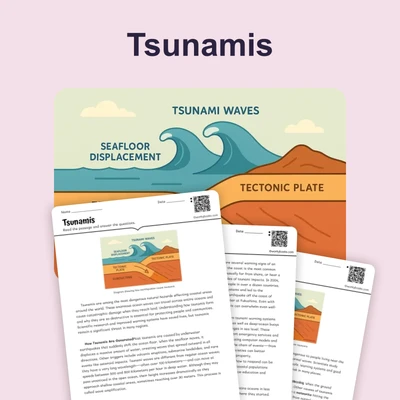
Mount Vesuvius sits along a tectonic plate boundary where the African Plate pushes beneath the Eurasian Plate. This process, called subduction, creates magma that can erupt violently. The volcano remains active today, and over three million people live in nearby areas. Understanding what happened at Pompeii helps scientists predict future eruptions and protect communities. The disaster demonstrates how natural hazards can affect human populations and why monitoring active volcanoes matters for public safety.
Interesting Fact: Archaeologists have discovered that some Pompeii residents survived the initial ashfall but died from the pyroclastic flows while trying to escape, with their footprints preserved in the ash showing their final desperate steps toward the sea.
Comprehension quiz (10 questions)
1. What caused Pompeii to disappear in 79 AD?
2. According to the passage, what are pyroclastic flows?
3. What does the term 'eruption column' refer to?
4. How did the volcanic ash paradoxically help preserve Pompeii?
5. What geological process creates magma beneath Mount Vesuvius?
6. Based on the passage, why is it important to study what happened at Pompeii?
7. What technique did archaeologists use to reveal the positions of victims?
8. Which phase of the eruption was most deadly to people in Pompeii?
9. True or False: Mount Vesuvius is no longer active and poses no danger to nearby populations.
10. True or False: The ashfall from Vesuvius accumulated several feet deep on Pompeii's rooftops, causing many buildings to collapse.
Perfect for the way you teach
- Build comprehension skills
- Auto-graded quiz
- Differentiated reading
- Read together at home
- Improve fluency
- Quiet reading time
- Reading curriculum support
- Independent practice
- Track Lexile growth