Why Is Uranium Found in Certain Rock Types — Reading Comprehension
Rate this
Premium Resource
Present
Present in classroom. No work saved
Assign
Classroom with student accounts, Track progress
Quick Play
No student accounts, assign with a link
Grades
6
7
8
Standards
MS-ESS3-1
PRINT+DIGITAL RESOURCE
This learning resource is available in interactive and printable formats. The interactive worksheet can be played online and assigned to students. The Printable PDF version can be downloaded and printed for completion by hand.
This informative science reading passage for middle school students (grades 6-8) explains why uranium concentrates in certain rocks like granite through geological processes that span billions of years. Students explore how uranium forms during crystallization in magma, concentrates in hydrothermal deposits, and becomes part of Earth's natural resource distribution. The passage aligns with NGSS science standard MS-ESS3-1, helping students understand the uneven distribution of Earth's mineral, energy, and groundwater resources. Audio-integrated content includes a main passage, simplified differentiated version for struggling readers, Spanish translations, comprehensive glossary, multiple-choice questions testing various cognitive levels, writing activities that encourage scientific explanation, and graphic organizers for visual learning. Students examine crystallization processes, mineral formation, and how geological time affects resource concentration. The curriculum materials support diverse learners through multiple reading levels while maintaining scientific accuracy and conceptual depth appropriate for middle school science education.
CONTENT PREVIEW
Expand content preview
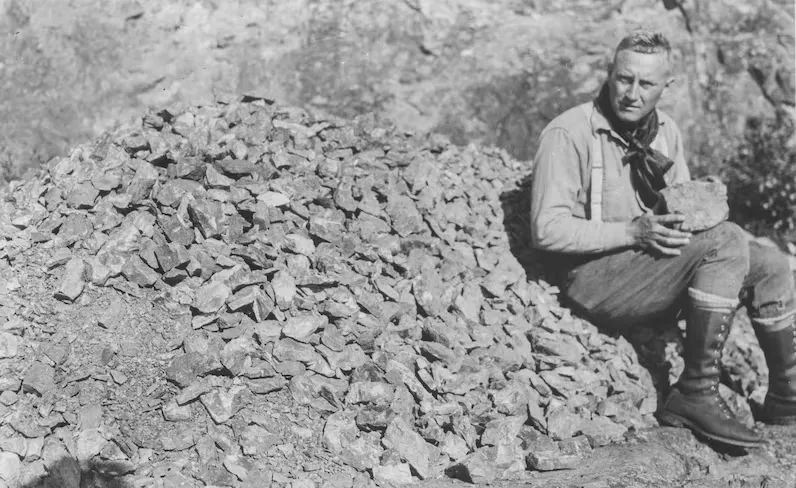
"Gilbert Labine examining uranium ore at the Eldorado Mine located at Great Bear Lake, Northwest Territories" by Wilfred Leigh Brintnell / Wikimedia Commons
Uranium is a naturally occurring radioactive element found in Earth's crust, but it does not distribute evenly across all rock types. Instead, uranium concentrates in specific rocks, particularly granitic rocks and hydrothermal deposits. Understanding why uranium accumulates in these locations requires examining geological processes that have operated over billions of years.
The story of uranium concentration begins deep underground where molten rock, called magma, forms beneath Earth's surface. Magma contains many different elements mixed together in a hot liquid state. As magma slowly cools, minerals begin to form through a process called crystallization. Different minerals crystallize at different temperatures, and this sequence matters greatly for uranium distribution. Early-forming minerals, such as olivine and pyroxene, generally do not incorporate uranium atoms into their crystal structures because uranium atoms are too large to fit comfortably. As these minerals solidify and separate from the remaining liquid magma, the uranium stays behind in the liquid portion.
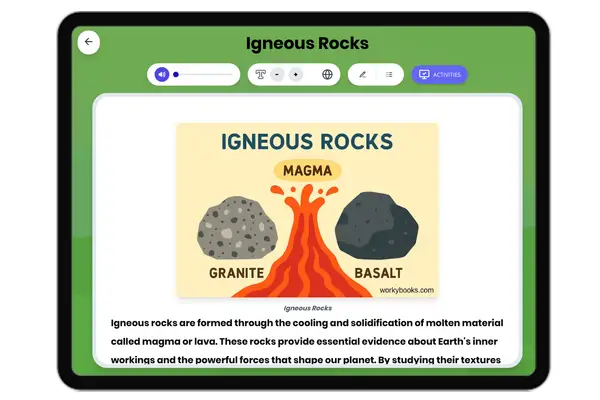
As cooling continues, the remaining magma becomes increasingly enriched in uranium and other elements that did not fit into the early minerals. Eventually, this uranium-rich magma crystallizes into granitic rocks, which are light-colored rocks composed mainly of quartz, feldspar, and mica. Granite forms the foundation of continents and contains significantly more uranium than darker rocks like basalt. The average granite contains about 4 parts per million uranium, while basalt typically contains less than 1 part per million. This difference exists because of the crystallization sequence that separates compatible elements from incompatible elements like uranium.
Hydrothermal deposits represent another important concentration mechanism for uranium. These deposits form when hot, mineral-rich fluids move through cracks and fractures in rocks. The fluids, heated by magma or by Earth's internal heat, dissolve uranium from surrounding rocks as they travel. When these hydrothermal fluids encounter changes in temperature, pressure, or chemical conditions, uranium minerals precipitate out of solution and accumulate in concentrated zones. Some of the world's richest uranium deposits formed this way, with uranium minerals filling fractures and creating veins within rocks.
The element uranium itself contributes to its own concentration through radioactive decay. Uranium atoms slowly break down over billions of years, releasing energy and transforming into other elements. This decay process generates heat within rocks, which can drive further fluid circulation and uranium redistribution. Additionally, when uranium decays, it produces daughter isotopes like thorium and radium, which also concentrate in uranium-rich rocks. Scientists use these decay products to determine the age of rocks and understand geological history.
The uneven distribution of uranium in Earth's crust has practical implications for human society. Uranium serves as fuel for nuclear power plants and has various industrial and medical applications. Geologists search for uranium deposits by understanding the geological processes that concentrate this element. They look for granitic rocks, ancient hydrothermal systems, and specific geological settings where uranium concentration was likely. This knowledge connects directly to resource management and energy planning, as societies must understand where natural resources exist and how they formed to use them responsibly.
Interesting Fact: The oldest known uranium deposit on Earth formed approximately 2 billion years ago in Oklo, Gabon, Africa, where natural nuclear fission reactions occurred spontaneously when uranium concentrations and groundwater conditions were just right.
What are the two main types of rocks where uranium concentrates?
Granitic rocks and hydrothermal depositsBasalt and limestoneSandstone and shaleMarble and quartzite
Why does uranium remain in liquid magma when early minerals like olivine and pyroxene form?
Uranium is too heavy to enter early mineralsUranium atoms are too large to fit into early mineral crystal structuresUranium dissolves completely in magmaEarly minerals repel uranium atoms
What does the term 'crystallization' mean in the context of this passage?
The breaking down of rocks into smaller piecesThe movement of hot fluids through rock fracturesThe process by which minerals form from cooling magmaThe decay of radioactive elements over time
What is the approximate uranium content in average granite compared to basalt?
Granite has about the same uranium as basaltGranite has about 4 times more uranium than basaltGranite has less uranium than basaltGranite has about 10 times more uranium than basalt
Based on the passage, what can be inferred about why geologists look for granitic rocks when searching for uranium deposits?
Granitic rocks are easier to mine than other rock typesGranitic rocks form near the surface where uranium is accessibleThe crystallization process naturally concentrates uranium in granitic rocksGranitic rocks are more common than other rock types
How do hydrothermal fluids contribute to uranium concentration?
They cool magma quickly, trapping uranium insideThey dissolve uranium from rocks and deposit it in concentrated zones when conditions changeThey prevent uranium from decaying radioactivelyThey break down granitic rocks into smaller pieces
What role does radioactive decay play in uranium concentration?
It destroys all uranium in rocks over timeIt prevents uranium from forming in the first placeIt generates heat that can drive fluid circulation and uranium redistributionIt converts uranium into granite
Which statement best explains why understanding uranium distribution is important for society?
Uranium is used only for making weaponsUranium serves as nuclear fuel and has industrial and medical applications, requiring resource managementUranium is the most common element in Earth's crustUranium prevents earthquakes from occurring
True or False: Uranium distributes evenly across all rock types in Earth's crust.
TrueFalse
True or False: The oldest known uranium deposit formed approximately 2 billion years ago in Oklo, Gabon, Africa, where natural nuclear fission reactions occurred.
TrueFalse
Perfect For:
👩🏫 Teachers
• Reading comprehension practice
• Auto-graded assessments
• Literacy skill development
👨👩👧👦 Parents
• Reading practice at home
• Comprehension improvement
• Educational reading time
🏠 Homeschoolers
• Reading curriculum support
• Independent reading practice
• Progress monitoring
Reading Features:
📖
Reading Passage
Engaging fiction or nonfiction text
❓
Comprehension Quiz
Auto-graded questions
📊
Instant Feedback
Immediate results and scoring
📄
Printable Version
Download for offline reading
🔊
Read Aloud
Voice-over with word highlighting
Reviews & Ratings
No reviews yet. Be the first to share your experience!
Related Content
How Do Solar Panels Work?
This middle school reading passage explains how solar panels work by turning sunlight into electricity. The passage desc...
MS-ESS3-1
How Do Wind Turbines Work?
This NGSS-aligned reading passage for middle school students explains how wind turbines convert the energy of moving air...
MS-ESS3-1
How Does a Hydroelectric Dam Work?
This NGSS-aligned science passage for middle school students explains how hydroelectric dams work to produce clean, rene...
MS-ESS3-1
What Is Biofuel?
This NGSS-aligned middle school science passage explains what biofuel is, how it is made, and why it is important as a c...
MS-ESS3-1
What Is Tidal Energy?
This engaging reading passage for middle school students introduces tidal energy, a form of renewable energy that uses t...
MS-ESS3-1
What Is Wave Energy?
This passage introduces middle school students to wave energy—a clean, renewable energy source that comes from the movem...
MS-ESS3-1
What Is Green Energy?
This science passage introduces middle school students to the concept of green energy—clean, renewable energy that comes...
MS-ESS3-1
Igneous Rocks
This comprehensive passage introduces middle school students to igneous rocks, focusing on how these rocks form from mol...
MS-ESS2-1MS-ESS3-1
Sedimentary Rocks
This comprehensive middle school science passage introduces students to sedimentary rocks, detailing their step-by-step ...
MS-ESS2-1MS-ESS2-3MS-ESS3-1
Metamorphic Rocks
This engaging middle school science passage introduces students to the fascinating world of metamorphic rocks. Aligned w...
MS-ESS2-1MS-ESS3-1
Topographic Maps
This comprehensive passage introduces middle school students to topographic maps, with a focus on how these maps represe...
MS-ESS2-2MS-ESS3-1SEP.4SEP.7
Minerals and Rocks as Resources
This middle school science passage, aligned to NGSS standards MS-ESS3-1 and MS-ESS3-4, explores the critical role that m...
MS-ESS3-1MS-ESS3-4
Benefits of Volcanic Activity
This middle school science passage explores the many positive impacts of volcanic activity, aligning with NGSS standards...
MS-ESS2-2MS-ESS3-1
Groundwater
This middle school science passage explores the essential topic of groundwater, aligned to NGSS standards MS-ESS2-4 and ...
MS-ESS2-4MS-ESS3-1
Distribution of Water on Earth
This middle school science reading passage explores the distribution of water on Earth, aligned with NGSS standards MS-E...
MS-ESS2-4MS-ESS3-1
Water as a Resource
This middle school science passage examines water as a critical resource, focusing on how it is used, managed, and conse...
MS-ESS3-1MS-ESS3-4
Water Quality
This middle school science reading passage covers the topic of water quality, aligned with NGSS standards MS-ESS3-1 and ...
MS-ESS3-1MS-ESS3-3
How Minerals Are Mined
This comprehensive 650-word informational science reading passage teaches middle school students (grades 6-8) about mine...
MS-ESS3-1
Why Are Resources Unevenly Distributed on Earth
This comprehensive 650-word reading passage explains why natural resources are unevenly distributed across Earth's surfa...