Reading PassagePremium

Why Mars Is Red

Interactive passage with audio narration, comprehension questions, and printable PDF.

No ratings yet
Grades 5–8ScienceElaEnglish · SpanishInteractive · Printable
Aligned toMS-ESS1-3
Just this resource
$1.50
One-time purchase
Best value
Unlock everything
$49.99$29.99/yr
40% off until Aug 1 — 10,000+ resources
Renews at $49.99/year.
Unlock above to use these actions

What's included

Reading passage
Audio narration
Comprehension quiz
Writing activity
Glossary & flashcards
Differentiated version
Spanish translation

Why Mars Is Red preview and details

About this printable Why Mars Is Red science reading passage, NGSS-aligned (Grades 5-8)

This 400-500 word informational science reading passage explores why Mars appears red, aligned with NGSS standard MS-ESS1-3 and disciplinary core idea MS-ESS1.B Earth and the Solar System. Students in grades 6-8 will learn how iron-rich minerals on Mars's surface reacted with traces of oxygen billions of years ago to form iron oxide, commonly known as rust. The passage explains the cause-and-effect relationship between chemical reactions, oxidation processes, and the planet's distinctive reddish appearance visible from Earth. Through clear explanations and real-world connections, students develop understanding of planetary composition, chemical weathering, and how scientists study distant worlds. The passage includes audio integration for accessibility, glossary terms for vocabulary development, and activities that reinforce comprehension. Students engage with multiple-choice questions, writing prompts, and graphic organizers that build scientific reasoning skills while exploring one of the solar system's most recognizable features.
Written by Workybooks TeamPublished by Workybooks
Preview

Sample passage and quiz from Why Mars Is Red

Reading passage and comprehension quiz preview

Why Is Mars Red
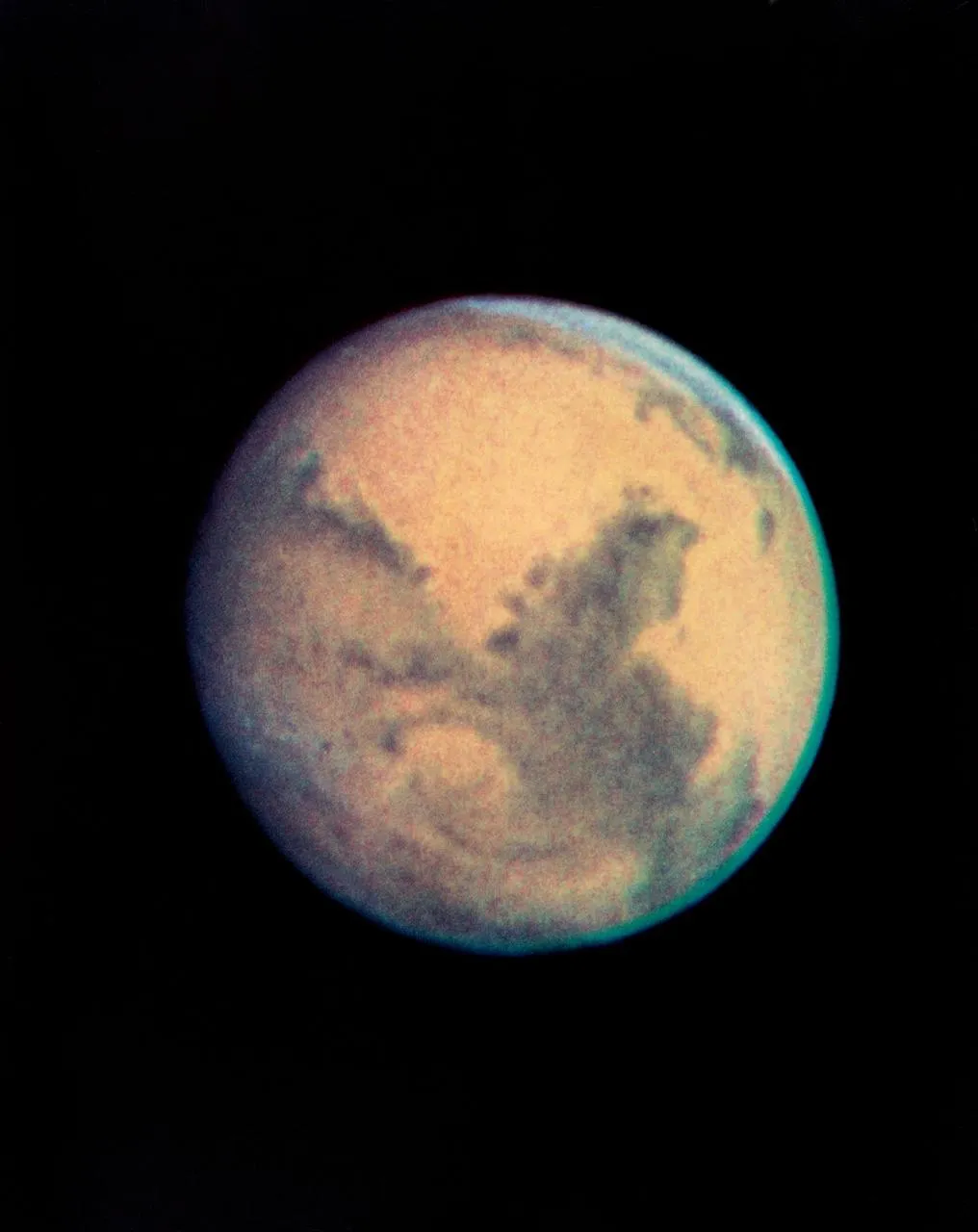
Composite image of the planet Mars taken by Hubble Space Telescope (HST)

"Composite image of the planet Mars taken by Hubble Space Telescope (HST)" / NASA 

Mars appears red because of iron oxide coating its surface. This compound forms when iron-rich minerals react with oxygen. The same process creates rust on Earth. Scientists explain that this reaction happened billions of years ago on Mars.

The Martian surface contains large amounts of iron in its rocks and dust. Evidence shows that Mars once had more oxygen in its atmosphere than it does today. When iron and oxygen combined, they formed iron oxide through a process called oxidation. This chemical reaction changed the iron's appearance from gray to reddish-brown. The iron oxide then spread across the planet's surface as dust. Wind storms on Mars can lift this rusty dust high into the atmosphere. The tiny particles scatter sunlight in ways that make the planet look red.

Scientists observe Mars using telescopes and spacecraft to study its composition. The Mars rovers have analyzed soil samples directly on the planet's surface. These missions confirmed that iron oxide makes up a significant portion of Martian dust. One rover named Opportunity discovered small sphere-shaped rocks nicknamed "blueberries." These rocks contain concentrated iron oxide. They formed when water interacted with iron-rich minerals underground. This discovery provided evidence that liquid water once existed on Mars.

Understanding why Mars is red helps scientists learn about the planet's history. The iron oxide on Mars tells us that the planet once had different conditions. Mars may have had more oxygen and water in its past. These conditions could have supported different types of geological processes. Studying Mars helps us understand how planets change over time. It also helps scientists compare Earth's atmosphere and surface to other worlds in our solar system.

Interesting Fact: Mars dust is so fine that it can stay suspended in the atmosphere for months after a storm. This makes the entire Martian sky appear butterscotch or light orange during the day.

Comprehension quiz (10 questions)

1. What compound causes Mars to appear red?

Iron oxide
Carbon dioxide
Water ice
Nitrogen gas

2. What process creates iron oxide on Mars?

Freezing
Melting
Oxidation
Evaporation

3. According to the passage, what did Mars have more of in the past compared to today?

Craters
Oxygen and water
Volcanoes
Moons

4. What does the word 'composition' mean in the context of this passage?

The color of something
What something is made of
The size of something
How old something is

5. What does 'atmosphere' refer to in the passage?

The surface of a planet
The core of a planet
The layer of gases surrounding a planet
The rocks on a planet

6. Why can Mars dust stay in the atmosphere for a long time?

It is very heavy
It is very fine and light
It is magnetic
It is frozen

7. What did the discovery of 'blueberry' rocks on Mars provide evidence for?

Volcanic activity
The presence of life
Liquid water once existed on Mars
Mars was once closer to the Sun

8. How does studying Mars help scientists understand Earth?

It allows them to predict earthquakes
It helps them compare planetary atmospheres and surfaces
It shows them how to travel faster in space
It teaches them about ocean currents

9. True or False: Iron oxide is the same compound that causes rust on Earth.

True
False

10. True or False: The Martian sky appears blue during the day just like Earth's sky.

True
False
Who it's for

Perfect for the way you teach

Teachers
  • Build comprehension skills
  • Auto-graded quiz
  • Differentiated reading
Parents
  • Read together at home
  • Improve fluency
  • Quiet reading time
Homeschoolers
  • Reading curriculum support
  • Independent practice
  • Track Lexile growth
Topics

Reviews & Ratings

No reviews yet. Be the first to share your experience!

More reading you might love

20 more
Passage
Sunspots and Solar Flares - reading educational content
Grades 4–5

Sunspots and Solar Flares

earth science · RI.4.1

Free
Passage
The Hottest Planet in the Solar System - reading educational content
Grades 3–7

The Hottest Planet in the Solar System

science · MS-ESS1-3

Free
Passage
Mercury: Closest to the Sun - reading educational content
Grades 5–8

Mercury: Closest to the Sun

science · MS-ESS1-2

$1.50
Passage
Venus: Earth's Twin? - reading educational content
Grades 5–8

Venus: Earth's Twin?

science · MS-ESS1-2

$1.50
Passage
Mars: The Red Planet - reading educational content
Grades 5–8

Mars: The Red Planet

science · MS-ESS1-2

$1.50
Passage
What Is the Solar System? - reading educational content
Grades 5–8

What Is the Solar System?

science · MS-ESS1-2

$1.50
Passage
Structure of the Solar System - reading educational content
Grades 5–8

Structure of the Solar System

science · MS-ESS1-2

$1.50
Passage
Scale of the Solar System - reading educational content
Grades 5–8

Scale of the Solar System

science · MS-ESS1-3

$1.50
Passage
Exploration of the Solar System - reading educational content
Grades 5–8

Exploration of the Solar System

science · MS-ESS1-3

$1.50
Passage
Optical Telescopes - reading educational content
Grades 5–8

Optical Telescopes

science · MS-ESS1-3

$1.50
Passage
Future of Alien Search - reading educational content
Grades 5–8

Future of Alien Search

science · MS-ESS1-3

$1.50
Passage
Communicating with Aliens - reading educational content
Grades 5–8

Communicating with Aliens

science · MS-ESS1-3

$1.50
Passage
Measuring Distances in Space - reading educational content
Grades 5–8

Measuring Distances in Space

earth science · MS-ESS1-3

$1.50
Passage
 Astronomy - reading educational content
Grades 5–8

Astronomy

earth science · MS-ESS1-2

$1.50
Passage
The Solar System - reading educational content
Grades 5–8

The Solar System

science · MS-ESS1-2

$1.50
Passage
The Inner Planets - reading educational content
Grades 5–8

The Inner Planets

science · MS-ESS1-2

$1.50
Passage
The Outer Planets - reading educational content
Grades 5–8

The Outer Planets

science · MS-ESS1-2

$1.50
Passage
Light-Years and Cosmic Distances - reading educational content
Grades 5–8

Light-Years and Cosmic Distances

science · MS-ESS1-3

$1.50
Passage
Space Stations - reading educational content
Grades 5–8

Space Stations

science · MS-ESS1-3

$1.50
Passage
Types of Spacecraft - reading educational content
Grades 5–8

Types of Spacecraft

science · MS-ESS1-3

$1.50
Copyright © 2026 Workybooks. Made with ♥ in California.