Age of Exploration Begins
Interactive passage with audio narration, comprehension questions, and printable PDF.
By completing this purchase you agree to our Terms of Use and Privacy Policy. Your subscription renews automatically until you cancel. You can cancel anytime from your account settings. All sales are final and non-refundable. Digital content is available for download in your account immediately upon purchase.
What's included
Age of Exploration Begins preview and details
About this printable Age of Exploration Begins reading passage (Grades 5-8)
Sample passage and quiz from Age of Exploration Begins
Reading passage and comprehension quiz preview
Age of Exploration Begins
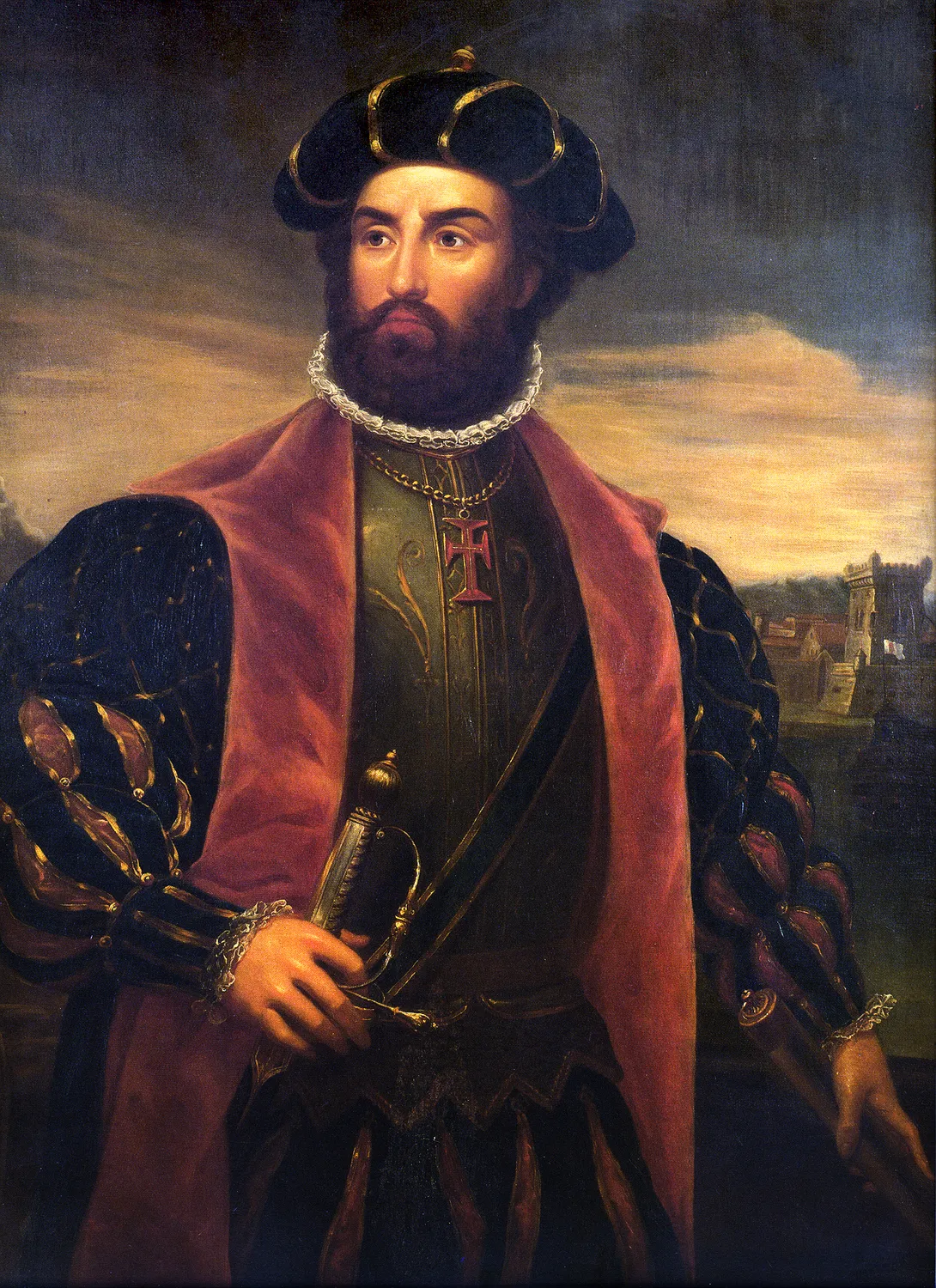
"Vasco da Gama - 1838" by António Manuel da Fonseca / Wikimedia Commons.
The Age of Exploration began in the 15th century, when European countries started to explore the world beyond their own borders. Powerful kingdoms such as Portugal and Spain competed for wealth, territory, and new trade routes. Their goal was to discover faster ways to reach Asia, where valuable goods like spices, silk, and gold could be found. This era saw major changes in technology and world geography.
One key reason for the Age of Exploration was the desire for trade. European merchants wanted direct access to Asian markets, instead of relying on expensive middlemen in the Middle East. At the same time, the fall of Constantinople in 1453 blocked the old land routes to Asia. In response, explorers began searching for sea routes. Advances in navigation technology made these journeys possible. For example, the magnetic compass allowed sailors to determine direction, even when the sky was cloudy. The astrolabe, an ancient Greek tool improved by Arab scholars, helped navigators measure the positions of stars to find their location at sea. New ship designs, such as the Portuguese caravel, made longer ocean voyages safer and more efficient.
Several famous explorers set out during this period. In 1492, Christopher Columbus sailed west from Spain and reached the Caribbean, believing he had found a new route to Asia. His voyage, recorded in his own journals, marked the beginning of sustained contact between Europe and the Americas. In 1498, Vasco da Gama of Portugal became the first European to reach India by sailing around Africa. These journeys were documented in ship logs and maps, some of which survive today. They show the importance of accurate record-keeping and mapmaking in the era.
The Age of Exploration changed the world in many ways. It led to new connections between continents, as well as the exchange of goods, ideas, plants, and animals—a process called the Columbian Exchange. European countries established colonies, which altered local societies and economies. These changes also affected social hierarchies, as new wealth and opportunities shifted power within European societies. However, exploration also brought conflict and disease to many indigenous peoples. Written accounts from explorers and indigenous voices show both the excitement and challenges of these encounters.
In conclusion, the Age of Exploration was driven by a mix of ambition, new technology, and the search for trade. The effects of this era can still be seen today in maps, languages, and cultures around the globe. This period helps students understand how geography, technology, and human curiosity shape world history.
Interesting Fact: The first globe to show the Americas was created by Martin Behaim in 1492, just months before Columbus sailed west.
Comprehension quiz (8 questions)
1. What year did Columbus reach the Caribbean?
2. Which tool helped sailors find direction?
3. Who sailed around Africa to India?
4. Why did Europeans want new trade routes?
5. What was the Columbian Exchange?
6. How did the caravel help explorers?
7. Exploration changed local societies and economies. True or false?
8. What does 'middlemen' mean?
Perfect for the way you teach
- Build comprehension skills
- Auto-graded quiz
- Differentiated reading
- Read together at home
- Improve fluency
- Quiet reading time
- Reading curriculum support
- Independent practice
- Track Lexile growth