This learning resource is available in interactive and printable formats. The interactive worksheet can be played online and assigned to students. The Printable PDF version can be downloaded and printed for completion by hand.
This engaging world history reading passage examines Attila the Hun, a powerful and feared ruler during the Middle Ages. Students will learn about Attila's rise to power, his military strategies, and his dramatic invasions of the Roman Empire. The passage explores key historical events, such as the Battle of the Catalaunian Plains, and considers the social and political effects of Attila's leadership. It covers the geographic context of the Huns' migration, their impact on Roman society, and what happened after Attila's sudden death. This resource is aligned with CA HSS 7.1 and CCSS RI.6.3, making it ideal for history and ELA skill development. It includes a read aloud audio, Spanish translation, differentiated reading versions, vocabulary support, comprehension activities, and graphic organizers for classroom or independent study.
CONTENT PREVIEW
Expand content preview
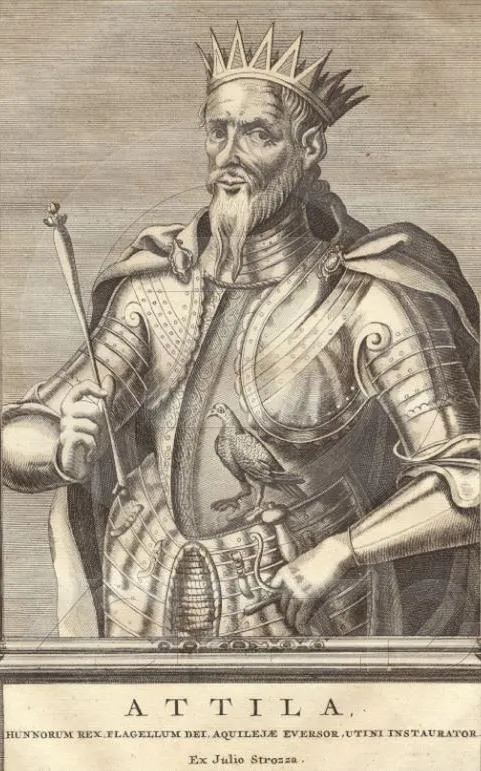
"Attila, King of the Huns, the Scourge of God, Destroyer of Aquileia, Founder of Udine" by Julio Strozza/ Wikimedia Commons.
Attila the Hun was one of the most feared leaders in European history, ruling over a vast empire of nomadic warriors during the Middle Ages. He led the Huns, a powerful group from Central Asia, and became known for his military strength and impact on the Roman Empire.
Attila rose to power in 434 CE, when he and his brother Bleda became joint leaders of the Huns. After Bleda's mysterious death, Attila became the sole ruler. He controlled a vast territory stretching from the Ural River in the east to the Danube River in the west. The Huns were expert horsemen and archers, which helped them move quickly across the steppe and surprise their enemies. Archaeological evidence, such as decorated horse harnesses and weapons, shows the importance of horses in Hun society.
Attila's reputation for brutality and cunning spread rapidly. In 447 CE, he invaded the Eastern Roman Empire, forcing Emperor Theodosius II to pay heavy tribute, or payments, to avoid further destruction. Ancient sources like the historian Priscus describe Attila's court as both lavish and strict, with Attila himself eating simply while his nobles feasted. In 451 CE, Attila invaded Gaul (modern-day France), leading to the famous Battle of the Catalaunian Plains. According to Roman sources, this battle involved a huge alliance of Romans and Germanic tribes working together to stop Attila's advance. Though neither side claimed a clear victory, Attila was forced to retreat, marking a turning point in his campaigns.
In 452 CE, Attila invaded Italy, threatening major cities like Aquileia and even Rome itself. However, a combination of disease, famine, and negotiations with Pope Leo I caused him to withdraw. Soon after, in 453 CE, Attila died suddenly on his wedding night. Some sources claim he died from a nosebleed, while others suggest he was assassinated. His death caused the rapid collapse of the Hunnic Empire, as rival leaders fought for control and many subject peoples rebelled.
Attila's invasions changed the history of Europe by weakening the Roman Empire and spreading fear across many regions. His rule also showed how military innovation and leadership could shape the fate of entire civilizations. The story of Attila the Hun connects to larger themes of migration, conflict, and the rise and fall of empires in world history.
Interesting Fact: Attila was called the "Scourge of God" by some Romans, who believed his attacks were a punishment for their empire's sins.
When did Attila become leader of the Huns?
434 CE451 CE500 CE400 CE
What was Attila's main military strength?
Expert horsemen and archersStrong navyWealthy citiesTall castles
Which river marked part of Attila's territory?
DanubeNileAmazonYellow
Why did Attila retreat from Italy?
Disease and famineLost a battleNo horsesAllies betrayed him
How did Attila's death affect the Huns?
Empire collapsed quicklyEmpire grew strongerHuns ruled RomeAttila's son became ruler
What did Romans call Attila?
"Scourge of God"King of KingsLion of RomeFather of Huns
Attila died from a nosebleed. (True/False)
TrueFalse
What does "tribute" mean?
Payment for protectionA type of foodA battle strategyA horse harness
Perfect For:
👩🏫 Teachers
• Reading comprehension practice
• Auto-graded assessments
• Literacy skill development
👨👩👧👦 Parents
• Reading practice at home
• Comprehension improvement
• Educational reading time
🏠 Homeschoolers
• Reading curriculum support
• Independent reading practice
• Progress monitoring
Reading Features:
📖
Reading Passage
Engaging fiction or nonfiction text
❓
Comprehension Quiz
Auto-graded questions
📊
Instant Feedback
Immediate results and scoring
📄
Printable Version
Download for offline reading
🔊
Read Aloud
Voice-over with word highlighting
Reviews & Ratings
No reviews yet. Be the first to share your experience!
Related Content
Middle Ages Legacy
This history reading passage examines the lasting legacy of the Middle Ages, including the development of universities, ...
Early Middle Ages
This comprehensive reading passage explores the Early Middle Ages (500-1000 CE), a transformative period in European his...
High Middle Ages
This detailed world history reading passage explores the High Middle Ages (1000-1300 CE), a transformative era in Europe...
What Were the Middle Ages?
This engaging world history reading passage introduces students to the Middle Ages, the period in European history betwe...
Late Middle Ages
This rigorous world history reading passage explores the Late Middle Ages (1300-1500 CE), a time marked by the devastati...
Dark Ages
This passage offers a rigorous, engaging examination of why the early Middle Ages are often called the 'Dark Ages.' Stud...
Life in Middle Ages
This rigorous history reading passage explores life in Europe during the Middle Ages, focusing on the structure of feuda...
Medieval Islamic World
This rigorous reading passage delves into the Medieval Islamic World's golden age, when a vast civilization stretched fr...
Islamic Golden Age
This history reading passage explores the Islamic Golden Age, a period from the 8th to 14th centuries marked by outstand...
Medieval to Modern Transition
This engaging world history reading passage explores the dramatic transformation from the Middle Ages to the modern era,...
Medieval Words in English
This engaging history reading passage examines the evolution of the English language during the Middle Ages, focusing on...
Age of Exploration Begins
This engaging history reading passage explores the Age of Exploration, a turning point in world history when European po...
Italian City-States
This passage explores the rise and significance of the Italian city-states—Venice, Florence, and Genoa—during the Middle...
Medieval Guilds
This engaging world history reading passage explores the important role of guilds—worker groups that shaped the economy ...
Medieval Christian Worship
This detailed passage examines how people worshiped during the Middle Ages, focusing on essential religious practices su...
Power of the Pope
This history reading passage examines the power of the pope during the Middle Ages, focusing on his role as spiritual le...
Carolingian Renaissance
This engaging world history passage explores how Charlemagne, ruler of the Franks, transformed education and learning in...
Islamic Golden Age Inventions
This world history reading passage explores the remarkable inventions and scientific advances made in the medieval Islam...
Medieval Agricultural Innovations
This history reading passage explores how farming inventions like the heavy plow, three-field system, and horse collar r...