High Middle Ages
Interactive passage with audio narration, comprehension questions, and printable PDF.
By completing this purchase you agree to our Terms of Use and Privacy Policy. Your subscription renews automatically until you cancel. You can cancel anytime from your account settings. All sales are final and non-refundable. Digital content is available for download in your account immediately upon purchase.
What's included
High Middle Ages preview and details
About this printable High Middle Ages reading passage (Grades 5-8)
Sample passage and quiz from High Middle Ages
Reading passage and comprehension quiz preview
High Middle Ages
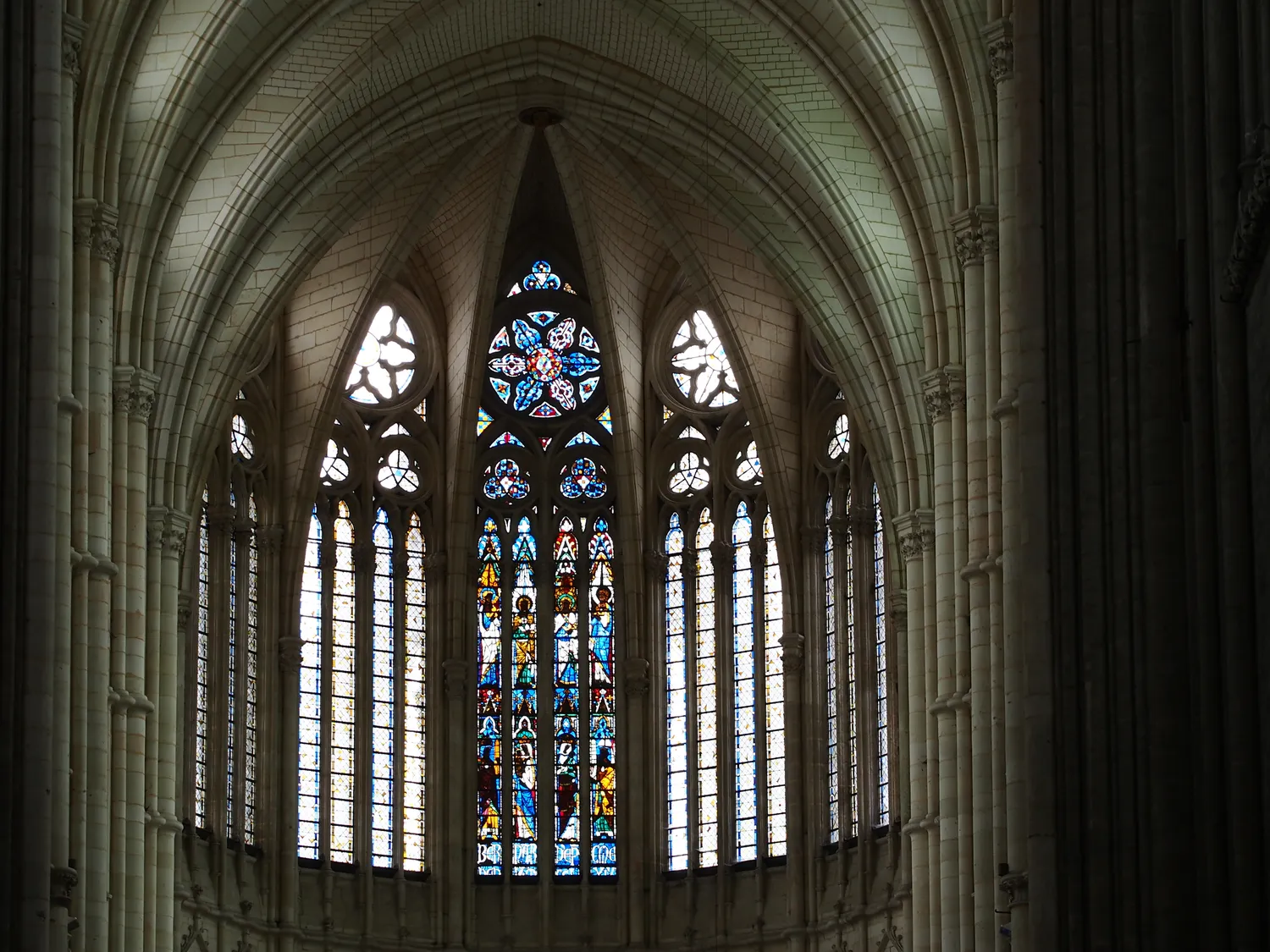
"Stained glass windows of Amiens Cathedral" by Alf van Beem / Wikimedia Commons.
The High Middle Ages lasted from about 1000 to 1300 CE and brought many important changes to Europe. During this time, Europe’s population grew quickly, villages expanded, and new cities appeared. The period was marked by major innovations in farming, the rise of bustling towns, the construction of impressive cathedrals, and a series of religious wars called the Crusades.
Population growth in the High Middle Ages was dramatic. Historians estimate that Europe’s population doubled between 1000 and 1300 CE. This growth was possible due to agricultural advances, like the introduction of the three-field system. In this system, farmers divided their land into three parts: one for autumn crops, one for spring crops, and one left fallow to recover. The use of the heavy plow helped farmers turn over rich northern European soil. These changes meant more food and healthier people. Archaeological evidence, such as larger houses and better diets found in medieval villages like Wharram Percy in England, supports these claims.
As food supplies grew, so did trade. New towns and cities developed along trade routes and rivers. Merchants formed guilds to protect their businesses and ensure quality goods. Townspeople, sometimes called burghers, gained more rights, challenging the old feudal order. The social structure shifted: while nobles and clergy remained powerful, skilled craftsmen and merchants became increasingly important. Written records from towns like Lübeck and Florence show how city governments and laws grew more complex. The bustling markets and fairs became centers of economic and social life.
One of the most striking achievements of the High Middle Ages was the building of large cathedrals. These Gothic cathedrals, like Notre-Dame in Paris and Canterbury Cathedral in England, were constructed with tall pointed arches and large stained glass windows. Building such structures required advanced engineering and organization. The cathedrals not only served as places of worship but also showed the power of the Church and the creativity of medieval society. Primary sources, like construction records and carvings left by stone masons, reveal the pride and skill involved in these projects.
The Crusades (1096–1291 CE) were another major feature of this era. These were military expeditions launched by European Christians to capture Jerusalem and other holy sites from Muslim rulers. The Crusades changed relationships between Europe, the Middle East, and North Africa. They led to the exchange of goods, ideas, and technologies, but also caused suffering and conflict. Letters from Crusaders and chronicles by Muslim and Christian writers, such as Anna Comnena and Ibn al-Athir, help us understand these complex encounters.
The High Middle Ages left a lasting mark on Europe. Innovations in farming and trade, the rise of towns, and cultural achievements like cathedral building all shaped the continent’s future. The period also saw the spread of new ideas and contact with other cultures, setting the stage for the Renaissance.
This era connects to broader world history themes, such as the impact of technology, urbanization, and cultural exchange on human societies.
Interesting Fact: The stained glass windows in Gothic cathedrals often told Bible stories with pictures, helping people who could not read understand religious teachings.
Comprehension quiz (8 questions)
1. When did the High Middle Ages start?
2. What was a key farming innovation?
3. Who built the cathedrals?
4. What was a guild?
5. Why did towns grow?
6. What effect did the Crusades have?
7. The High Middle Ages ended in 1300 CE. True or false?
8. What does 'agricultural' mean?
Perfect for the way you teach
- Build comprehension skills
- Auto-graded quiz
- Differentiated reading
- Read together at home
- Improve fluency
- Quiet reading time
- Reading curriculum support
- Independent practice
- Track Lexile growth