Medieval Guilds
Interactive passage with audio narration, comprehension questions, and printable PDF.
By completing this purchase you agree to our Terms of Use and Privacy Policy. Your subscription renews automatically until you cancel. You can cancel anytime from your account settings. All sales are final and non-refundable. Digital content is available for download in your account immediately upon purchase.
What's included
Medieval Guilds preview and details
About this printable Medieval Guilds reading passage (Grades 5-8)
Sample passage and quiz from Medieval Guilds
Reading passage and comprehension quiz preview
Medieval Guilds
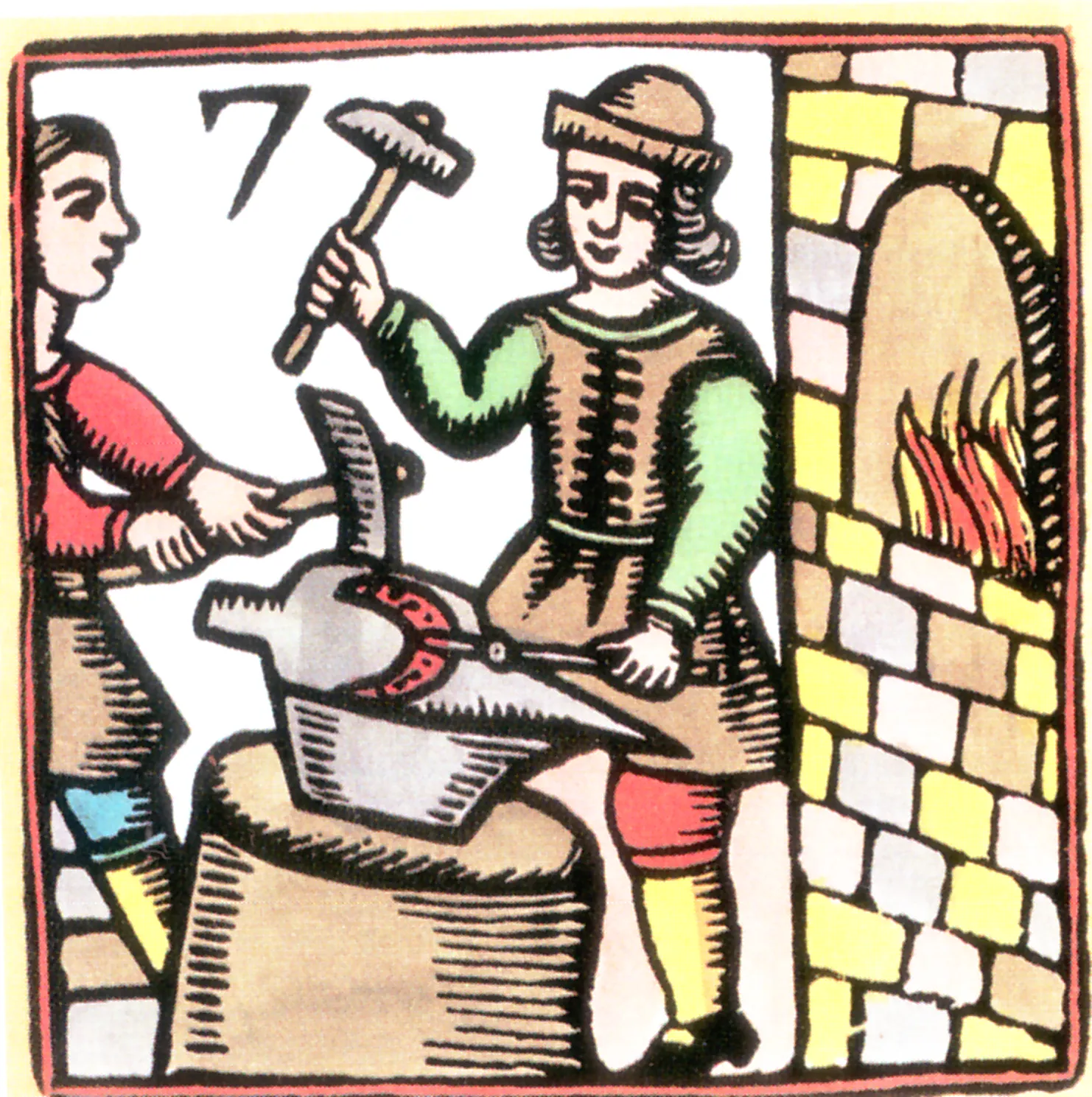
Young people, often as young as twelve, started as apprentices. Anónimo del siglo XVIII, Museums of art in Barcelona. Wikimedia Commons
Guilds were organized groups of workers and merchants in medieval Europe who controlled their trades and protected their members. These groups became especially important between the 1100s and 1500s, as towns and cities grew across Europe. Guilds helped shape the economy, set rules for work, and influenced daily life in places like Florence, Paris, and London.
There were two main types of guilds: craft guilds and merchant guilds. Craft guilds included people who made things, such as blacksmiths, weavers, shoemakers, and bakers. They set strict rules about the quality of goods, prices, and working hours. For example, the Paris bakers' guild in the 13th century had regulations to make sure bread was safe and properly weighed. Merchant guilds, on the other hand, included traders who bought and sold goods. They protected their members' interests, controlled trade routes, and sometimes negotiated with rulers for special privileges. The Hanseatic League, a powerful group of merchant guilds in northern Germany, controlled trade along the Baltic Sea from the 1200s to the 1600s.
Training in a guild followed a set path. Young people, often as young as twelve, started as apprentices. Apprentices lived with a master and learned the skills of the trade through hands-on work. After several years, they became journeymen and could earn wages, but they were not yet full members. To become a master, a journeyman had to create a piece of work called a "masterpiece" that showed advanced skill. If the guild approved, the journeyman became a master with the right to open a workshop and train others. This system ensured high standards and passed knowledge from one generation to the next.
Guilds also played a role in city life beyond work. They built meeting halls, took part in religious festivals, and helped care for sick or poor members. Some guilds, like the Goldsmiths' Company in London, kept detailed records that historians still use today. While guilds provided security for members, they could also exclude outsiders and keep strict control over who could join. Over time, as new trade routes and technologies appeared, the power of guilds declined, but their influence on business and training lasted for centuries. In many European cities, the organization of workers and merchants by trade created a unique social order and supported the growth of towns.
Guilds shaped not only the economy but also the social structure of medieval Europe. By controlling training and membership, they helped create a sense of identity and pride among workers. The rules and traditions they established influenced later labor organizations and even some modern professional groups.
Interesting Fact: Some medieval guilds had secret signs and handshakes to identify their members and protect trade secrets.
Comprehension quiz (8 questions)
1. What is a guild?
2. Who started as apprentices?
3. Which guild set bread rules in Paris?
4. What was the Hanseatic League?
5. Why did guilds set regulations?
6. What effect did guilds have on cities?
7. Guilds still exist today. True or false?
8. What is an apprentice?
Perfect for the way you teach
- Build comprehension skills
- Auto-graded quiz
- Differentiated reading
- Read together at home
- Improve fluency
- Quiet reading time
- Reading curriculum support
- Independent practice
- Track Lexile growth