What Were the Middle Ages? — Reading Comprehension
Rate this
Premium Resource
Present
Present in classroom. No work saved
Assign
Classroom with student accounts, Track progress
Quick Play
No student accounts, assign with a link
Grades
5
6
7
8
PRINT+DIGITAL RESOURCE
This learning resource is available in interactive and printable formats. The interactive worksheet can be played online and assigned to students. The Printable PDF version can be downloaded and printed for completion by hand.
This engaging world history reading passage introduces students to the Middle Ages, the period in European history between 500 and 1500 CE. The passage explains how the fall of the Western Roman Empire led to new kingdoms, the rise of feudalism, the role of the Catholic Church, and the daily lives of peasants, nobles, and knights. Students will explore primary and archaeological sources, social hierarchy, and cause-and-effect relationships that shaped medieval society. The passage is aligned to CA HSS 6.6 and TEKS 113.18 social studies standards, as well as CCSS RI.6.3, and includes a glossary, graphic organizers, comprehension quiz, and writing activities. Also features a Spanish translation and read aloud audio to support diverse learners.
The Middle Ages was a period of European history that lasted from about 500 to 1500 CE. This era began after the fall of the Western Roman Empire and ended with the start of the Renaissance. During these thousand years, Europe experienced major changes in politics, society, and daily life.
One of the most important features of the Middle Ages was the feudal system. This system organized society into different levels, or a hierarchy. At the top were kings and powerful nobles who owned large lands called manors. Below them were knights, who served nobles as warriors. At the very bottom were peasants and serfs, who worked the land but had few rights. This structure helped maintain order, but it also meant most people had hard lives with few chances to change their position.
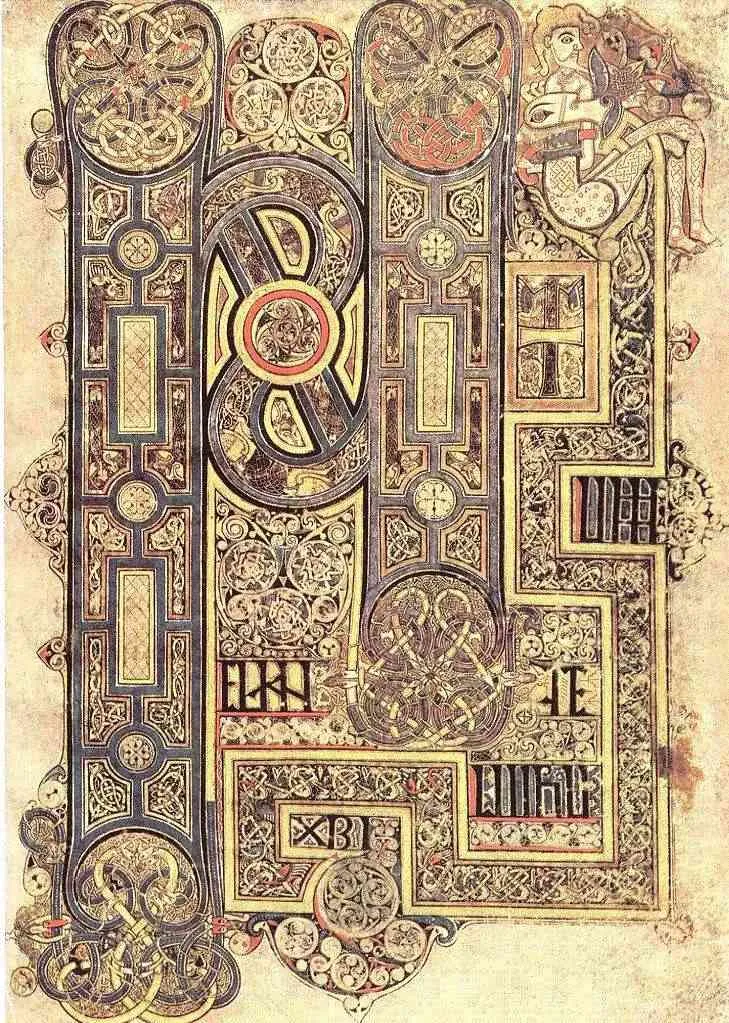
The Catholic Church played a central role in medieval Europe. Almost everyone was Christian, and the Church influenced every part of life, from education to government. Monasteries, where monks lived and studied, helped preserve ancient texts. For example, the Book of Kells, an illuminated manuscript created by monks in Ireland around 800 CE, is still admired today for its art and beauty. Cathedrals, such as Notre Dame in Paris, were built to honor God and became centers of community life. Archaeological discoveries, like the remains of medieval villages in England, reveal the daily routines of peasants, including farming, cooking, and religious festivals.
Warfare and defense were constant concerns. Castles were built across Europe to protect lands and people. Knights trained for years to become skilled fighters and followed a code called chivalry, which valued bravery, loyalty, and honor. However, not all was war. Trade grew, towns developed, and new ideas spread. The Black Death, a disease that struck in the mid-1300s, caused massive population loss and changed society. Despite hardships, some traditions and institutions, like the Catholic Church and local languages, continued across generations.
The Middle Ages ended as new ideas and technologies led to the Renaissance, a period of renewed learning and creativity. The changes of the Middle Ages shaped the foundations of modern Europe, from government to language and law.
This study of the Middle Ages helps us understand how societies adapt and change through challenges, and connects to broader themes in world history, such as cultural exchange and the rise of civilizations.
Interesting Fact: The word "medieval" comes from the Latin "medium aevum," which means "the middle age."
When did the Middle Ages begin?
After fall of RomeAfter the RenaissanceDuring the Roman EmpireIn 2000 CE
Who was at the top of feudal society?
Kings and noblesPeasantsSerfsMerchants
What role did the Catholic Church play?
Central roleNo influenceOnly militaryOnly farming
What was the Book of Kells?
An illuminated manuscriptA castleA battleA disease
How did the Black Death affect society?
Caused population lossBuilt castlesSpread ChristianityStarted Renaissance
Why were castles built?
For defenseOnly for funTo grow cropsTo trade
The Renaissance followed the Middle Ages. True or false?
TrueFalse
What does 'hierarchy' mean?
Social rankingDiseaseReligionVillage
Perfect For:
👩🏫 Teachers
• Reading comprehension practice
• Auto-graded assessments
• Literacy skill development
👨👩👧👦 Parents
• Reading practice at home
• Comprehension improvement
• Educational reading time
🏠 Homeschoolers
• Reading curriculum support
• Independent reading practice
• Progress monitoring
Reading Features:
📖
Reading Passage
Engaging fiction or nonfiction text
❓
Comprehension Quiz
Auto-graded questions
📊
Instant Feedback
Immediate results and scoring
📄
Printable Version
Download for offline reading
🔊
Read Aloud
Voice-over with word highlighting
Reviews & Ratings
No reviews yet. Be the first to share your experience!
Related Content
Middle Ages Legacy
This history reading passage examines the lasting legacy of the Middle Ages, including the development of universities, ...
Early Middle Ages
This comprehensive reading passage explores the Early Middle Ages (500-1000 CE), a transformative period in European his...
High Middle Ages
This detailed world history reading passage explores the High Middle Ages (1000-1300 CE), a transformative era in Europe...
Late Middle Ages
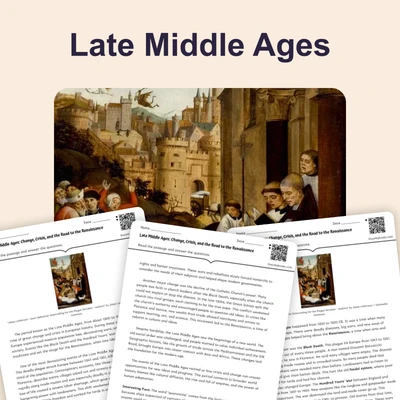
This rigorous world history reading passage explores the Late Middle Ages (1300-1500 CE), a time marked by the devastati...
Dark Ages
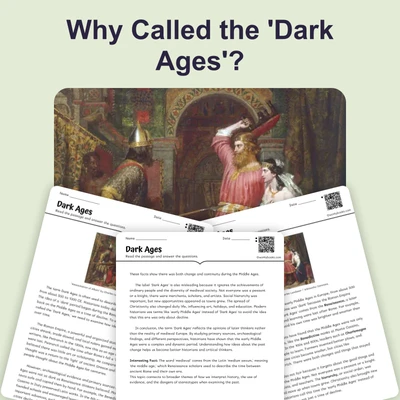
This passage offers a rigorous, engaging examination of why the early Middle Ages are often called the 'Dark Ages.' Stud...
Life in Middle Ages
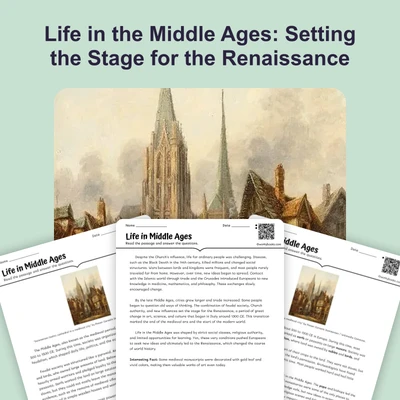
This rigorous history reading passage explores life in Europe during the Middle Ages, focusing on the structure of feuda...
Medieval Islamic World
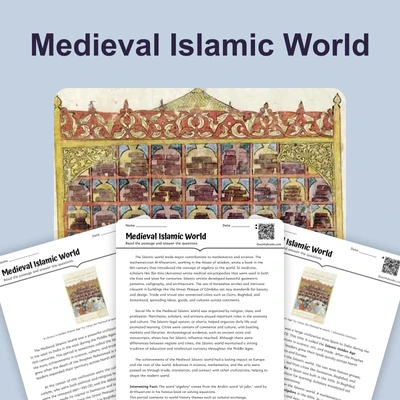
This rigorous reading passage delves into the Medieval Islamic World's golden age, when a vast civilization stretched fr...
Islamic Golden Age
This history reading passage explores the Islamic Golden Age, a period from the 8th to 14th centuries marked by outstand...
Medieval to Modern Transition
This engaging world history reading passage explores the dramatic transformation from the Middle Ages to the modern era,...
Medieval Words in English
This engaging history reading passage examines the evolution of the English language during the Middle Ages, focusing on...
Age of Exploration Begins
This engaging history reading passage explores the Age of Exploration, a turning point in world history when European po...
Italian City-States
This passage explores the rise and significance of the Italian city-states—Venice, Florence, and Genoa—during the Middle...
Attila the Hun
This engaging world history reading passage examines Attila the Hun, a powerful and feared ruler during the Middle Ages....
Medieval Guilds
This engaging world history reading passage explores the important role of guilds—worker groups that shaped the economy ...
Medieval Christian Worship
This detailed passage examines how people worshiped during the Middle Ages, focusing on essential religious practices su...
Power of the Pope
This history reading passage examines the power of the pope during the Middle Ages, focusing on his role as spiritual le...
Carolingian Renaissance
This engaging world history passage explores how Charlemagne, ruler of the Franks, transformed education and learning in...
Islamic Golden Age Inventions
This world history reading passage explores the remarkable inventions and scientific advances made in the medieval Islam...
Medieval Agricultural Innovations
This history reading passage explores how farming inventions like the heavy plow, three-field system, and horse collar r...