Power of the Pope
Interactive passage with audio narration, comprehension questions, and printable PDF.
By completing this purchase you agree to our Terms of Use and Privacy Policy. Your subscription renews automatically until you cancel. You can cancel anytime from your account settings. All sales are final and non-refundable. Digital content is available for download in your account immediately upon purchase.
What's included
Power of the Pope preview and details
About this printable Power of the Pope reading passage (Grades 5-8)
Sample passage and quiz from Power of the Pope
Reading passage and comprehension quiz preview
Power of the Pope
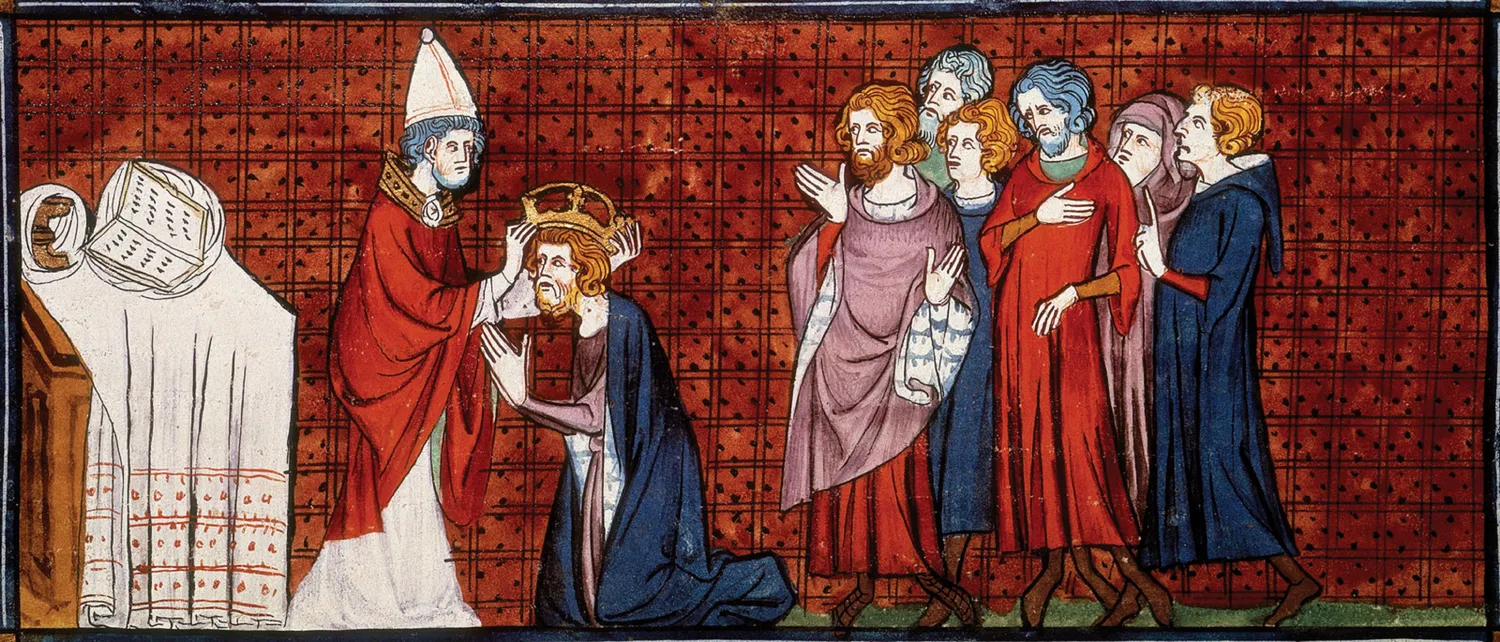
"Pope Leo III crowning Charlemagne as Emperor on Christmas Day, 800;, from Chroniques de France ou de St Denis, 14th century" by Levan Ramishvili from Tbilisi, Georgia / Wikimedia Commons.
The pope was one of the most powerful figures in Europe during the Middle Ages. As the leader of the Roman Catholic Church, the pope had enormous spiritual and political influence. He was believed to be God's representative on Earth, guiding millions of Christians in matters of faith and daily life. The pope's authority reached far beyond the church; he often influenced the actions of kings and rulers across Europe.
The pope’s spiritual role was central to his power. He could issue decrees or official orders that shaped religious belief and practice. For example, in 1054, Pope Leo IX played a major part in the Great Schism, which split the Christian Church into Roman Catholic and Eastern Orthodox branches. The pope could also call for large events like the Crusades. In 1095, Pope Urban II delivered a famous speech in Clermont, France, urging Christians to take back the Holy Land from Muslim control. This speech was recorded by eyewitnesses and led thousands to join the First Crusade. Through such actions, the pope united people under a common religious goal and demonstrated his unique authority.
In addition to his spiritual leadership, the pope held significant temporal or worldly power. Popes often crowned kings and emperors, showing that even monarchs recognized the pope’s higher authority. One of the most famous examples was in 800 CE, when Pope Leo III crowned Charlemagne as Holy Roman Emperor in Rome. This event, written about by monks at the time, showed that the pope could decide who should rule over vast territories. The pope could also excommunicate (expel) rulers from the church, which meant they lost support from Christian subjects. For example, in 1076, Pope Gregory VII excommunicated Emperor Henry IV, leading to a power struggle that historians call the Investiture Controversy.
The pope’s influence affected the daily lives of ordinary people as well as the highest members of society. Church teachings guided laws about marriage, education, and even what people ate on certain days. Cathedrals and churches were built across Europe, often funded by local rulers who wanted the pope’s approval. The pope also sent out envoys to communicate with distant lands, spreading Christianity and increasing the church’s reach. Despite his power, the pope sometimes faced challenges from kings who wanted more independence or from reform movements within the church itself.
The power of the pope in the Middle Ages helped shape European society and government for centuries. The pope’s ability to unite people under a shared religion, influence political leaders, and guide cultural life left a lasting legacy. Understanding the pope’s role shows how religion and government were deeply connected during this era and how leaders could use both spiritual and political tools to shape history.
Interesting Fact: The pope is also called the “Pontiff,” which comes from a Latin word meaning “bridge builder.” This reflects his role as a connection between God and the people.
This study of the pope’s power connects to wider themes in world history, such as the relationship between religious and political authority.
Comprehension quiz (8 questions)
1. Who crowned Charlemagne as emperor?
2. What does excommunicate mean?
3. In what year did the First Crusade begin?
4. How did the pope influence kings?
5. Why did Pope Urban II call for the Crusades?
6. What is a decree?
7. The pope sent envoys to spread Christianity. True or false?
8. Which word means worldly, not religious?
Perfect for the way you teach
- Build comprehension skills
- Auto-graded quiz
- Differentiated reading
- Read together at home
- Improve fluency
- Quiet reading time
- Reading curriculum support
- Independent practice
- Track Lexile growth