Carolingian Renaissance
Interactive passage with audio narration, comprehension questions, and printable PDF.
By completing this purchase you agree to our Terms of Use and Privacy Policy. Your subscription renews automatically until you cancel. You can cancel anytime from your account settings. All sales are final and non-refundable. Digital content is available for download in your account immediately upon purchase.
What's included
Carolingian Renaissance preview and details
About this printable Carolingian Renaissance reading passage (Grades 5-8)
Sample passage and quiz from Carolingian Renaissance
Reading passage and comprehension quiz preview
Carolingian Renaissance
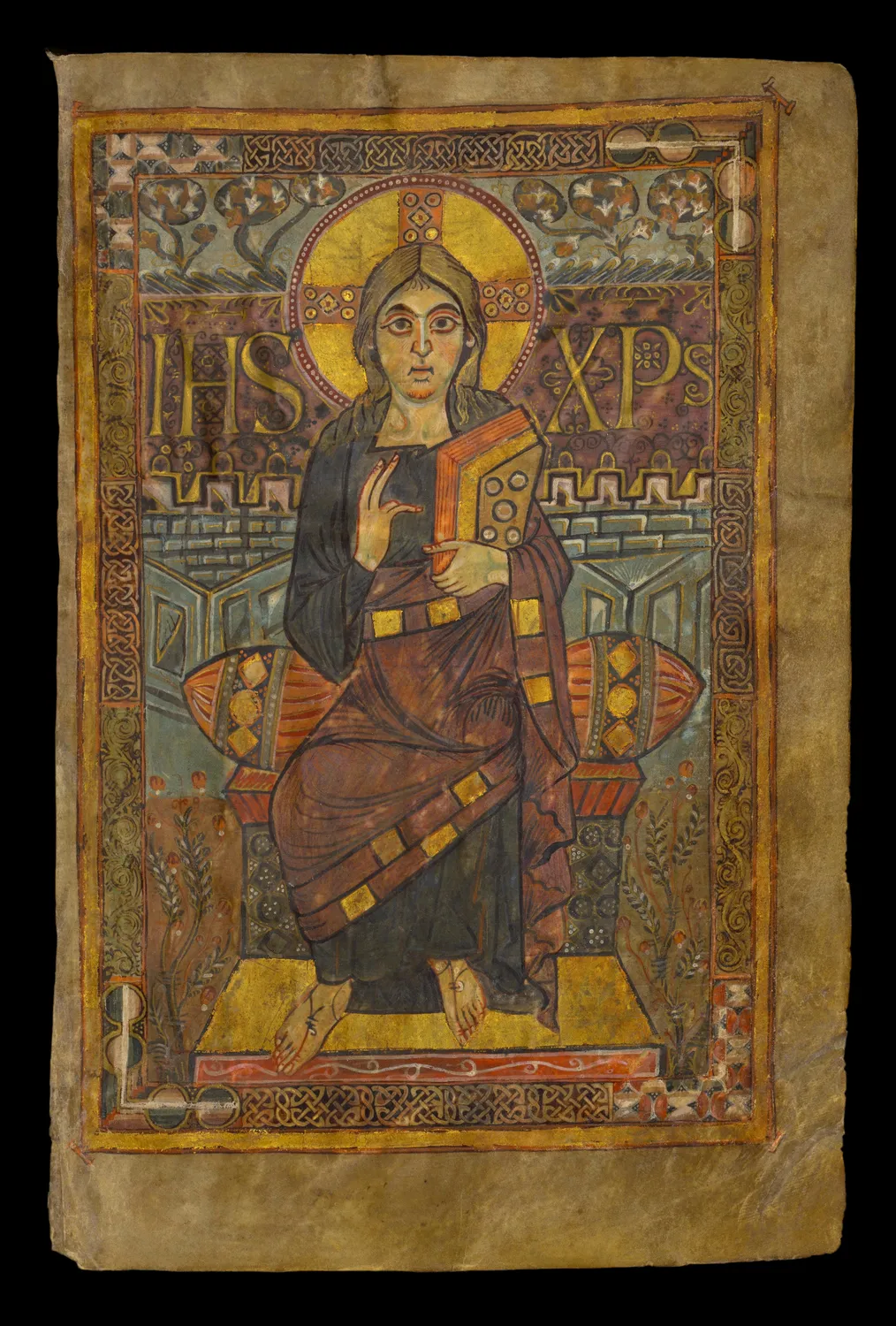
"Evangeliarium - évangéliaire dit de Charlemagne ou de Godescalc - Jésus-Christ - BNF Gallica" by Godescalc/ Wikimedia Commons.
During the Middle Ages, European learning and culture faced serious challenges. In the late eighth and early ninth centuries, Charlemagne, king of the Franks, took important steps to revive education and knowledge. His efforts began a period called the Carolingian Renaissance, which had a lasting impact on European history.
Charlemagne became king in 768 and was crowned Emperor of the Romans in 800. He believed that education was necessary for strengthening his empire. Charlemagne invited scholars from Italy, Spain, and Ireland to his court at Aachen. One of the most famous was Alcuin of York, an English monk and teacher. Alcuin organized a palace school to educate royal children and future leaders. Under Charlemagne’s orders, many monasteries and churches also opened schools for boys, including sons of nobles and some commoners. These schools taught reading, writing, arithmetic, and religious studies. The curriculum was based on ancient Roman and Christian texts.
To preserve knowledge, Charlemagne ordered the copying of important books and documents, especially the Bible and works by Roman authors like Virgil. Monks used a new, clear style of handwriting called Carolingian minuscule, making texts easier to read and copy. This handwriting helped prevent mistakes in manuscripts and made learning more accessible. The surviving manuscripts from this period, such as the Godescalc Evangelistary (781–783), show the care and skill of medieval scribes. These copied texts later became the foundation for much of Europe’s written heritage.
Charlemagne’s reforms also standardized the curriculum and encouraged the use of Latin, the language of learning. Teachers and students across his empire used the same texts and methods. As a result, literacy increased among the clergy and some nobles. Although most ordinary people did not attend school, the spread of education changed European society over time. Charlemagne’s program helped protect knowledge during a time of war and uncertainty. By connecting his empire with a shared culture of learning, he influenced the future growth of universities and libraries.
The Carolingian Renaissance was significant because it preserved ancient knowledge and made new advances possible in later centuries. Charlemagne’s support for learning laid the groundwork for developments in art, science, and literature. His vision for education connected people across Europe and inspired future rulers to value knowledge and scholarship.
This story of educational renewal links to the broader theme of how leaders and societies shape the development of culture and knowledge in world history.
Interesting Fact: Charlemagne himself was never able to write well, even though he deeply valued education and encouraged others to learn.
Comprehension quiz (8 questions)
1. Who started the Carolingian Renaissance?
2. Where was Charlemagne's main royal court?
3. What new handwriting was developed?
4. Why did Charlemagne create schools?
5. How did copying manuscripts help Europe?
6. What language was used for learning?
7. Charlemagne was a skilled writer.
8. What does 'curriculum' mean?
Perfect for the way you teach
- Build comprehension skills
- Auto-graded quiz
- Differentiated reading
- Read together at home
- Improve fluency
- Quiet reading time
- Reading curriculum support
- Independent practice
- Track Lexile growth