Are Continents the Same as Plates
Interactive passage with audio narration, comprehension questions, and printable PDF.
By completing this purchase you agree to our Terms of Use and Privacy Policy. Your subscription renews automatically until you cancel. You can cancel anytime from your account settings. All sales are final and non-refundable. Digital content is available for download in your account immediately upon purchase.
What's included
Are Continents the Same as Plates preview and details
About this printable Are Continents the Same as Plates science reading passage, NGSS-aligned (Grades 5-8)
Sample passage and quiz from Are Continents the Same as Plates
Reading passage and comprehension quiz preview
Are Continents the Same as Plates
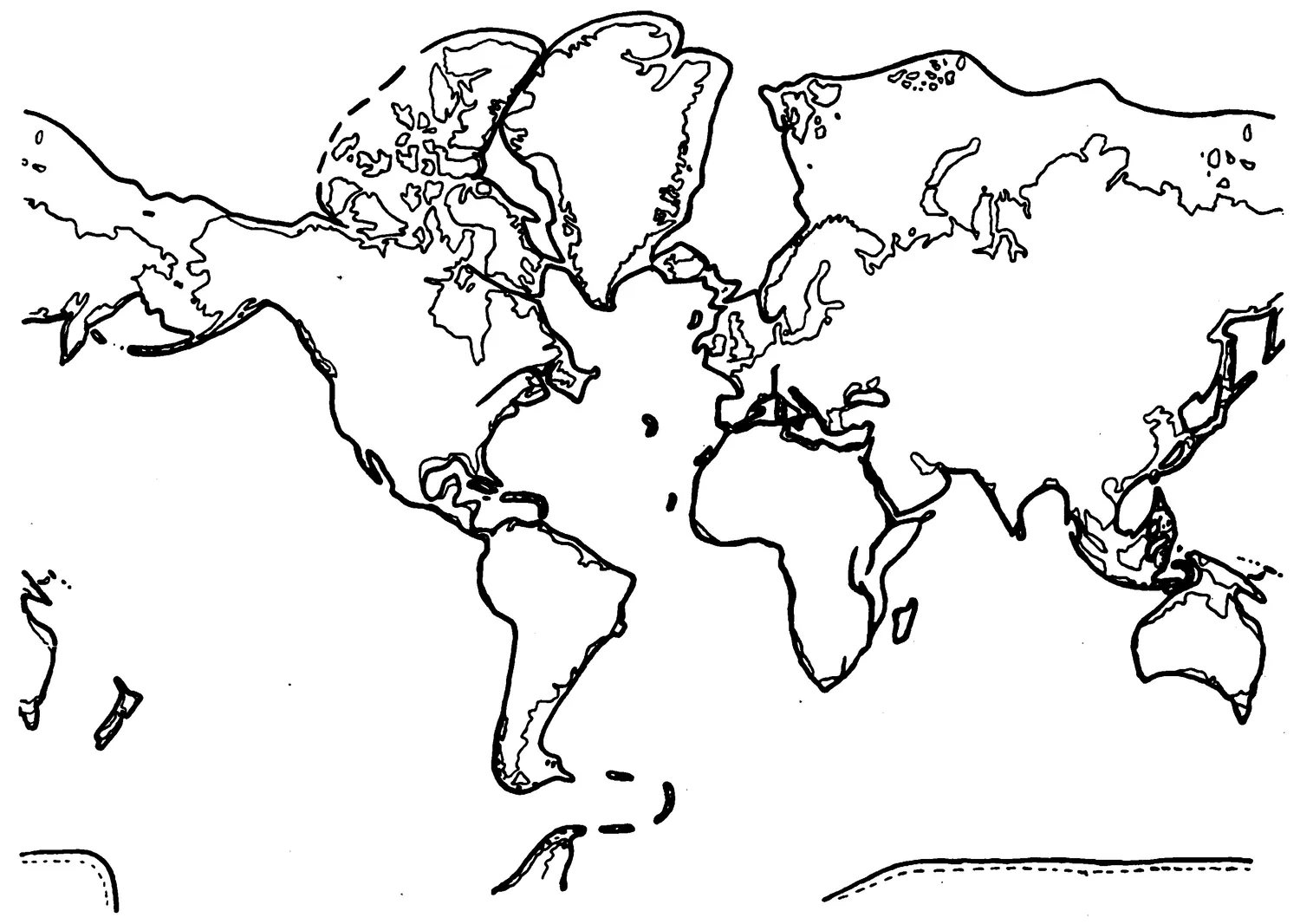
"The origin of continents and oceans - Wegener (1924) - figure 27" by Alfred Wegener (author) J. G. A. Skerl (translator)E P Dutton & Co (publisher) / Wikimedia Commons (Public domain).
No, continents and tectonic plates are not the same thing. This is one of the most common misunderstandings in Earth science. A continent is a large landmass made of continental crust, which is the dry land where we live. A tectonic plate is a rigid slab of the lithosphere that moves slowly across Earth's surface. Most plates carry both a continent and a large area of ocean floor.
Scientists explain that the edges of continents and the edges of plates are usually in different places. The edge of a continent is where land meets the sea at a coastline. However, a plate boundary is where two tectonic plates meet, and this boundary often lies far beneath the ocean. Evidence shows that most coastlines are not plate boundaries at all. The real action in plate tectonics happens at plate boundaries, not at the edges of continents.
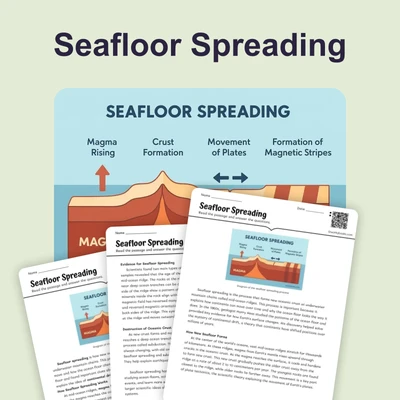
Consider the North American Plate as a real-world example. This plate includes all of North America, but it does not stop at the Atlantic coastline. The plate extends eastward across the ocean floor, carrying the western half of the Atlantic Ocean. The actual boundary of the North American Plate lies in the middle of the Atlantic Ocean, thousands of miles from the coast. At this boundary, called the Mid-Atlantic Ridge, new oceanic crust forms as the plate moves away from the ridge.
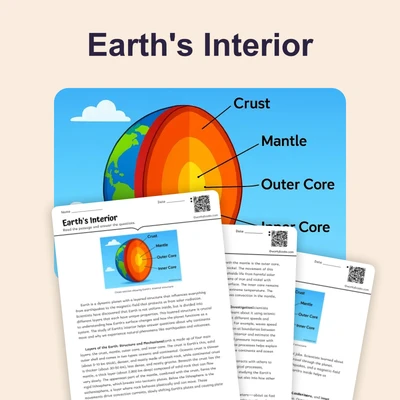
Understanding this distinction helps students picture how Earth's surface is really divided. A tectonic plate can be much larger than the continent it carries. The plate includes both the continent and a huge section of ocean floor beneath the water. The lithosphere, which makes up tectonic plates, is about 100 kilometers thick and includes both the crust and the upper part of the mantle. This rigid layer floats on the softer, flowing rock below.
This concept matters because it explains why earthquakes and volcanoes occur where they do. These events happen at plate boundaries, not at the edges of continents. When students confuse continents with plates, they may incorrectly predict where geologic activity occurs. Recognizing that plates carry continents helps explain the movement and changes we observe on Earth's surface over millions of years.
Interesting Fact: The Pacific Plate is the largest tectonic plate on Earth, but it carries almost no continental crust at all—it is nearly entirely ocean floor!
Comprehension quiz (10 questions)
1. What is a continent made of?
2. Where do most plate boundaries occur?
3. What does the North American Plate carry besides North America?
4. In the passage, what does the term 'lithosphere' refer to?
5. Based on the passage, what does 'plate boundary' mean?
6. Why is it important to understand that continents and plates are different?
7. What can you infer about the Pacific Plate from the interesting fact?
8. If a student wanted to find a plate boundary, where should they look?
9. True or False: Most coastlines are plate boundaries.
10. True or False: A tectonic plate can be much larger than the continent it carries.
Perfect for the way you teach
- Build comprehension skills
- Auto-graded quiz
- Differentiated reading
- Read together at home
- Improve fluency
- Quiet reading time
- Reading curriculum support
- Independent practice
- Track Lexile growth