Botticelli Birth of Venus
Interactive passage with audio narration, comprehension questions, and printable PDF.
By completing this purchase you agree to our Terms of Use and Privacy Policy. Your subscription renews automatically until you cancel. You can cancel anytime from your account settings. All sales are final and non-refundable. Digital content is available for download in your account immediately upon purchase.
What's included
Botticelli Birth of Venus preview and details
About this printable Botticelli Birth of Venus reading passage (Grades 5-8)
Sample passage and quiz from Botticelli Birth of Venus
Reading passage and comprehension quiz preview
Botticelli Birth of Venus
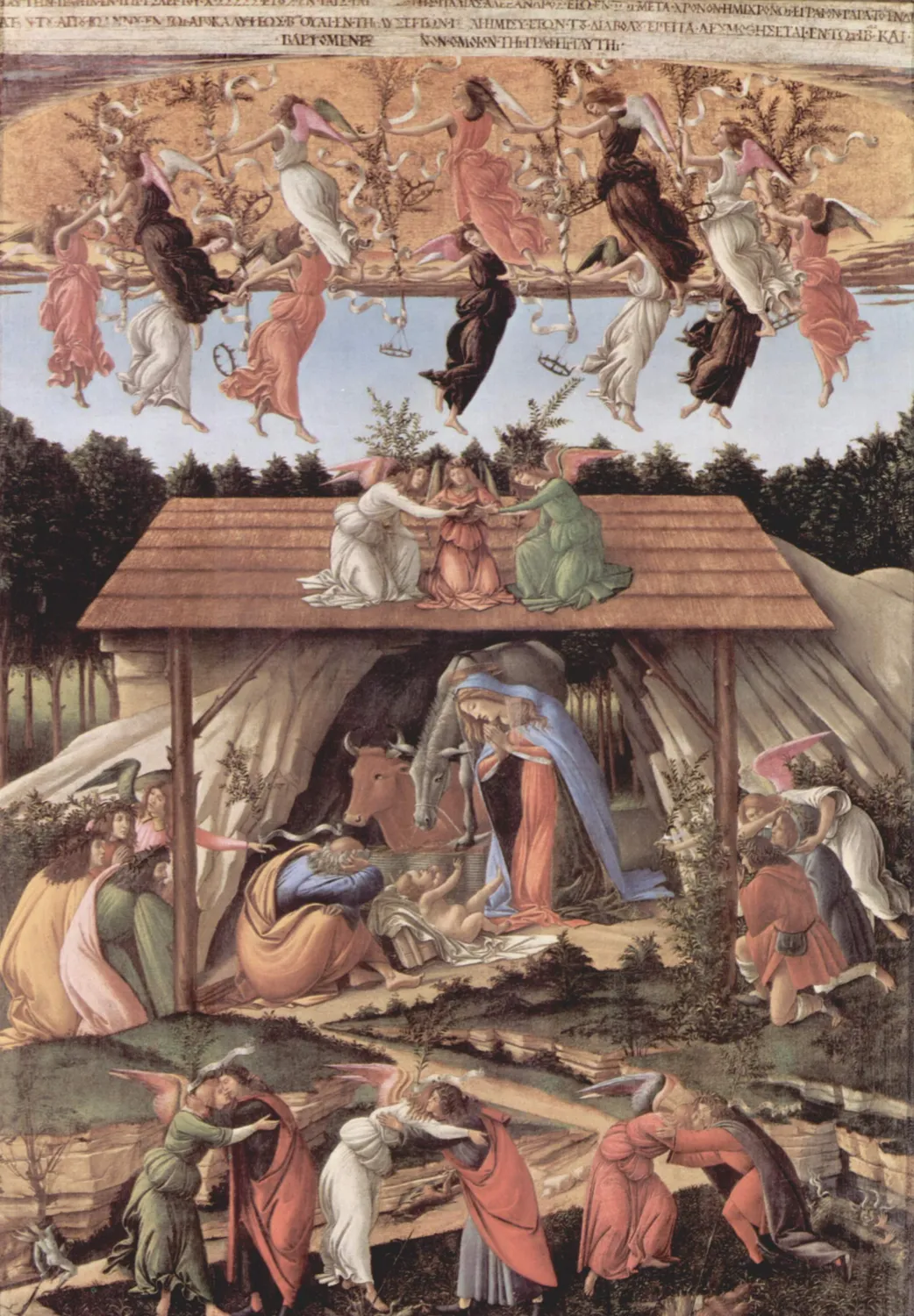
"Mystic Nativity" by Sandro Botticelli / Wikimedia Commons.
Sandro Botticelli created one of the most celebrated paintings of the Italian Renaissance, titled The Birth of Venus. Painted around 1484-1486 in the city-state of Florence, this masterpiece shows the goddess Venus rising from the sea on a giant shell. The painting is a powerful example of how Renaissance artists combined classical mythology, idealized beauty, and new artistic techniques to create works that still inspire people today.
The subject matter of the painting is based on a myth from ancient Rome and Greece. According to legend, Venus, the goddess of love and beauty, was born from the sea foam and brought to shore on a shell. Botticelli used this story to celebrate human beauty and nature, using flowing lines and soft colors to make Venus appear graceful and almost otherworldly. The painting also includes figures like Zephyr, the wind god, and a nymph named Chloris, who blows Venus toward the shore. On the right, a woman waits to cover Venus with a cloak decorated with flowers, symbolizing the arrival of Spring.
The style of the painting reflects key ideas of the Renaissance. Botticelli uses idealized forms, giving Venus perfect proportions and smooth, pale skin that suggest a dreamlike perfection. The composition is carefully arranged: Venus stands at the center, with other figures and flowing hair guiding the viewer's eyes around the scene. Unlike medieval art, which often focused on religious subjects, Botticelli draws from pagan or non-Christian stories. This marks a change in European culture, where artists began to rediscover and celebrate ancient Greek and Roman ideas.
Patronage played a major role in making art like The Birth of Venus possible. Wealthy families such as the Medici of Florence supported artists by providing money and materials. Historians believe that Lorenzo di Pierfrancesco de' Medici, a cousin of Lorenzo the Magnificent, asked Botticelli to paint The Birth of Venus for his villa. Letters and records from the time show that the Medici family often commissioned art that reflected both their interest in classical learning and their status in society. This support allowed artists to spend more time perfecting their work, leading to new innovations in painting, such as the use of perspective and natural light.
The Birth of Venus remains significant because it shows how Renaissance artists could blend myth, beauty, and technical skill. It also demonstrates how the social and economic changes of the time—like increased trade, powerful families, and the study of ancient texts—influenced art. Today, the painting can be seen in the Uffizi Gallery in Florence, where it continues to draw visitors from around the world.
This painting connects to broader themes in world history, such as the development of new ideas, the influence of geography and economics, and the role of art in expressing cultural values.
Interesting Fact: Botticelli's signature is not on The Birth of Venus, but art experts have identified his style through clues like the delicate use of line and color.
Comprehension quiz (8 questions)
1. Who painted The Birth of Venus?
2. What city was Botticelli from?
3. Who likely paid for The Birth of Venus?
4. What is the main subject of the painting?
5. How did Medici patronage affect art?
6. Why is the painting important?
7. True or False: The painting is signed by Botticelli.
8. What does 'idealized' mean in the passage?
Perfect for the way you teach
- Build comprehension skills
- Auto-graded quiz
- Differentiated reading
- Read together at home
- Improve fluency
- Quiet reading time
- Reading curriculum support
- Independent practice
- Track Lexile growth