Classical Greece and Rome
Interactive passage with audio narration, comprehension questions, and printable PDF.
By completing this purchase you agree to our Terms of Use and Privacy Policy. Your subscription renews automatically until you cancel. You can cancel anytime from your account settings. All sales are final and non-refundable. Digital content is available for download in your account immediately upon purchase.
What's included
Classical Greece and Rome preview and details
About this printable Classical Greece and Rome reading passage (Grades 5-8)
Sample passage and quiz from Classical Greece and Rome
Reading passage and comprehension quiz preview
Classical Greece and Rome
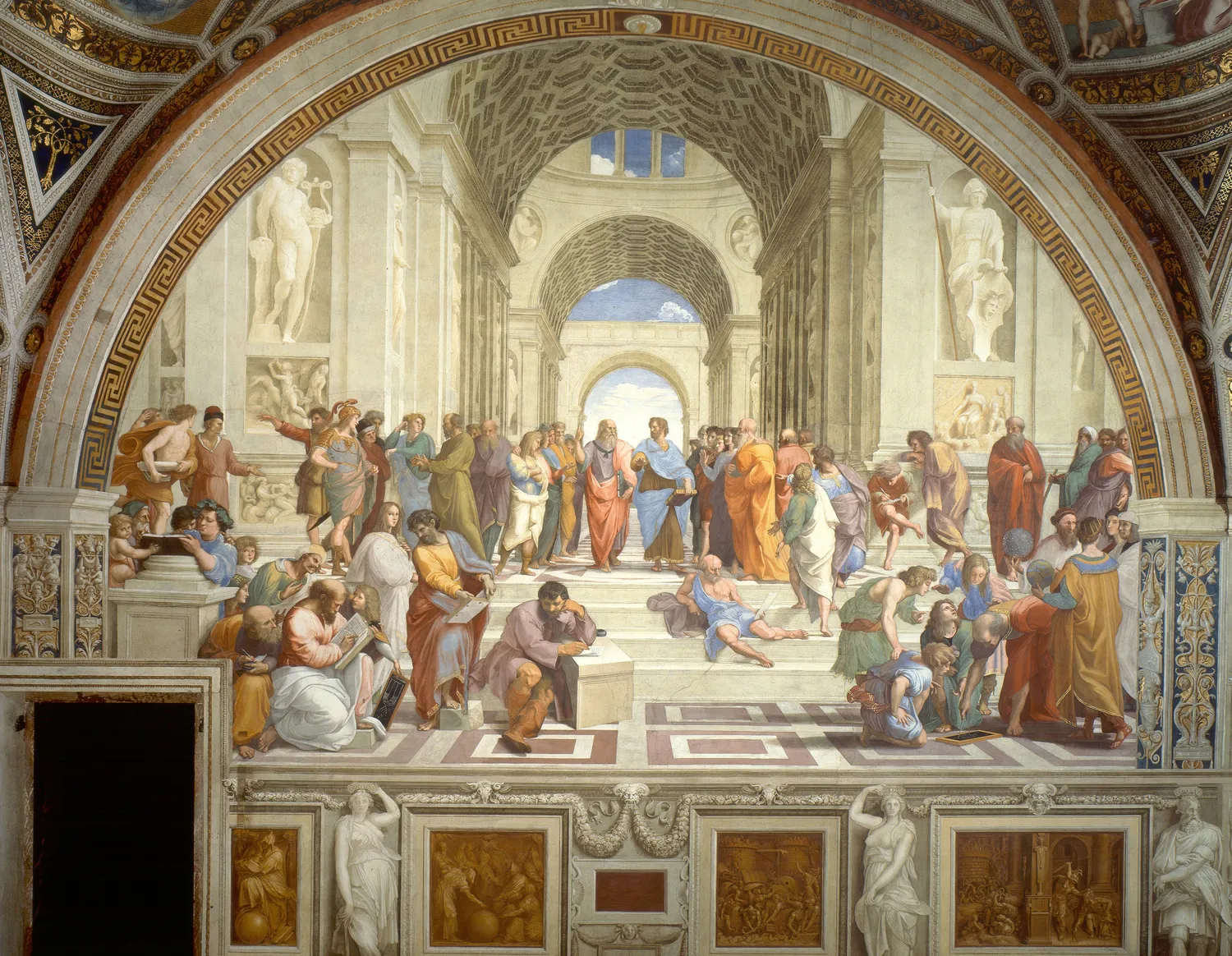
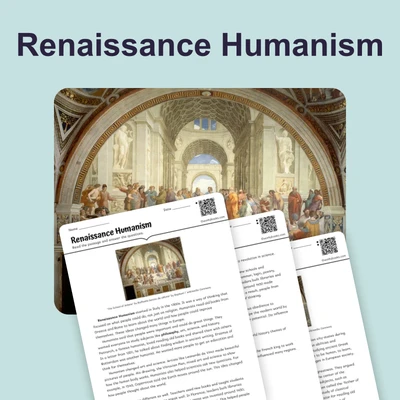
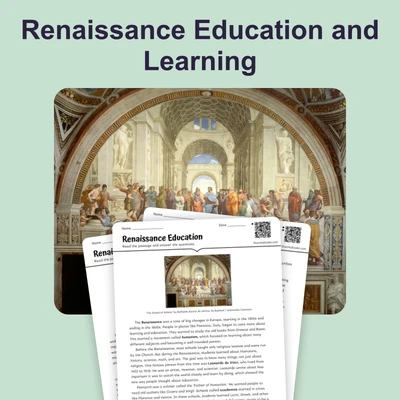
"The School of Athens" by Raffaello Sanzio da Urbino, by Raphael / Wikimedia Commons.
The Renaissance was a period in European history, beginning in the 14th century and lasting into the 17th century, marked by a renewed interest in the cultures of Ancient Greece and Rome. This era saw the revival of classical learning, philosophy, art, and architecture. The word "Renaissance" itself means "rebirth," indicating a return to the ideas and achievements of the ancient world after centuries dominated by the Middle Ages.
One of the main reasons for the Renaissance was the rediscovery of ancient texts. During the Middle Ages, many Greek and Roman works were lost or forgotten in Western Europe. However, some texts survived in monasteries, while others were preserved by scholars in the Byzantine Empire and the Islamic world. In the 14th and 15th centuries, Italian scholars such as Petrarch and Poggio Bracciolini searched libraries across Europe for these works. They found writings by philosophers like Plato and Aristotle, historians such as Livy and Tacitus, and poets like Homer and Virgil. The translation and study of these texts inspired new ways of thinking and learning.
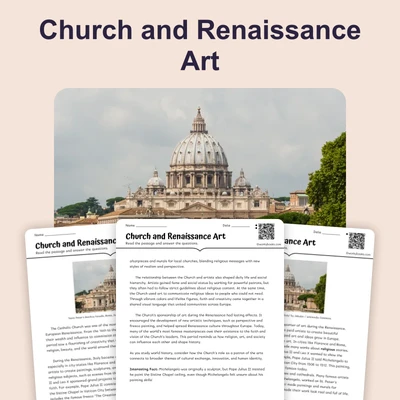
The revival of classical learning had a profound effect on European society. Renaissance thinkers embraced humanism, which focused on the study of humanities—subjects such as literature, history, and ethics—drawing on the teachings of the Greeks and Romans. Humanists believed that people could improve themselves through education and reason. This shift led to advances in science, mathematics, and art. Artists such as Leonardo da Vinci and Michelangelo studied ancient sculptures and buildings, creating realistic paintings and grand architectural designs. The use of columns, domes, and arches in Renaissance buildings reflected the influence of Greek temples and Roman engineering, as seen in Florence Cathedral or St. Peter’s Basilica.
Primary sources from the Renaissance, such as letters, diaries, and artwork, reveal this admiration for the ancient world. For example, in a letter from 1366, Petrarch wrote about climbing Mount Ventoux while carrying a copy of Livy’s history, showing his desire to learn directly from Roman authors. Archaeological discoveries, like the recovery of ancient statues in Rome, also inspired artists and scholars. Over time, the ideas of Greek democracy and Roman law influenced political thought, helping to shape modern governments.
The Renaissance’s renewed interest in classical learning changed Europe’s social and intellectual structure. It encouraged the questioning of old beliefs and promoted creativity, exploration, and scientific discovery. The continuing impact of ancient Greek and Roman achievements can be seen in modern education, government, and art.
The Renaissance connects to broader themes in world history, such as cultural exchange, the preservation of knowledge, and the evolution of societies.
Interesting Fact: The word "academy" comes from Plato’s school in Athens, called the Academy, which influenced the creation of modern schools and universities.
Comprehension quiz (8 questions)
1. What does Renaissance mean?
2. Who was Petrarch?
3. Which two ancient civilizations inspired the Renaissance?
4. What is humanism?
5. How did ancient texts return to Europe?
6. Why did Renaissance artists study ancient sculptures?
7. The Renaissance began in the 14th century. True or false?
8. What is a primary source?
Perfect for the way you teach
- Build comprehension skills
- Auto-graded quiz
- Differentiated reading
- Read together at home
- Improve fluency
- Quiet reading time
- Reading curriculum support
- Independent practice
- Track Lexile growth