Dante's Divine Comedy
Interactive passage with audio narration, comprehension questions, and printable PDF.
By completing this purchase you agree to our Terms of Use and Privacy Policy. Your subscription renews automatically until you cancel. You can cancel anytime from your account settings. All sales are final and non-refundable. Digital content is available for download in your account immediately upon purchase.
What's included
Dante's Divine Comedy preview and details
About this printable Dante's Divine Comedy reading passage (Grades 5-8)
Sample passage and quiz from Dante's Divine Comedy
Reading passage and comprehension quiz preview
Dante's Divine Comedy
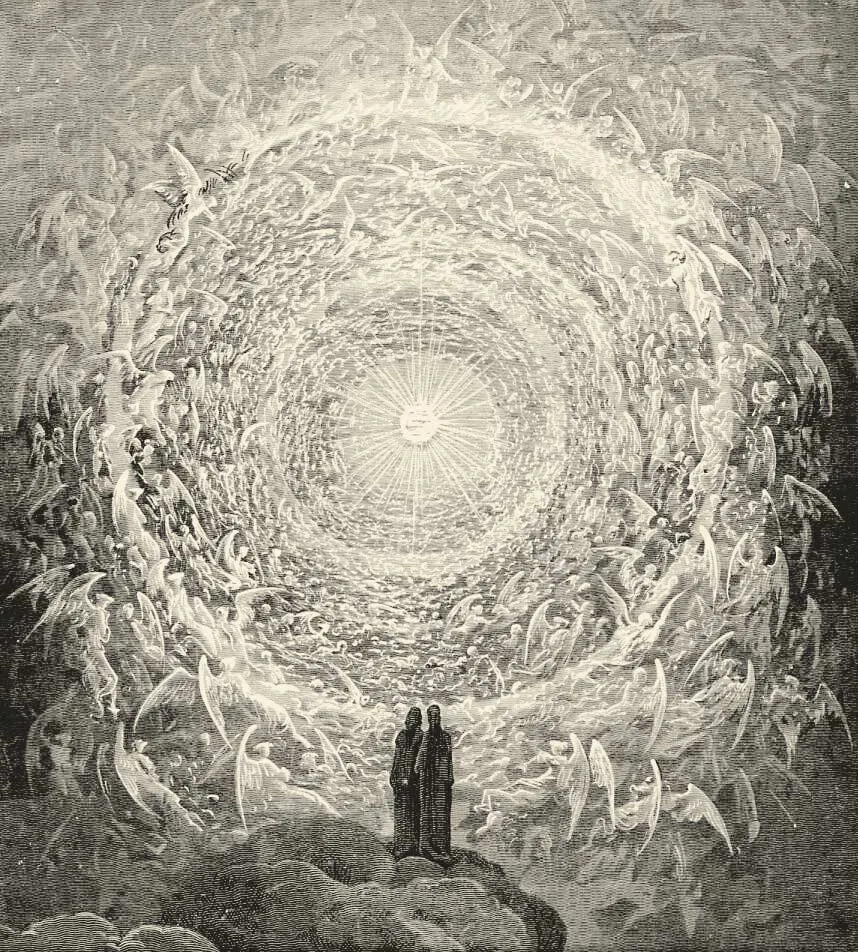
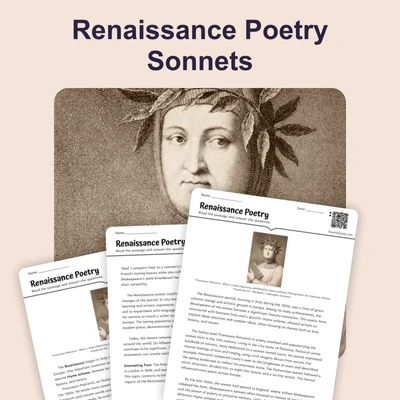
"Paradiso Canto" by Gustave Doré / Wikimedia Commons.
The Renaissance was a time of great creativity in Europe, especially in the city-states of Italy. One of the most important works from this period is Dante Alighieri's Divine Comedy, an epic poem written between 1308 and 1320. This masterpiece is divided into three parts: Inferno, Purgatorio, and Paradiso. Dante's journey through these realms explores deep moral questions about right and wrong, life and death, and the fate of the soul.
Dante begins his journey in the dark woods, feeling lost and afraid. He is guided by the ancient Roman poet Virgil, who represents human reason. Together, they descend into the Inferno, or Hell, where Dante witnesses the punishments of sinners. Each circle of Hell is reserved for a specific kind of sin, such as greed or violence. For example, in one circle, Dante sees people who were greedy forced to push heavy weights forever. These vivid descriptions are based on medieval beliefs about justice and are described in detail in Dante's own words, which serve as primary sources for historians.
After leaving the Inferno, Dante and Virgil reach Purgatorio, or Purgatory, a mountain where souls who are not evil but not yet pure work to cleanse themselves. Here, Dante meets historical and literary figures, many of whom ask for his prayers. This part of the poem reflects the Renaissance belief in the possibility of self-improvement and the importance of prayer. Eventually, Dante is guided by Beatrice, a symbol of divine love, as he rises into Paradiso, or Heaven. In Paradiso, Dante witnesses the beauty of the universe and the presence of God, using complex poetic language and astronomical references common in the period.
The Divine Comedy was revolutionary because it was written in the Italian vernacular, or everyday language, rather than Latin. This made the poem accessible to ordinary people and helped standardize the Italian language. Dante's use of real historical figures and detailed settings reflects the Renaissance focus on human experience and the study of classical texts. For example, Dante includes Florentine politicians and ancient philosophers in his poem, connecting the spiritual journey to real-world events and social hierarchies of his day.
Dante's Divine Comedy has had a lasting influence on literature, art, and ideas about the afterlife. It inspired many later writers and artists and provided a model for exploring moral themes in creative works. The poem continues to be studied and admired around the world for its powerful imagery and deep questions about humanity.
This journey through the afterlife connects to broader course themes about how literature can shape cultural values and influence societies over time.
Interesting Fact: Dante placed real people from his own life, including enemies and friends, into the story, making the poem both personal and historical.
Comprehension quiz (8 questions)
1. Who wrote the Divine Comedy?
2. In which language was Divine Comedy written?
3. What does Inferno mean?
4. Why is Beatrice important in the poem?
5. How did the Divine Comedy change Italian society?
6. What is one main theme of the poem?
7. Dante's poem is divided into three parts. True or false?
8. What does the word vernacular mean?
Perfect for the way you teach
- Build comprehension skills
- Auto-graded quiz
- Differentiated reading
- Read together at home
- Improve fluency
- Quiet reading time
- Reading curriculum support
- Independent practice
- Track Lexile growth