Defining Life: What Are We Looking For? — Reading Comprehension
Rate this
Premium Resource
Present
Present in classroom. No work saved
Assign
Classroom with student accounts, Track progress
Quick Play
No student accounts, assign with a link
Grades
5
6
7
8
Standards
MS-LS1-1
MS-ESS1-2
PRINT+DIGITAL RESOURCE
This learning resource is available in interactive and printable formats. The interactive worksheet can be played online and assigned to students. The Printable PDF version can be downloaded and printed for completion by hand.
This informational science passage for middle school students explores the question: What is life, and how do we define it when searching for life beyond Earth? Aligned to NGSS standards MS-LS1-1 and MS-ESS1-2, the passage introduces the six key characteristics that define living things: organization (cells), metabolism, growth, reproduction, response to the environment, and evolution. It also explains why scientists use an Earth-centric definition—requiring water, carbon molecules, and energy sources—but encourages students to consider possibilities like silicon-based or ammonia-based life. Real-world examples such as extremophiles (life forms surviving in extreme environments) and tardigrades show how resilient life can be. The passage discusses challenges in defining life, like viruses and fire, and introduces the field of astrobiology. Activities include multiple-choice questions, writing prompts, and graphic organizers, all with audio integration for accessibility. This resource supports science literacy and critical thinking about life’s diversity and the search for extraterrestrial organisms.
CONTENT PREVIEW
Expand content preview
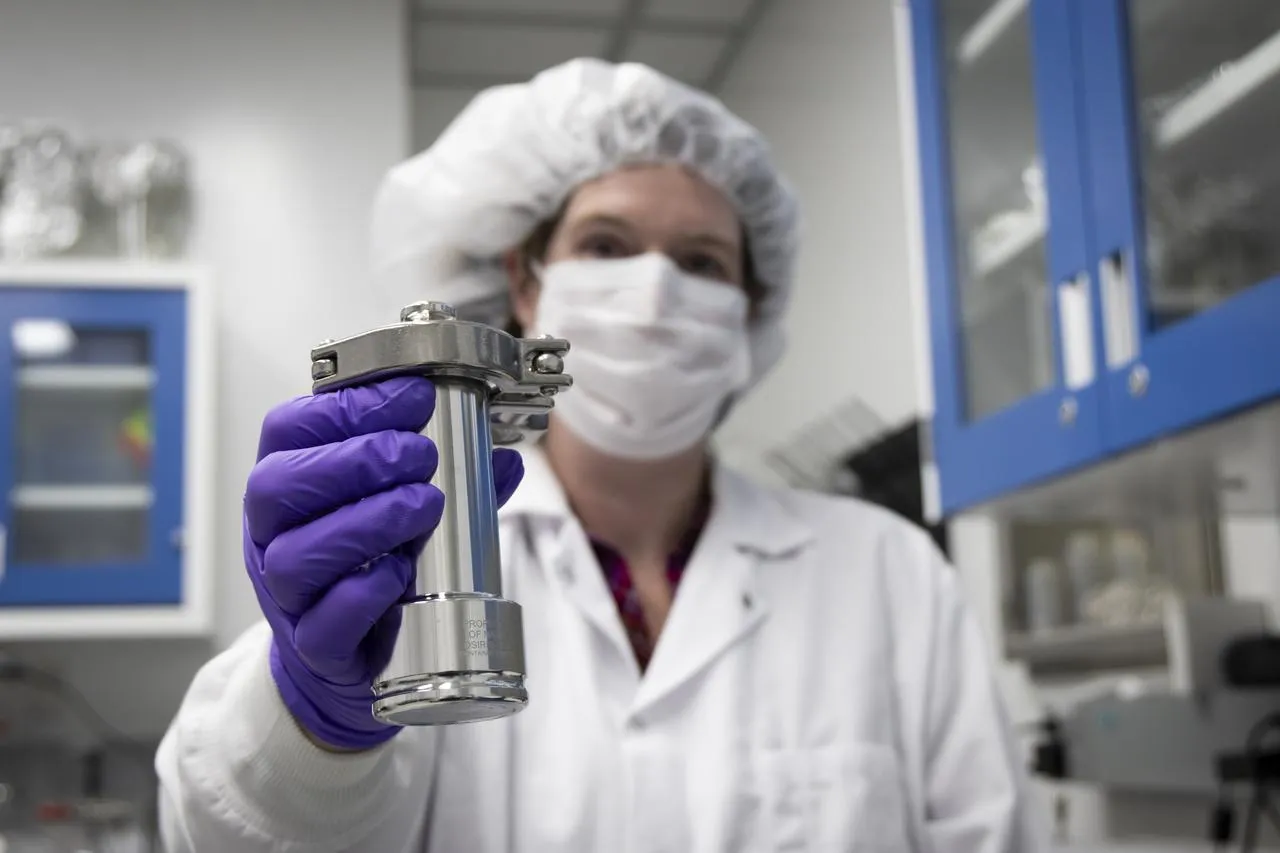
Inside NASA Goddard Astrobiology Lab / NASA (Public domain).
Scientists searching for life beyond Earth face a challenging task: how do we know what to look for when we have only one example—life as we know it on our own planet? The definition of life shapes the search for organisms on other worlds. Understanding what makes something alive is a foundation for astrobiology, the scientific study of life in the universe.
What Makes Something Alive?
Biologists generally agree that life has six main characteristics: organization (made of cells), metabolism (using energy), growth, reproduction, response to the environment, and the ability to evolve. For example, all known living things are made of cells. Cells organize and use energy through metabolism, like plants using sunlight in photosynthesis or humans digesting food. Growth and reproduction ensure that living things can make more of their kind. Response to the environment means organisms can react to changes around them, such as bacteria moving toward nutrients. Over generations, life evolves—populations change to adapt better to their environments. These processes interact: for instance, metabolism provides energy for growth, and evolution results from reproduction and variation.
Life As We Know It—And Beyond
So far, our definition of life is based on Earth. All known life requires liquid water as a solvent, carbon for building complex molecules, and an energy source. But could life elsewhere be different? Some scientists propose that alien life could use silicon instead of carbon, or ammonia instead of water. To keep an open mind, researchers look for signs of life’s functions—using energy, reproducing, and adapting—rather than just familiar forms. Studying extremophiles on Earth supports this idea. Extremophiles are organisms that thrive in extreme environments, like boiling hot springs, deep ocean vents, acidic pools, and frozen Antarctic ice. Some, like tardigrades, can survive in the vacuum of space, extreme radiation, or temperatures near absolute zero. The existence of extremophiles expands our view of where and how life could exist elsewhere.
The Limits and Challenges of Defining Life
Not everything that seems alive fits neatly into our definitions. Viruses, for example, can reproduce and evolve but lack cells and don’t use energy on their own. Are they alive? Fire grows, reproduces (spreads), and metabolizes fuel, but it is not alive because it lacks cells and does not evolve in the biological sense. These examples show that life’s boundaries are complex. Astrobiologists use these challenges to refine their search. They ask questions, conduct experiments, and compare findings from biology, chemistry, and astronomy to look for patterns and exceptions. By studying Earth’s most extreme and unusual life forms, scientists hope to recognize unfamiliar life if we find it.
In summary, defining life requires looking at systems and interactions, not just single features. Our Earth-based definition is a starting point, but discoveries of extremophiles and debates about viruses remind us that life is adaptable and diverse. As technology improves, the search for life elsewhere may force us to rethink what it really means to be alive.
Interesting Fact: Tardigrades, also known as water bears, are less than 1 mm long but can survive being frozen, boiled, dried out, and even exposed to the vacuum of space!
Which of the following is NOT one of the six main characteristics of life mentioned in the passage?
Having a backboneMetabolism (using energy)GrowthReproduction
What is the scientific field that studies life in the universe called?
AstrobiologyGeologyMeteorologyEcology
According to the passage, which element is essential for building complex molecules in Earth life?
CarbonOxygenSiliconNitrogen
What is an extremophile?
An organism that lives in extreme conditionsA type of virusA plant that uses photosynthesisA chemical element
What does the term 'metabolism' mean as used in the passage?
The process of using energyThe ability to moveThe ability to survive without waterThe process of reproduction
Why do scientists study extremophiles?
To understand how life could survive in harsh environmentsTo learn how to make new medicinesTo see if viruses are aliveTo learn about photosynthesis
How does the passage suggest that our definition of life might change in the future?
We may find new types of life that don't fit current definitionsOnly plants and animals will be considered aliveLife can only exist on EarthAll scientists agree on one unchanging definition
What is the relationship between metabolism and growth in living things?
Metabolism provides energy needed for growthGrowth causes metabolism to stopMetabolism and growth are unrelatedGrowth is only possible without metabolism
True or False: All living things on Earth require liquid water.
TrueFalse
True or False: Viruses are definitely considered living things by all scientists.
TrueFalse
Perfect For:
👩🏫 Teachers
• Reading comprehension practice
• Auto-graded assessments
• Literacy skill development
👨👩👧👦 Parents
• Reading practice at home
• Comprehension improvement
• Educational reading time
🏠 Homeschoolers
• Reading curriculum support
• Independent reading practice
• Progress monitoring
Reading Features:
📖
Reading Passage
Engaging fiction or nonfiction text
❓
Comprehension Quiz
Auto-graded questions
📊
Instant Feedback
Immediate results and scoring
📄
Printable Version
Download for offline reading
🔊
Read Aloud
Voice-over with word highlighting
Reviews & Ratings
No reviews yet. Be the first to share your experience!
Related Content
Antonie van Leeuwenhoek and the Discovery of Animalcules
This NGSS-aligned science passage explores the groundbreaking work of Antonie van Leeuwenhoek, a pioneer in microscopic ...
MS-LS1-1MS-LS1-2
Robert Hooke and the Naming of 'Cells'
This NGSS-aligned reading passage introduces middle school students to Robert Hooke's discovery and naming of 'cells' in...
MS-LS1-1MS-LS1-2
Rudolf Virchow and His Contribution to Cell Theory
This NGSS-aligned science reading passage introduces students to Rudolf Virchow, a key historical figure in cell biology...
MS-LS1-1MS-LS1-2
Matthias Schleiden and the Discovery That Plants Are Made of Cells
This NGSS-aligned science passage explains how Matthias Schleiden, a German scientist in the 1830s, discovered that all ...
MS-LS1-1MS-LS1-2
When Was the Microscope Invented?
This NGSS-aligned reading passage introduces students to the invention of the microscope, an essential scientific tool. ...
MS-LS1-1MS-LS1-2
What are Prokaryotic Cells?
This NGSS-aligned science reading passage explains prokaryotic cells, the simplest type of cells found in single-celled ...
MS-LS1-1MS-LS1-2
What are Eukaryotic Cells?
This NGSS-aligned reading passage introduces middle school students to eukaryotic cells, which are complex cells found i...
MS-LS1-1MS-LS1-2
Prokaryotic vs. Eukaryotic Cells
This NGSS-aligned reading passage helps middle school students compare prokaryotic and eukaryotic cells. Supporting stan...
MS-LS1-1MS-LS1-2
What is an Organelle?
This NGSS-aligned reading passage introduces middle school students to the concept of organelles. Supporting MS-LS1-
MS-LS1-1MS-LS1-2
Chromoplast: Nature's Color Palette
This passage details chromoplast functions in pigment production, ecological signaling, and nutrition. Aligned with NGSS...
MS-LS1-1MS-LS1-2MS-LS1-6LS1.C
Parts of the Cell
This informational science passage, aligned with NGSS standard MS-LS1-1, introduces students to the parts of the cell an...
MS-LS1-1MS-LS1-2
The Nucleolus and Its Function
This NGSS-aligned reading passage focuses on the nucleolus, a key structure inside the cell’s nucleus responsible for ma...
MS-LS1-1MS-LS1-2
Golgi Apparatus and Its Function
This NGSS-aligned reading passage introduces middle school students to the structure and function of the Golgi apparatus...
MS-LS1-1
Is a Platypus a Mammal?
This interactive science reading passage, titled "Is a Platypus a Mammal? The Monotreme Mystery!", delves into the uniqu...
MS-LS1-1
Where Do Platypus Live?
This engaging science reading passage, titled "Where Do Platypus Live? Finding Australia's Elusive Swimmer," explores th...
MS-LS1-1
The Amazing Red Panda
This engaging science reading passage, titled "The Amazing Red Panda: A Fluffy Tree Dweller," introduces students to one...
MS-LS1-1MS-LS4-D
Where Do Red Pandas Live?
This science reading passage, titled "Where Do Red Pandas Live? In the Mountain Forests," explores the specific habitat ...
MS-LS1-1
Przewalski's Horse
This engaging science reading passage, titled "Przewalski's Horse: A Wild Comeback Story," introduces students to the tr...
MS-LS4-DMS-LS1-1
The Quokka
This engaging science reading passage, titled "The Quokka: The Happiest Animal on Earth?", introduces students to one of...
MS-LS4-DMS-LS1-1
The Proboscis Monkey
This interactive science reading passage, titled "The Proboscis Monkey: A Monkey with a Mighty Nose!", introduces studen...