This learning resource is available in interactive and printable formats. The interactive worksheet can be played online and assigned to students. The Printable PDF version can be downloaded and printed for completion by hand.
This comprehensive passage for grades 6-8 explains the science of gravity and orbits, aligning with NGSS standard MS-ESS1-2. Students will discover how gravity, the attractive force between all objects with mass, keeps planets, moons, and satellites in motion. The passage details Newton’s law of universal gravitation, the mathematical relationship between mass, distance, and gravitational force, and explores Kepler’s laws of planetary motion. Through real-world examples like the motion of planets, tides, and artificial satellites, students see how gravity impacts their everyday lives. The resource includes a glossary, differentiated and Spanish versions, comprehension questions, writing and graphic organizer activities, and is designed for audio integration. Key scientific concepts are connected to broader principles, supporting deep understanding and critical thinking.
CONTENT PREVIEW
Expand content preview
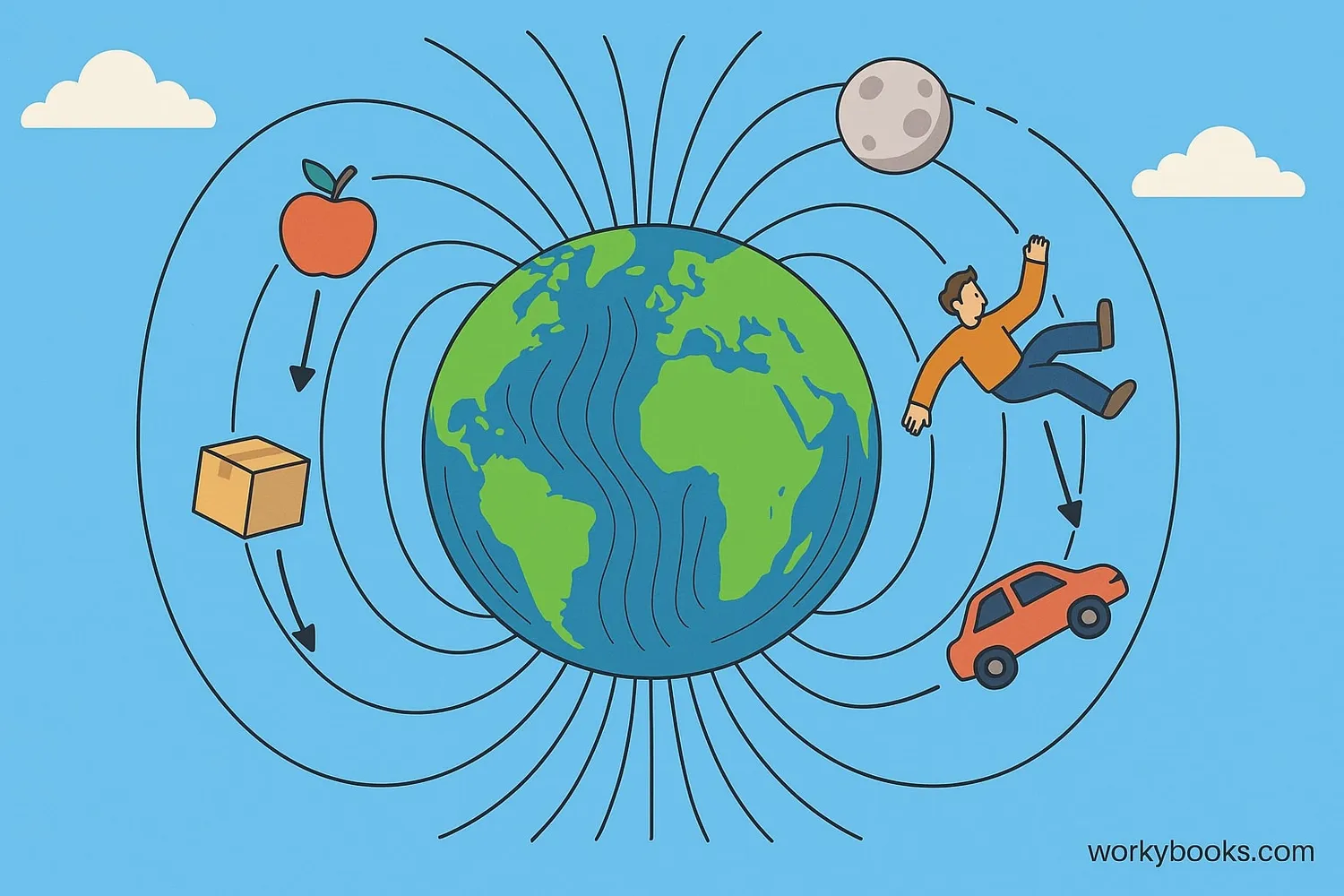
Gravity pulls objects toward Earth's center and keeps the moon in orbit
Gravity is the invisible force that keeps the planets moving around the Sun and causes objects to fall toward the ground. Every object with mass, from a tiny pebble to a massive planet, pulls on every other object with mass. This pull, called gravitational attraction, is what holds our entire solar system together. Understanding gravity is essential for explaining why planets, moons, and satellites move the way they do.
How Gravity Works: Newton’s Law and Orbital Motion
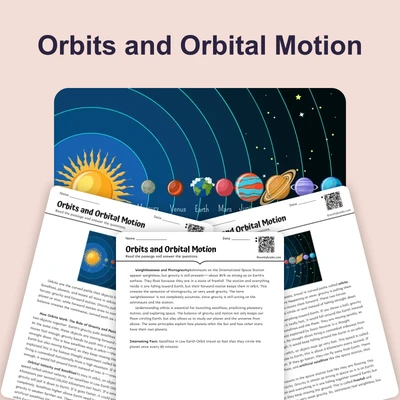
Sir Isaac Newton discovered that the force of gravity depends on two things: the mass of the objects and the distance between them. Newton’s law of universal gravitation states that the force increases when objects are more massive and decreases rapidly as they get farther apart. In fact, if the distance between two objects doubles, the force of gravity becomes four times weaker. This relationship is described mathematically as the inverse square law. Gravity is what keeps the Moon in orbit around the Earth and the Earth in orbit around the Sun. Orbits happen because objects in space are moving forward while gravity pulls them inward, creating a delicate balance. Instead of flying off into space or crashing into each other, planets and moons follow curved paths called ellipses.
Kepler’s Laws, Orbital Shapes, and Real-World Applications
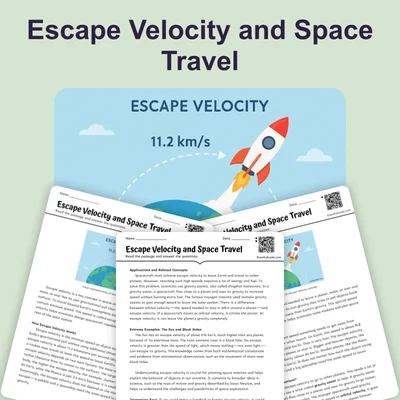
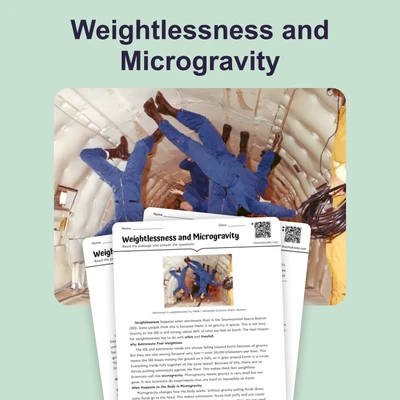
Johannes Kepler studied planetary orbits and discovered that planets move in ellipses, not perfect circles. According to Kepler’s laws, a planet moves faster when it is closer to the Sun and slower when it is farther away. This means that Mercury, the closest planet to the Sun, completes its orbit in just 88 days, while Neptune, much farther away, takes 165 years. Gravity also explains why astronauts feel weightless in space—they are actually falling around the Earth, constantly pulled by gravity but always moving forward. The concept of escape velocity is important for space travel; it’s the speed an object needs to break free from a planet’s gravity. For Earth, this is about 11.2 kilometers per second.
Gravity’s Effects on Earth and Technology
Gravity affects us every day. It gives us weight, causes ocean tides through the pull of the Moon and Sun, and keeps satellites in orbit for communication and observation. Without gravity, our bodies, oceans, and atmosphere would behave very differently. Modern technology, like GPS and weather satellites, relies on precise knowledge of gravity and orbital motion. Scientists use gravity to study the structure of Earth and other planets, and to plan missions in space. Understanding gravity connects to larger scientific principles, such as energy, motion, and systems in nature.
In summary, gravity is the fundamental force shaping the structure and motion of our universe. By studying gravity and orbits, scientists have unlocked many mysteries about planets, stars, and galaxies, and have developed technologies that impact our daily lives.
Interesting Fact: A teaspoon of matter from a neutron star would weigh billions of tons on Earth because of its extreme gravity!
What is gravity?
A force that pulls objects with mass togetherA type of energy created by the SunThe movement of planets in spaceA push that separates objects
Why do planets follow elliptical orbits?
Because gravity and forward motion balance each otherBecause they are pushed by solar windsBecause they are perfectly roundBecause the Sun changes its shape
Which scientist discovered the laws about planetary orbits?
Isaac NewtonJohannes KeplerAlbert EinsteinGalileo Galilei
What is escape velocity?
The speed needed to break free from a planet's gravityThe speed at which planets orbitThe speed of lightThe speed satellites travel in orbit
According to Newton’s law, what happens to gravitational force if the distance between two objects doubles?
It becomes four times weakerIt becomes twice as strongIt stays the sameIt becomes four times stronger
What does the term 'mass' mean as used in the passage?
The amount of matter in an objectThe speed of an objectThe color of an objectThe shape of an object
What does 'orbital motion' refer to in the passage?
The movement of an object around another due to gravityThe spinning of a planet on its axisThe movement of tectonic platesThe change in seasons
Why do astronauts feel weightless in space?
They are falling around Earth while moving forwardThere is no gravity in spaceThey are lighter than airSpace has no atmosphere
Gravity is responsible for ocean tides. (True/False)
TrueFalse
Satellites remain in orbit because of gravity. (True/False)
TrueFalse
Perfect For:
👩🏫 Teachers
• Reading comprehension practice
• Auto-graded assessments
• Literacy skill development
👨👩👧👦 Parents
• Reading practice at home
• Comprehension improvement
• Educational reading time
🏠 Homeschoolers
• Reading curriculum support
• Independent reading practice
• Progress monitoring
Reading Features:
📖
Reading Passage
Engaging fiction or nonfiction text
❓
Comprehension Quiz
Auto-graded questions
📊
Instant Feedback
Immediate results and scoring
📄
Printable Version
Download for offline reading
🔊
Read Aloud
Voice-over with word highlighting
Reviews & Ratings
No reviews yet. Be the first to share your experience!
Related Content
Comets
This middle school science passage explores the fascinating world of comets, commonly known as 'dirty snowballs.' Studen...
MS-ESS1-2
Mercury: Closest to the Sun
This comprehensive, standards-aligned passage explores Mercury—the smallest and closest planet to the Sun. Students in g...
MS-ESS1-2MS-ESS1-3
Venus: Earth's Twin?
This comprehensive science passage for grades 6-8 examines Venus—often called Earth's twin—by exploring its similarities...
MS-ESS1-2MS-ESS1-3
Earth: Our Home Planet
This comprehensive science passage for grades 6-8 explores Earth’s unique characteristics and the interconnected systems...
MS-ESS1-2
Mars: The Red Planet
This middle school science passage explores Mars, the Red Planet, providing students in grades 6-8 with a comprehensive ...
MS-ESS1-2MS-ESS1-3
What Is Gravity?
This comprehensive middle school science reading passage explores the concept of gravity, aligning with NGSS standards M...
MS-ESS1-2MS-PS2-4
Kepler's Laws of Planetary Motion
This comprehensive middle school science passage explores Kepler's Laws of Planetary Motion, meeting NGSS Standard MS-ES...
MS-ESS1-2
Tides and Tidal Forces
This middle school science passage explores the mechanisms of tides and tidal forces, aligning with NGSS standards MS-ES...
MS-ESS1-1MS-ESS1-2
Escape Velocity and Space Travel
This middle school science passage introduces students to the concept of escape velocity—the minimum speed required to b...
MS-ESS1-2MS-PS2-4
Weightlessness and Microgravity
This science reading passage for middle school students explores the phenomenon of weightlessness and microgravity. Alig...
MS-PS2-4MS-ESS1-2
Orbits and Orbital Motion
This middle school science passage, aligned with NGSS MS-ESS1-2 and MS-PS2-4, explores the science of orbits and orbital...
MS-ESS1-2MS-PS2-4
What Is the Solar System?
This passage provides a comprehensive overview of the solar system for grades 6-8, aligned with NGSS standards MS-ESS1-2...
MS-ESS1-2MS-ESS1-3
Structure of the Solar System
This comprehensive science reading passage introduces middle school students (grades 6-8) to the structure of the solar ...
MS-ESS1-2MS-ESS1-3
Moons of the Solar System
This comprehensive passage, designed for grades 6-8 and aligned to NGSS standard MS-ESS1-2, delves into the fascinating ...
MS-ESS1-2
Defining Life: What Are We Looking For?
This informational science passage for middle school students explores the question: What is life, and how do we define ...
MS-LS1-1MS-ESS1-2
Astronomy
This comprehensive reading passage introduces middle school students to the science of astronomy, which is the study of ...
MS-ESS1-2MS-ESS1-3MS-PS4-2MS-ETS1-1
The Solar System
This middle school science passage introduces students to the solar system, aligning with NGSS standards MS-ESS1-2 and M...
MS-ESS1-2MS-ESS1-3
The Inner Planets
This comprehensive science passage for grades 6-8 explores the inner (terrestrial) planets of our solar system—Mercury, ...
MS-ESS1-2MS-ESS1-3
The Outer Planets
This engaging science passage for grades 6-8 introduces students to the outer planets—Jupiter, Saturn, Uranus, and Neptu...