This 400-500 word informational science reading passage addresses the misconception that comet tails are burning flames. Aligned with NGSS MS-ESS1-3 and MS-ESS1.B Earth and the Solar System standards, the passage explains how comet tails form from gas and dust pushed away by solar wind and sunlight. Students learn that these tails glow because they reflect sunlight or become ionized, not because they're on fire. The passage includes real-world examples, scientific vocabulary appropriate for grades 6-8, and an engaging interesting fact. Audio-integrated features support diverse learners. Complete with differentiated versions, Spanish translations, comprehension quizzes, writing activities, and graphic organizers, this curriculum resource helps students understand solar system phenomena through evidence-based explanations.
Written by Workybooks TeamPublished by Workybooks
Preview
Sample passage and quiz content
CONTENT PREVIEW
Expand content preview
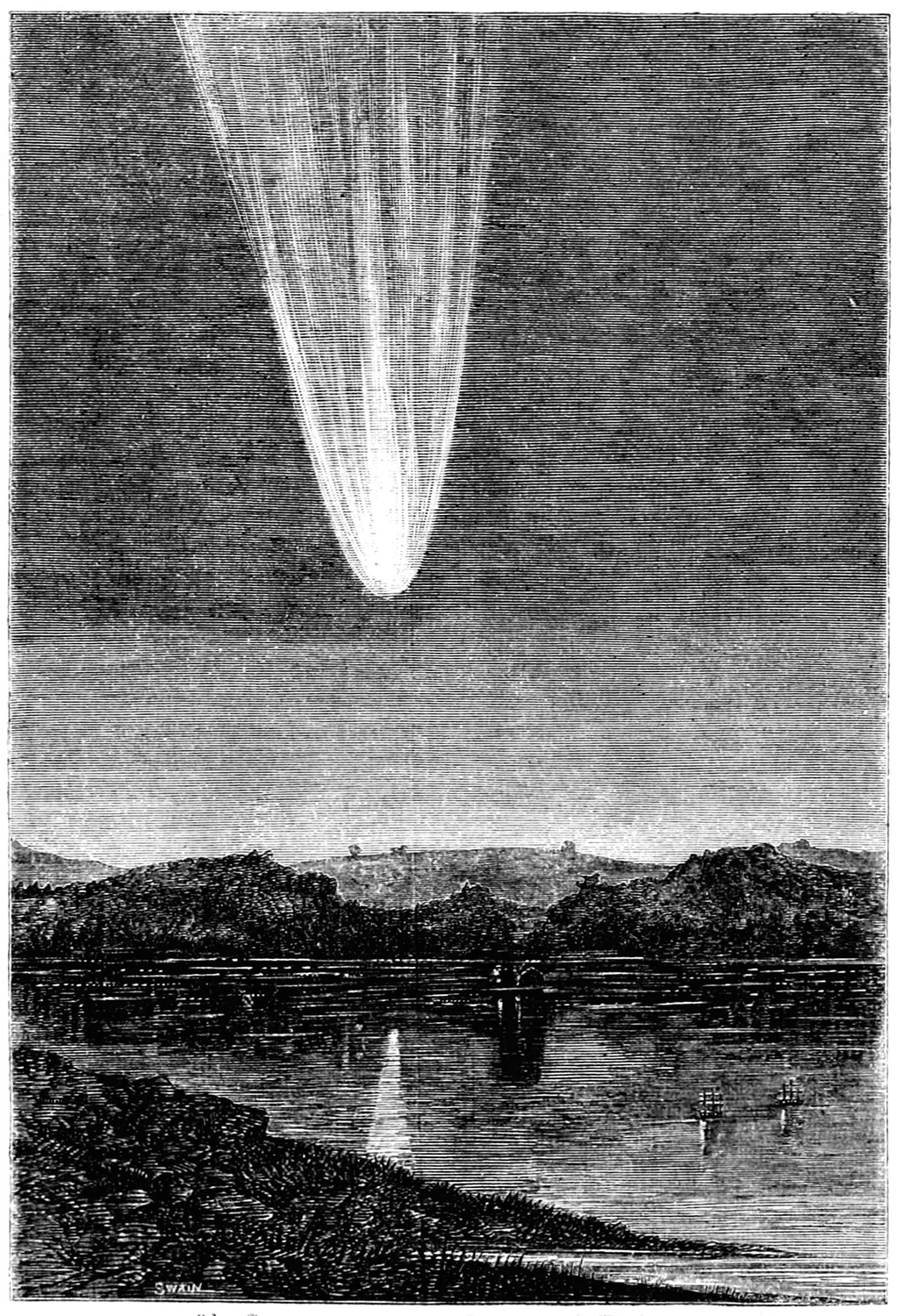
Comets are icy objects that travel through space. Their tails are streams of gas and dust, not burning material. Scientists explain that these tails glow because they reflect sunlight or become ionized, not because they are on fire. 1861 Comet over Portsmouth Harbour" by Joseph Swain and workshop / Wikimedia Commons
Do comets have burning tails? No, comet tails are not made of fire or flames. This is a common misconception that many people believe. Comets are icy objects that travel through space. Their tails are streams of gas and dust, not burning material. Scientists explain that these tails glow because they reflect sunlight or become ionized, not because they are on fire.
When a comet travels close to the Sun, heat causes ice on its surface to change directly into gas. This process is called sublimation. The gas and dust particles escape from the comet's surface. Solar wind, a stream of charged particles from the Sun, pushes these materials away from the comet. Sunlight also pushes on the dust particles. This creates two different tails. The dust tail appears white or yellowish because dust particles reflect sunlight. The ion tail appears blue because gas molecules become ionized by solar radiation. When atoms lose or gain electrons, they can emit light at specific colors.
Evidence shows that comet tails always point away from the Sun. This happens regardless of the direction the comet is traveling. In 1997, Comet Hale-Bopp became visible to people on Earth. Scientists observed its two distinct tails. The dust tail curved slightly, while the ion tail pointed straight away from the Sun. This observation supported the explanation that solar wind and radiation pressure shape comet tails. The temperature in a comet's tail can be extremely cold, sometimes below negative 100 degrees Celsius. This is far too cold for combustion to occur.
Understanding what comet tails really are helps scientists learn about the early solar system. Comets contain materials from when our solar system formed billions of years ago. By studying the gas and dust in comet tails, researchers can learn about the chemical makeup of the early solar system. This knowledge connects to how Earth and other planets formed. Recognizing that comet tails glow through physical processes rather than burning demonstrates how electromagnetic radiation and particle interactions work in space.
Interesting Fact: A comet's tail can stretch for millions of kilometers across space. Some comet tails are so long they could span the distance from Earth to the Sun!
What are comet tails actually made of?
Flames and burning gasesStreams of gas and dustMelted ice and waterSolid rock particles
What is sublimation?
When ice melts into waterWhen gas turns into liquidWhen solid changes directly into gasWhen dust reflects sunlight
Why does the ion tail of a comet appear blue?
Because it reflects blue light from EarthBecause gas molecules become ionized and emit blue lightBecause ice crystals scatter blue wavelengthsBecause the dust contains blue minerals
What does solar wind do to a comet's tail?
It makes the tail burn brighterIt melts the ice on the cometIt pushes gas and dust away from the cometIt causes the comet to move faster
Which direction do comet tails always point?
In the direction the comet is travelingToward the SunAway from the SunToward Earth
What did scientists observe about Comet Hale-Bopp in 1997?
It had only one tailIt had two distinct tails with different shapesIts tail was on fireIt had no tail at all
Why can't comet tails be burning?
There is no oxygen in space for combustionThe temperature is too cold for burning to occurComets are made of ice, which cannot burnAll of the above
How do scientists use comet tails to learn about the early solar system?
By measuring how fast they burnBy studying the gas and dust to learn about early chemistryBy counting how many tails each comet hasBy watching how comets crash into planets
True or False: Comet tails glow because they are on fire.
TrueFalse
True or False: Radiation pressure from sunlight can push on dust particles in a comet's tail.
TrueFalse
Who it's for
Perfect for the way you teach
Teachers
Build comprehension skills
Auto-graded quiz
Differentiated reading
Parents
Read together at home
Improve fluency
Quiet reading time
Homeschoolers
Reading curriculum support
Independent practice
Track Lexile growth
Topics
cometscomet tailssolar windionizationsolar systemspace scienceNGSS MS-ESS1-3middle school science
Reviews & Ratings
No reviews yet. Be the first to share your experience!
More reading you might love
20 more
Sunspots and Solar Flares
This quiz is designed to test your understanding of the fascinating phenomena of sunspots and solar flares, as described...
RI.4.1RI.4.4RI.5.1ESS1.A
The Hottest Planet in the Solar System
This NGSS-aligned middle school reading passage explains why Venus is the hottest planet in our solar system. Students l...
MS-ESS1-3
Mercury: Closest to the Sun
This comprehensive, standards-aligned passage explores Mercury—the smallest and closest planet to the Sun. Students in g...
MS-ESS1-2MS-ESS1-3
Venus: Earth's Twin?
This comprehensive science passage for grades 6-8 examines Venus—often called Earth's twin—by exploring its similarities...
MS-ESS1-2MS-ESS1-3
Mars: The Red Planet
This middle school science passage explores Mars, the Red Planet, providing students in grades 6-8 with a comprehensive ...
MS-ESS1-2MS-ESS1-3
What Is the Solar System?
This passage provides a comprehensive overview of the solar system for grades 6-8, aligned with NGSS standards MS-ESS1-2...
MS-ESS1-2MS-ESS1-3
Structure of the Solar System
This comprehensive science reading passage introduces middle school students (grades 6-8) to the structure of the solar ...
MS-ESS1-2MS-ESS1-3
Scale of the Solar System
This passage, aligned to NGSS standard MS-ESS1-3, helps middle school students grasp the immense scale of the solar syst...
MS-ESS1-3
Exploration of the Solar System
This comprehensive passage for grades 6-8 examines how humans explore the solar system, aligning with NGSS standards MS-...
MS-ESS1-3MS-ETS1-1
Optical Telescopes
This comprehensive passage explores the science of optical telescopes for middle school students, aligning with NGSS sta...
MS-ESS1-3MS-ETS1-1
Future of Alien Search
This informational passage for grades 6-8 explores how scientists are using cutting-edge missions and technology to sear...
MS-ESS1-3MS-ETS1-1
Communicating with Aliens
This middle school science passage, aligned with NGSS standard MS-ESS1-3, examines the scientific and technological chal...
MS-ESS1-3
Measuring Distances in Space
This middle school science passage explores how astronomers measure the vast distances in space, aligning with NGSS stan...
MS-ESS1-3
Astronomy
This comprehensive reading passage introduces middle school students to the science of astronomy, which is the study of ...
MS-ESS1-2MS-ESS1-3MS-PS4-2MS-ETS1-1
The Solar System
This middle school science passage introduces students to the solar system, aligning with NGSS standards MS-ESS1-2 and M...
MS-ESS1-2MS-ESS1-3
The Inner Planets
This comprehensive science passage for grades 6-8 explores the inner (terrestrial) planets of our solar system—Mercury, ...
MS-ESS1-2MS-ESS1-3
The Outer Planets
This engaging science passage for grades 6-8 introduces students to the outer planets—Jupiter, Saturn, Uranus, and Neptu...
MS-ESS1-2MS-ESS1-3
Light-Years and Cosmic Distances
This middle school science passage, aligned to NGSS MS-ESS1-3, explores how astronomers measure the vast distances in sp...
MS-ESS1-3
Space Stations
This informational science reading passage for grades 6-8 explores the complex systems and technology behind space stati...
MS-ESS1-3MS-ETS1-1
Types of Spacecraft
This passage introduces middle school students to the various types of spacecraft used to explore our solar system and b...