Energy Conservation and Efficiency — Reading Comprehension
Rate this|
1
Premium Resource
Present
Present in classroom. No work saved
Assign
Classroom with student accounts, Track progress
Quick Play
No student accounts, assign with a link
Grades
5
6
7
8
Standards
MS-PS3-4
MS-ESS3-3
MS-ESS3-4
PRINT+DIGITAL RESOURCE
This learning resource is available in interactive and printable formats. The interactive worksheet can be played online and assigned to students. The Printable PDF version can be downloaded and printed for completion by hand.
This middle school science passage explores the essential concepts of energy conservation and energy efficiency, aligned with NGSS standards MS-PS3-4, MS-ESS3-3, and MS-ESS3-4. Students will learn the difference between reducing energy use (conservation) and improving the way energy is used (efficiency), through real-world examples from homes, transportation, and industry. The passage examines mechanisms such as insulation, efficient appliances, smart thermostats, and public transit, and discusses the impact of personal actions and energy audits. Connections are made to larger scientific principles, emphasizing how reducing energy demand is as important as using clean energy sources. Activities include a glossary, multiple-choice quiz, writing prompts, and graphic organizers to deepen understanding. This resource is audio-integrated, making it accessible for all learners and supporting science literacy development.
CONTENT PREVIEW
Expand content preview
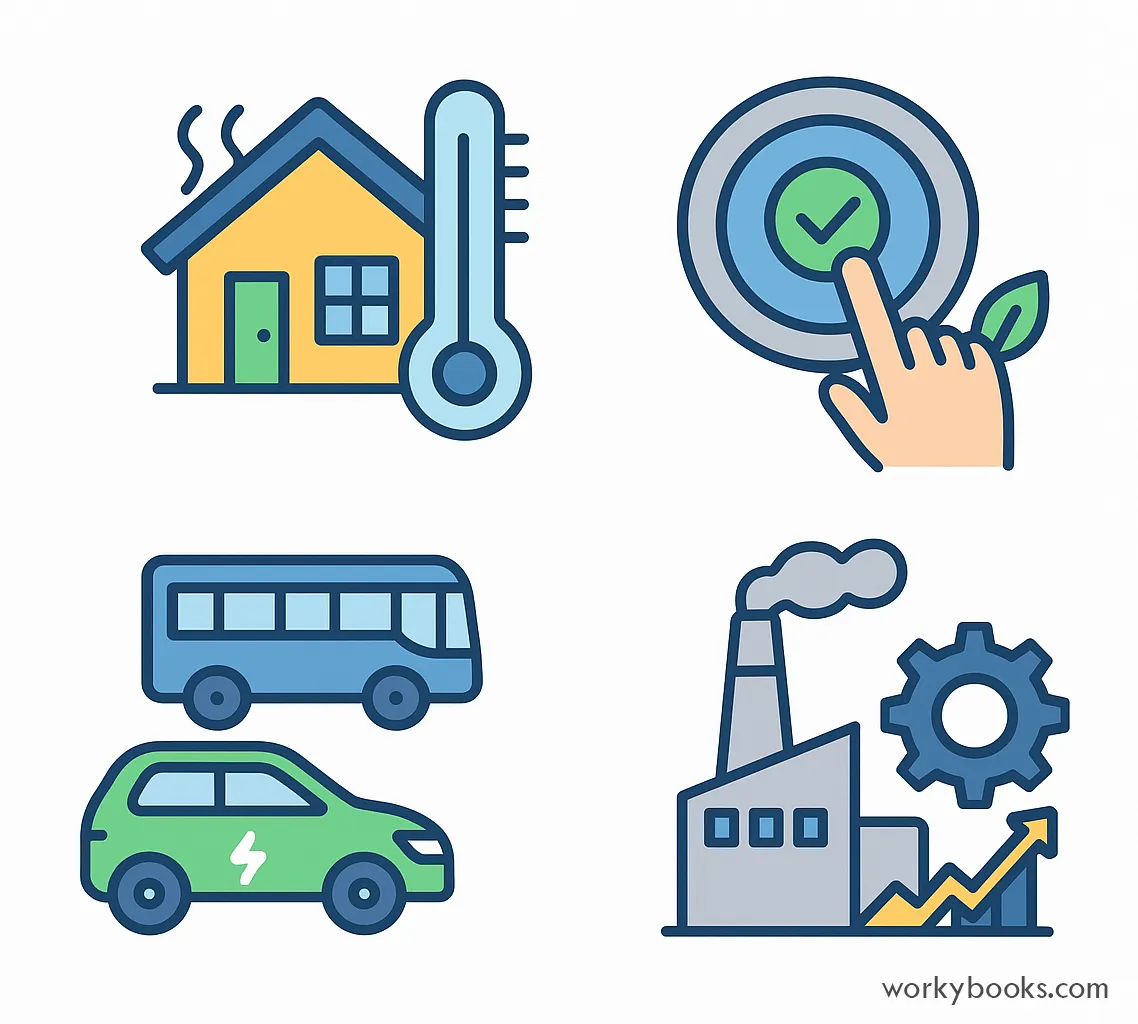
Energy-saving tools in homes, transport, and industry.
Energy is a resource needed for every part of our daily lives, from lighting homes to powering cars and factories. Around the world, people use huge amounts of energy every day, and much of it comes from burning fossil fuels. This creates pollution and adds to climate change. Reducing our energy use is essential for a healthier planet and a sustainable future. Two main strategies help achieve this: energy conservation and energy efficiency.
How Conservation and Efficiency Work
Energy conservation means using less energy by making choices to avoid waste. For example, turning off lights when leaving a room or lowering the thermostat in winter are ways to conserve energy. In contrast, energy efficiency means using technology to get more useful output from the same amount of energy. This includes using LED light bulbs that use 75% less electricity than traditional bulbs to produce the same amount of light. Both conservation and efficiency lower overall demand for energy, but they work in different ways. Conservation depends on behavior, while efficiency focuses on improving systems and technologies.
Real-World Applications: Homes, Transport, and Industry
In homes, insulation reduces heat loss, so less energy is needed for heating and cooling. Smart thermostats automatically adjust temperatures, saving up to 10% in heating and cooling costs. In transportation, fuel-efficient vehicles and electric cars use less energy per mile compared to traditional vehicles. Public transit can move many people at once, reducing the total fuel needed. In industry, upgrading equipment and using energy audits help companies find and fix wasteful practices. For example, switching to efficient motors in factories can cut electricity use by 20% or more. These changes not only save money but also lower pollution and greenhouse gas emissions.
The Importance of Reducing Demand
While renewable energy sources like solar and wind are growing, reducing the demand for energy remains crucial. The less energy we use, the easier it is for clean sources to meet our needs. Personal actions, such as unplugging devices and choosing efficient appliances, add up when practiced by millions of people. Schools and communities can conduct energy audits to identify ways to save. Scientists use data to track how conservation and efficiency efforts reduce emissions and protect natural resources. These efforts are part of a larger system that links human choices, technology, and the environment.
Reducing energy use through both conservation and efficiency is a cause-and-effect process. When demand drops, pollution decreases, and communities become more resilient to climate change. These strategies are vital for a sustainable future.
Interesting Fact: If every American household replaced just one regular light bulb with an LED, the energy saved could power more than 3 million homes for a year!
What is the main difference between energy conservation and energy efficiency?
Conservation is about using less energy by choice; efficiency is about using technology to do more with the same energy.Conservation uses more energy; efficiency saves money.Conservation only happens in factories; efficiency only happens at home.Conservation is about transportation; efficiency is about lighting.
Which of the following is an example of energy conservation?
Turning off lights when leaving a room.Using a smart thermostat.Installing efficient motors in factories.Switching to public transit.
According to the passage, what percent less electricity do LED bulbs use compared to traditional bulbs?
25%50%75%90%
What is an energy audit?
A device that controls temperature.A process to find ways to save energy in a building or system.A new type of light bulb.A source of renewable energy.
What type of transportation is considered energy efficient according to the passage?
Driving a car alone.Using public transit like buses and trains.Walking only.Riding a bike only.
What does the word 'demand' mean in the context of the passage?
The amount of energy people or systems use.The cost of energy.A type of energy source.A way to create energy.
How does reducing energy demand help the environment?
It increases pollution.It makes it harder to use renewable energy.It lowers pollution and helps fight climate change.It has no effect.
Why are both energy conservation and efficiency important for a sustainable future?
Because they both use more fossil fuels.Because they help reduce energy use and pollution.Because they only work in factories.Because they are required by law.
True or False: Using renewable energy is the only important way to protect the environment.
TrueFalse
True or False: Insulation in homes helps reduce energy use by keeping heat inside.
TrueFalse
Perfect For:
👩🏫 Teachers
• Reading comprehension practice
• Auto-graded assessments
• Literacy skill development
👨👩👧👦 Parents
• Reading practice at home
• Comprehension improvement
• Educational reading time
🏠 Homeschoolers
• Reading curriculum support
• Independent reading practice
• Progress monitoring
Reading Features:
📖
Reading Passage
Engaging fiction or nonfiction text
❓
Comprehension Quiz
Auto-graded questions
📊
Instant Feedback
Immediate results and scoring
📄
Printable Version
Download for offline reading
🔊
Read Aloud
Voice-over with word highlighting
Reviews & Ratings
No reviews yet. Be the first to share your experience!
Related Content
Natural Disaster: Volcanic Eruptions
Volcanoes can erupt with lava and ash, changing the landscape. While dangerous, they also create fertile land and new la...
RI.3.1RI.4.4RI.4.2RI.5.2
Human Impacts: Pollution
This middle school science reading passage, aligned with NGSS standards MS-LS2-4 and MS-ESS3-3, examines the mechanisms ...
MS-LS2-4MS-ESS3-3
Human Impacts: Habitat Destruction
This grade 6-8 science passage explores human impacts on ecosystems, focusing on habitat destruction as the leading caus...
MS-LS2-4MS-LS2-5MS-ESS3-3
Ecosystem Services
This engaging middle school science passage introduces students to the concept of ecosystem services, the vital benefits...
MS-LS2-5MS-ESS3-3
Environmental Problems and Solutions
This passage for grades 6-8 introduces major environmental problems such as habitat loss, pollution, climate change, inv...
MS-LS2-4MS-ESS3-3MS-ESS3-4
Remote Sensing
This middle school science passage introduces students to the concept of remote sensing—the collection of information ab...
MS-ESS3-3MS-PS4-2MS-ETS1-1MS-ETS1-3
Geographic Information Systems (GIS)
This engaging middle school science passage introduces students to Geographic Information Systems (GIS), aligning with N...
MS-ESS3-3MS-ETS1-1MS-ETS1-2MS-ETS1-3
Renewable vs. Nonrenewable Energy
This engaging passage, aligned with NGSS standards MS-PS3-4, MS-ESS3-3, and MS-ESS3-4, helps middle school students diff...
MS-PS3-4MS-ESS3-3MS-ESS3-4
Fossil Fuels: Coal
This middle school science reading passage explores the science behind coal, a major fossil fuel. Students will learn ho...
MS-PS3-4MS-ESS3-3MS-ESS3-4
Solar Energy
This engaging passage for grades 6-8 explores the science of solar energy, focusing on how sunlight is converted into el...
MS-PS3-4MS-ESS3-3MS-ESS3-4
Wind Energy
This comprehensive middle school science passage explores the scientific principles behind wind energy and how wind turb...
MS-PS3-4MS-ESS3-3MS-ESS3-4
Hydroelectric Energy
This comprehensive passage introduces middle school students to the science behind hydroelectric energy, directly aligni...
MS-PS3-4MS-ESS3-3MS-ESS3-4
Geothermal Energy
This comprehensive science passage introduces middle school students to the mechanisms and applications of geothermal en...
MS-PS3-4MS-ESS3-3MS-ESS3-4
Biomass and Biofuels
This NGSS-aligned passage introduces grades 6-8 students to the science of biomass and biofuels, explaining how organic ...
MS-PS3-4MS-ESS3-3MS-ESS3-4
Nuclear Energy as a Resource
This NGSS-aligned informational science passage, designed for grades 6-8, explores nuclear energy as a resource in the c...
MS-PS3-4MS-ESS3-3MS-ESS3-4
Water Quality
This middle school science reading passage covers the topic of water quality, aligned with NGSS standards MS-ESS3-1 and ...
MS-ESS3-1MS-ESS3-3
Florida Everglades
This comprehensive passage introduces middle school students to the Florida Everglades, a distinctive wetland ecosystem ...
MS-LS2-1MS-LS2-4MS-ESS3-3MS-ESS3-4
Congo Rainforest
This middle school science passage explores the Congo Rainforest—Earth’s second-largest rainforest, located in Central A...
MS-LS2-1MS-ESS3-3
Nuclear Power Plants
This comprehensive reading passage introduces middle school students (grades 6-8) to the science of nuclear power plants...
MS-PS3-4MS-ESS3-3
Nuclear Safety and Waste
This middle school science passage explores the critical topic of nuclear safety and waste management, aligned with NGSS...